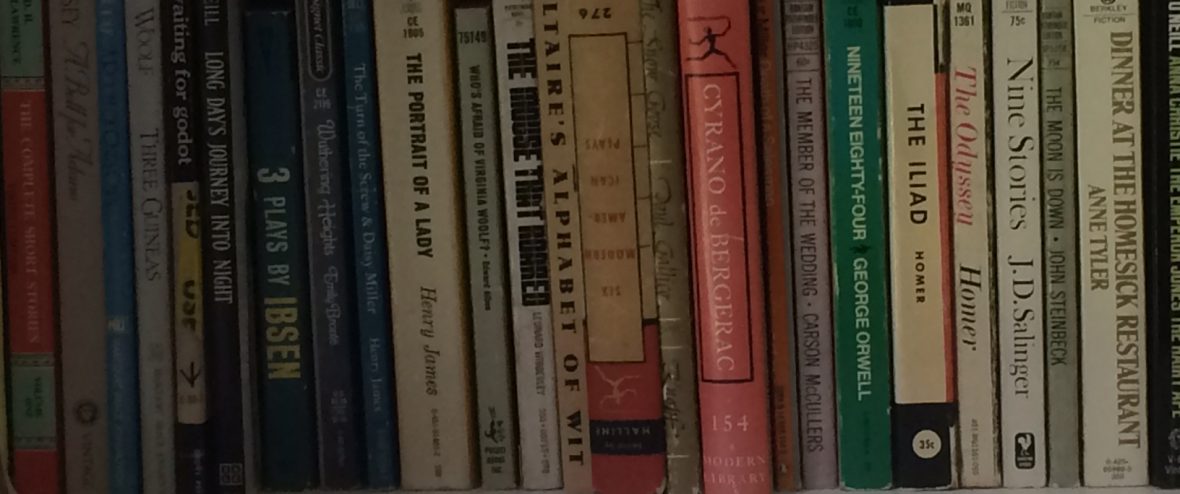
books, reading

The Wife, the Maid and the Mistress by Ariel Lawhon

August 6, 1969 Stella Crater walks into a bar, formally a popular speak easy in the 1930s. She sits in a corner table where the bartender brings over two glasses of whiskey with 6 ice cubes each. She waits for someone to come and listen to her confession. It’s been 39 years since her husband’s disappearance. She has been coming here every year on the anniversary of his disappearance to order his favorite drink – for two – to remember her husband. Someone joins her, and asks for her confession.

The story begins in 1930 – Judge Joseph Crater is in Maine, where his wife, a picture perfect wife, is faced with the truth of her husband’s infidelity – again. After an urgent call at dinner, he declares he is to return to New York the next morning. We meet Maria – a domestic that opens the door to her employer’s (the Craters) apartment, thinking they were in Maine, only to find a naked woman, not his wife, in their bed.  And we meet the mistress – Ritzi – who wanted to be a star at any cost. As the story unfolds the days of 1930 are recalled in each woman’s viewpoint. You hear of the corruption of politicians, cops, and everyone in between. You hear how everyone is afraid of Ownie – the gangster that has the run of the town. You hear how easy it is to slide down the slippery slope of corruption.

I will not give anything away, but the twists and turns of the plot kept me guessing mostly, but I was close to the right answers in the end, but still surprised by the way everything happened. The crux of the story was like an O. Henry story. Be careful what you wish for, and be aware of how easy acquiescence can turn to evil.

This is a well written and plotted book. If you are interested in period pieces, this is all about the roaring 30s in New York City, and the corruption that ran the city. The pace of the story and the ultimate ending were a wonderful nod to letting go of yester -year.

book-review, books, mystery, read around the world, reading

Smaller and Smaller Circles by F.H. Batacan

This is a murder mystery in the poorest of neighborhoods of Quezon City. With officials stretched with limited resources and hamstrung by apathy and politics that surround a post-Marcos regime in the Philippines, there appears to be a serial killer preying on young boys. Two Jesuit priests, Father Gus Saenz, a forensic anthropologist and his colleague/friend Father Jerome Lucero, a psychologist, are brought in by the Director of the National Bureau of Investigations (NBI) to help solve the case.

Throughout the story the prominence of both the Catholic Church and the government are highlighted – in both positive and negative light. The Priests have been fighting the church to bring to light allegations of abuse for a Cardinal, who simply gets re-assigned, exposing others to his power. Additionally, they are working with people in the NBI that are more concerned with getting credit for solving a crime than for actually finding the real killer. In both ways, Fathers Gus and Jerome are working to protect the young and vulnerable that have no power or voice.

This theme – the need to protect those that are the most vulnerable – is evident in all they do. As the mystery of the murders becomes clearer, the pain of the truth they uncover is heartbreaking.

This is truly a study of the need to have transparency for those in power, and an indictment of what “society” deems as truly important. I want to read more of this crime solving duo.

books, read around the world, reading

Atlas: The Story of Pa Salt #8 of the Seven Sisters series by Lucinda Riley (and finished by her son)

After spending years reading the Seven Sisters books, all epic tales of adventure for an adopted child of “Pa Salt” in Geneva, Switzerland, I was eager to hear the origin story at last. Each sister is named for one of the seven stars in the constellation Seven Sisters.  I had read the books mid-way through their being published, so I had to wait for the last 3 to be published before I could read them. That made this last book a little challenging. Having taken the books from the library, I didn’t have them with me to use as reference to double check or remind myself of things that were being referenced in this new book, and it has been years since I read some of them.

Even with this challenge, it was interesting to read Pa Salt’s story. While fantastical in nature, it was true to the original stories told in the initial books, while fleshing out questions. It took no time to backtrack on items, it just plowed forward with the story and brought you along. After being left hanging at the end of the 7th book, this left me far more satisfied. The loose strings were tied up in pretty bows for me, just as I had expected.

While I would not call this “high literature,” this series takes you on a global tour where you learn of places and industries that you would never have thought of before. I have learned about the building of Rio’s Christ the Redeemer, of flamenco dancing, concertos, book selling, gardening, race riots, and opal mining. Places from all over the world were visited with characters that you care about and that take time to learn from the histories in each area of the world.

Well worth the read – and possible re-read too!

books, read around the world, reading

Dinner at the center of the Earth by Nathan Englander

This is a complex story told in different alternating timelines. You need to make sure you check the date before reading each chapter. A psychological thriller, you learn of Prisoner X, a man that is only known to be held captive by his guard, his mother, and the General who had put him in the cell.  You see the prisoner and the guard taunting each other, but yet befriending each other. There is no one else to talk to, nor has there been for the last 14 years.

Ruthie is the General’s right hand. She has been with him, taking care of his every need for decades as he lay in a coma. She understands him better than the nurses and doctors that are watching over him now. She can sense that he is slipping away. But she is not family, and will not be allowed there at the end, regardless of her endless vigils at his bedside over the last years.

We are now in France, with a blown cover for a spy that is hoping to survive. He is not the best spy, admittedly, as he sees his own faults. But how will he escape to get home to his family?

As these three stories are unfolded, the simmering hate and quest for justice is at the heart of the story. Grudges are paid for before peace is considered. It is in this cycle that the core of the hatred in the Middle East will never end. Those that strive toward “justice” are on a fools errand if they don’t understand that revenge negates this. People on any side of the issue can be friendly and compassionate, but unless the view of “right” and “vengeance” becomes less rigid, how can there be hope? Even in the face of love and passion, this is an uncompromising truth. This compassion must be hidden from everyone, even themselves, because there is no tolerance in either community for any bending of the definitions.

The examination of the deeds that are “unforgivable” in the book are about someone trying to stop the unending cycle of this. The costs of stopping the pain from continuing are just as high, if not higher, than those that are perpetuating its longevity. Until either side is willing to compromise, there will be no peace, internally for these people, or within the world they live.

While I wish there was a hope or a will to put any human life above revenge, I am aware this is a foolish and naïve statement. While one person at a time has changed views, the widespread desire to keep the fires of hate burning do not leave me hopeful. This book underscores this very well. 

books, reading

The Reading List by Sara Nisha Adams

Prologue: Aiden goes to his favorite place, the public library, to find solace. He picks up his favorite book, Black Water Rising by Attica Lock, and settles in. Someone sits down near him with books, and leaves a note with a list of books, in case you need them.  He ignores it and continues with his own mystery book.

Flash forward and we meet Aleisha, a teenager working at the library. She is bored with the job and doesn’t like it. Mukesh, a widower, comes to the library to return a book his late wife had checked out, The Time Traveler’s Wife, that her read and asks for help on finding another book. Aleisha, being a teenager, was rude. After this happens, her brother, Aiden, tells her she could do better. When she finds a list of books, in case you need them, she begins to take the list seriously, and read each. She then shares this list with Mukesh, one by one.

As each book is read by these people, you see how they are entangled in their own lives, and how they take the lessons from the books to help them through their days. They try to be brave like Atticus in To Kill a Mockingbird, try to learn from not being afraid of Mrs DeWinter in Rebecca, and more. Mukesh finds connections with Aleisha, and others in the world he re-enters after his wife’s death. And he uses these books to help bridge a relationship with his granddaughter, Priya.  There are other copies of the list found, and people who use these to connect to themselves and to others. But who wrote the list?  I will not spoil this for you. 

This story lays out all I hold dear for books. They take you to different worlds, teach you how others live, and provide you with tools to build a better reality based upon what you have learned. They help you build relationships with other who have shared this experience. Books open worlds for everyone. This is a story of how hard life can be and how books can help you through difficult times. I must admit, I will be re-examining these titles again (I have read most of them already but not all).

To Kill A Mockingbird

Rebecca

The Kite Runner

Life of Pi

Pride & Prejudice

Little Women

Beloved

A Suitable Boy

in case you need them

books, read around the world, reading

His Only Wife by Peace Adzo Medie

Meet Afi Tekple of Ghana. She is about to married Elikem Ganyo – who will not be at the wedding because of a business trip. We meet Afi’s greedy Uncle Pious, her best friend Mawusi, her mother, and her mother-in-law “Aunty”. At the wedding ceremony Eli’s brother Richard stands in for him.

And we hear the story of when Afi’s father died his brother Pious did not take in Afi and her mother, but Aunty took her in and gave her a place to live and work. How generous and kind Aunty is, and how much Afi and her mother owe her. As the story continues, we learn that Afi has ambitions to be a designer – she is already a seamstress. She agrees to marry Eli, who is with an unsuitable woman according to his family that does not take care of their sickly daughter, because of what is owed to Aunty. But Afi wants the fairytale – to have him fall in love with her, to win his heart.

After the wedding Afi and her mother are sent to Accra, where Richard and Eli live. She is given a flat with modern conveniences she is not accustomed to. Yet Eli still doesn’t come. Afi decides she would like to go to fashion school to help her achieve her own goals. Eli, who she speaks to daily on the phone, supports her both financially and emotionally.  Aunty’s daughter, Eli’s sister, Yaya comes to take Afi to look at schools. As time passes it is apparent to Afi that everyone around her is reporting her actions and interactions with Eli and others back to Aunty, and she is beginning to feel uncomfortable with this – no one seems to be looking out for only her, but to protect what they had been given by Aunty’s “generosity”.

As Afi makes her own friends and her confidence grows in her fashion abilities, she is able to connect with Eli and their marriage becomes closer to what she wants, but the “other woman” remains in the picture. When Afi decides it is time to demand what she wants, regardless of anyone else’s desires, that she begins to grow for herself. As Afi defies Eli’s family, and her own family, she begins to make strides toward building her own dreams.

As Afi continues to grow up and be successful, she continues to be true to herself and her needs and desires. Ultimately this is a story of knowing who you are, what you will accept, and not compromising your values to get part of it.

This was a fun book to read. I look forward to reading more from this author.

books, read around the world, reading

The Unlikely Adventures of the Shergill Sisters by Balli Kaur Jaswal

Three sisters bicker across India as they complete a final pilgrimage taking their mother’s ashes to her homeland to be scattered. Each sister, Rajni, Jezmeen and Shirina is harboring secrets and pain as they follow the directions their mother set down for them before she died.

This is a typical story of sisters misunderstanding each other, the culture they live in, and the sacrifices that people make to help them grow. With each step of the journey the sisters face past hurt and current grief, thinking only of themselves. Over the 10 days on the Pilgrimage, they are able to achieve what their mother wanted – to have them face who they really are, and what they really want – to themselves and to each other. Through this journey they are able to come together and stand up for themselves.

Even if the secrets could be guessed at, it was a well written and fun to read book, and there were some twists that I truly didn’t expect. Those kept me on my toes and wanting to read more. 

Black Experience, book-review, books, literature, reading

The Love Songs of W.E.B. DuBois by Honorée Fanonne Jeffers

If there was ever a book that you should read to learn of how other’s lives have been lived, this is it. This epic tale – but you are never sure exactly who the hero is. You are introduced to many individuals, all who sing a different song. None of the songs are named, but each time you see a new title page with SONG, you know the speaker has changed. It is through all these voices that moves this story along, even if not linearly. You are introduced to many people, at different times in history, in different orders. None of this makes sense until you are almost at the end. You are faced with information on the many terrible things that humans are capable of, even those that are supposed to love and protect you.  


We are introduced to the Creek Indians, those that inhabited the land. White men from Europe come and took away their land as if they had never been there. They brought slaves to do their work. And through their arrogance and ego, they abused these men and women. They sowed not only the seeds of cotton and tobacco, but also of themselves. Mixed races are common, but never acknowledged by the white men that made them.

This history of a people is complex and confusing. The book reflects this in the intertwined stories of sisters, generations, family, tragedies, and fears. Throughout the book, however, Uncle Root, an educated Black man with a doctorate in History, understands that the history of the family comes from the women. He extolls the strength of Black women especially, because the burdens they have carried is so heavy.

I can never imagine having lived this history and surviving it. The brutality and ongoing ramifications are horrifying. The truth of these pains and these slights are not shied away from to make it easier for someone else to read it. The racism that still exists within the hallowed halls of education and throughout the country is astounding. I am humbled that I have probably erred without knowing or understanding, and I hope that I will not make the same mistakes again.

This book challenges you. You need to understand that we are the sum of our ancestors, as well as our times. While this book is well over 750 pages, I never once wanted to skim a page, because I was so involved in the number of people we are introduced to. I felt the pain of loss, the pain of betrayal, and the pain of self-doubt. This was worth every single page – and there is not a word I would keep out to make it shorter. We need to do the work to understand what these families have endured, and continue to endure. Until we face it and learn, things will not change.

books, reading

Hotel Cuba by Aaron Hamburger

After the Great War in Europe there was continued turmoil, especially in Eastern Europe.  The Tsar fell, the Whites came, then the Reds, the Poles, and more. All that Jews in the shtetls knew was that life was dangerous for them. Getting out, however, was not easy. Isolationist throughout the world were closing the doors, especially to these Jews. When confronted with the choice to wait until something changed or board a boat to Cuba, Pearl and her sister Frieda go to Cuba.

The Jewish diaspora, however, seeks to help others and they were met at the boat and brought home to a Jewish organization that helped feed and house them until they found jobs. With Pearl’s skills as a seamstress, they were able to be placed with a Jewish couple that had a millenary shop.

While they are sisters, Pearl has been raising Frieda since she was responsible for her after their mother died in childbirth. Pearl also took over the tasks of her mother, making the home for the family, cooking for all her father, the cantor, would invite to shabbas. The responsibility for taking care of Frieda continued in Cuba, with Frieda dreaming of her fiancé in Detroit, and Pearl always being realistic about what work needed to get done.

Each sister has a role to play, as in any family. With the stress of trying to make it to America with the doors closing tighter every day, these become exacerbated. Pearl finally agrees to help get the money to pay for Frieda to be smuggled to the US. After this, Pearl is on her own for the first time. She works hard but misses her family. She pays to go to Key West, but is found and sent back. Through the people she meets there and those she meets back in Cuba when she is sent back, she learns to stand strong for herself and make her desires known.

A strong woman in that era is not looked upon nicely. Through her strength of character, she finds what she wants, asks for it, and to her surprise, she earns it.  The person who is most surprised is Pearl.

An interesting alternative to how to get into the US, and there is truth in the desperation of those trying to get out of Europe. While there are some easy guesses to make, I thought it was an enjoyable read.    

books, read around the world, reading

Infidel by Ayaan Hirsi Ali

This is the story of courage. Of a young woman, born in Somalia on the brink of war, carrying the weight of clan, gender and religious expectations, who is able to raise her head to question Why? She is able to do this despite the institutions around her trying to beat her into complete submission – literally and figuratively.

Ayaan is the eldest child of her father’s second marriage. Her beloved father, a prominent scholar and revolutionary leader in Somalia, was away fighting to build Somalia into an Islamic country for much of her childhood. This left her mother and grandmother to raise Ayaan, her sister and brother by the grace of clan members that were providing funding and other supports while the family was in exile – in Saudi Arabia, Ethiopia and Kenya. Devoted to Islam, the family was exposed to the developing Muslim Brotherhood and the strict rules of observance demanded by the religion. Ayaan was able to survive despite the obstacles set before her. She was beaten by her mother for not doing enough around the house (cleaning, cooking, laundry) even though Ayaan was actually trying to complete her school work; when in Ethiopia her cousins arranged for all three children to be circumcised – for a woman that mean cutting out her clitoris and sewing her genitals together to keep her pure; friendships outside of the religion are shunned – it is forbidden to befriend someone outside the faith – and the Quran was taught to be a holy book that could not be questioned. But when men began asking for Ayaan’s hand in marriage – never to her directly – she began to question why she had no choice or voice in who or when she was to marry.

After years of deflecting, and a hidden marriage that was not consummated due to her circumcision, her father came home from the mosque and announced she was to marry a man from Canada he had met that morning. Without asking, her fate was bound to a man her father knew for two hours. After pushing back, and not attending the wedding ritual (she was not required to be there, only her father) the deed was done. As her new husband was a Canadian, she was sent to Germany to improve her odds at getting a visa. While there, Ayaan planned her escape and made it to the Netherlands where she was granted refugee status. While there Ayaan became enthralled with the way the government worked – so helpful and caring. But what she witnessed was her clansmen – and her religion – keeping to the words of the Quran to not mix with non-believers. Through her strong ability to learn languages, she became a translator and was able to hear the stories of women being beaten by husbands and not prosecuting, honor killings for having a boyfriend, doctors trying to help women through births after being sewn as a child, and more “norms” that are foreign to people outside the construct of what Ayaan was brought up in. When the planes hit the World Trade Center in New York on 9/11, she heard the words from the Quran being used to justify the attacks, and knew that was not a fringe element, these were quotes from the Quran that are meant to be literal. Through this horror, Ayaan realized that Muslim Brotherhood had no desire to become part of the societies they moved to as refugees – that they wanted the protections but also wanted to remain outside the norms of the society they now resided in. That included the ongoing subjugation of women.

It became her purpose in life to speak out about the injustice women in the closed Muslim communities faced, and worked to encourage a reformation of Islam to not live by the Quran as unquestionable – she saw it as a way to remain in the middle-ages when it was written – but to interpret its texts for the age we live in. It was through her outspokenness that she came to be part of the Dutch parliament, trying to raise her voice to have others speak about the atrocities that were occurring that were being explained away by “multiculturalism” and allowing others to be different while turning a blind eye to the fact that there was no interest in becoming part of the social ethics that created the space for these people to come to. Due to her need to be heard, she did not shy from debates. Now under constant threat for her life, the fear was realized when her collaborator on a film, Theo Van Gogh, was murdered in broad daylight, with a 5 page memo to her stabbed in his torso on why she must die too.

While she is now in hiding, she continues to work for an American think tank to help create policy for protecting these Muslim women and girls. No longer in touch with her family for turning her back on Islam, she is nevertheless cut from the same cloth as her father – both worked to make a government bring about a better world for others.

For me, the biggest why is why is are you not allowed to ask questions? Why, in so many places on earth, for so many millennium, is a woman denied a voice? What makes us so powerful that we are to be smothered? Is it because Eve tempted Adam with an apple? Is that the reason women are not allowed to speak, to be seen, to be beaten into complete subjugation? For asking what else there may be in the world? This placing of blame ignores the fact that Adam – or any man – should have a brain, and ethics, to react and be held accountable for their own actions. By removing any responsibility for making choices creates a world where power is absolute and unquestioning.

We need to make sure that women and men understand that each has responsibility for each other – to treat each other with compassion, to do what is right for others now and in the next life, and to be judged by this alone. Until we lift each other up, protecting those who can’t, we are all doomed to remain in the dark.