I was hoping to finish the novel I am reading now and do another book discussion, but was not able to complete in time for a weekly post. Will work on that one for next week. Instead, here is some insight to how I maintain my bookshelves.
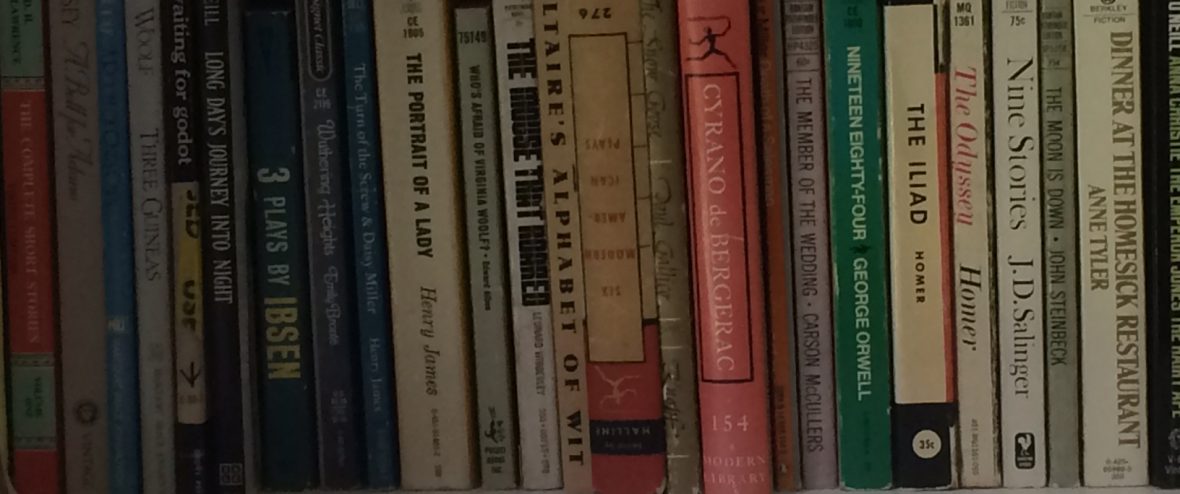
My bookshelves, we have more than 7 in our home, are full of books: waiting to be read and waiting to be re-read. While I do believe in sharing books, there are some that I can never bear to part with. Trying to explain that these pages are a reflection of who I am to non-readers can produce many funny looks. Especially if you live with someone who believes that print is dead.
Sacrilege I say!
For those with small children, I understand how overrun the house can get with books – it’s so easy to get just a few more. The key is that you need to “cull” those books wisely. I am a firm believer in the “PILED” method:
Preserve the books that mean most to you. They can be books that were given to you by a special person, or have been passed to you. The meaning in the book is associated with the physical book itself.
These are the books that have touched you and become part of who you are. The characters, the place, the experiences have all helped shape you and how you approach the world.
These are the first additions, investment books.
These are the books that you want people to see on your bookcase. These project the image of who you want to be known as.
Identify books you liked, and are ok to let go. These are the books that I trade with my family and friends. If I liked it enough to share, you can know that I enjoyed it, but didn’t LOVE it enough to keep it. It is always a good rule of thumb to understand when you pass these out, odds are you will never see them again. If that works for you, by all means, share.
Love those books that you will want to pull out again. These are books that you love and want to share with your family, but maybe not now. For example, Sandra Boynton books are some of the best children’s literature, up through the toddler years. The need, however, to read this nightly (or constantly) to a budding high schooler is not the same. It goes the other way, also. My toddler didn’t need to have my paperback copy of Frank Herbert’s Dune, which I acquired in 7th grade, on her bookcase at 18 months. Both sets have been stored in plastic boxes, and are circulated at the appropriate age. The favorites that we have outgrown have been saved for my grandchildren, may they please not come anytime soon.
Eject those books you hated. These are the books that you hated the characters, the plot, the pacing, the language, any or all of the above. These tend to be the books I gift to libraries. My name will not be used to tacitly endorse a book if it is coming from my house. There has been a RARE occasion when I just couldn’t handle it anymore, and it just had to be thrown out. I have only done this once in my life so far.
Damaged books should be given a good retirement – these are the books whose conditions render them unreadable. Either through being too well loved (my book Dune has its cover just come off) or ruined (fell in the tub when reading), these are not to be shared with others. It is up to you to decide if this title was important enough to either mend the book or re-purchase. Either way, once the decision is made, the old books should be thrown away to make more room for new ones.
I do this exercise in earnest each summer, when the kids are away at camp and I can focus. On a smaller scale, I do this as I determine what bookshelf a book will be placed. The ones in the family room, the ones in the “library” space we created upstairs near the bedrooms, or the one by my bed. And these always end up in a different place when I am done. In my home, the written word walks among the family.
 The Source 4 Books