books, literature, reading

When Giants Fall – Re-examining a favorite author

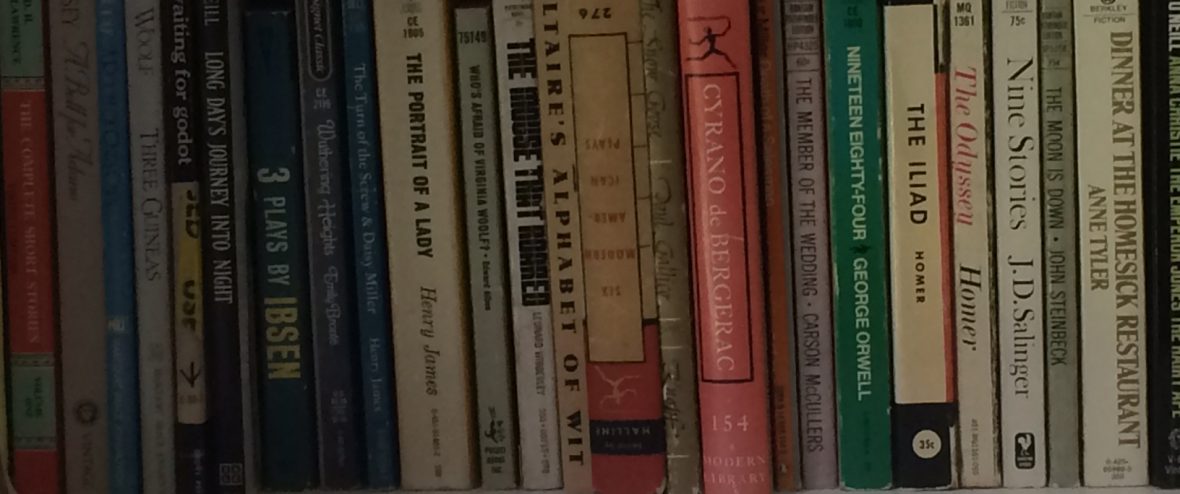
Since I read the Nick Adams stories, way back in high school, I have been a fan of Hemingway’s writing. I do admit that I felt a connection, since Horton’s Bay is somewhere I used to walk to on rainy days from my camp on Lake Charlevoix – I had been told that the camp’s property was next to that of Hemingway’s. In college I discovered In Our Times, The Sun Also Rises, and A Farewell to Arms.  He became my favorite writer, and I discovered my father’s favorite too.  I reveled in the crisp, clear sentences, the Code, and the adventure.  Then “people” started questioning why I would like the writing of a sexist man, especially since I am a staunch feminist?  The answer, I found, was as complicated as the author.

In my college years, and many before and after, I clung to the Code that Hemingway had laid out for a Real Man. This code, in my view, is that a person must be strong, embrace life wholly, be open to all possibilities, and always be true to themselves. That meant savoring each bite, drinking the last drop, and being with the person you like right now.  The crazy thing I saw missing from my critic’s view was that in The Sun Also Rises, Brett lived this code perfectly. She did as she pleased regardless of convention. This is why I had loved this book better than the critic’s favorite For Whom the Bell Tolls.  Maria’s passiveness and awakening only with Robert near her seemed simpering to me.

Then I was awakened myself.  I read The Paris Wife, a fictional account of Hemingway’s first marriage. The references to Sherwood Anderson, and others whom were cast off later by “Papa” made me curious.  I took to my father’s bookshelf and snagged Winesberg, Ohio.  Sure enough, the loosely connected stories were crisp and clear, with a code of their own.  Written well before In Our Time.  And I concluded that each of Hemingway’s best works were written when starting a new relationship with a woman that lived his hero’s code better than he did.

Yesterday, when I was reporting my completed reading to my goodreads.com challenge group, I saw that someone was reading Winesberg, Ohio.  After I mentioned that it would make her question Hemingway’s genius, someone shared with me the link to Ellen N. La Motte’s The Backwash of War.  It seems that the model of writing Hemingway laid claim to developing was actually from both Anderson and La Motte.  La Motte’s book has been made available from the Guttenberg Project, and is accessible free of charge from libraries and amazon.  I have just downloaded this, and I am now entering into an uncomfortable place where I need to rethink my reactions to the writing of Hemingway even more deeply. Even if uncomfortable, I will put myself into action (code requirement), be true to myself (code requirement) and decide what I must without looking back (code requirement.)

I will let you know what happens…..
book-review, books, Indian Culture, literature, reading

quest for justice in books and movies

As everyone gets ready to either watch or avoid the Academy Awards tonight, the number of articles being posted about them is exploding. I read one today on Yahoo.com about how Driving Miss Daisy won the award in 1989, but Spike Lee’s Do The Right Thing was not even nominated. The article went on to detail how race relations in the movies has always been employment based.  The black person is hired as a maid or driver, the friendship is made, and the employer’s racism is lessened. This concept was an important one for me, as I had just finished reading The Space Between Us by Thrity Umrigar.

Set in India, where classism is real and continuing, this is a story of the bonds of friendship that are forged between employee and employer. Sera may be well off, with a beautiful, pregnant daughter and son-in-law living with her after her husband passed away three years earlier, but there is darkness within her. Her husband is survived by a mother, incapacitated by a stroke, who had dominated Sera’s adult life, intent on extracting pain. This trait was passed to her son, who’s need to dominate Sera included the use of his fists.

Bhima, an uneducated but hard working woman, had been courted by Gopol and lived a happy life, until an industrial accident robbed them of 3 fingers, worker’s compensation, and dignity. As Gopol’s slide to despair and pain makes him turn to drink, the joy and caring goes out of the family.

The story, as it unwinds, begins with Bhima’s shame as she sees her 17 year old granddaughter Maya is pregnant and unmarried. Throughout this book, Bhima is on a quest for find justice. What we find, however, is that even with an education, women are at the mercy of men in this society. We also find that women can be even crueler when asked to take sides.

Bhima has given her life and energy to Sera and her family, yet is not allowed to sit on the furniture or use the dishes. While Sera has helped Bhima when Maya came to her, taking an interest in Maya’s education, when faced with realities of Bhima’s life, such as where she lives, Sera remains apart. It is in the end, when real evil is revealed, that the façade is pulled down.

In order to not spoil the story, I will leave it at this: in India the voices of women are marginalized, and the voices of poor women are silenced. In the larger world, this story is yet another tale that in a simple relationship where one holds the power, you need to understand this and not give up too much of yourself. Unless you are fully treated as equal, in the book by being allowed to sit on the chairs to drink from the glasses, in the movie by being allowed to come in to sit next to Miss Daisy as they hear MLK, Jr. there will always remain a barrier to equality. Even if there is deep companionship.  This struggle continues today, not just in India, but everywhere that people are not equal. Economic, spiritual, racial, and gender identifications are all ways in which the world has been divided, and remains so. Those in power, as in the book, will do everything to keep their power, regardless of the cost to others.

book-review, books, literature, reading

death with a small “d”

I have been struggling to complete a book, Death with Interruptions by Jose Santiago, that had sounded amazing to me. The description on the dust cover was compelling me to read this book. Yet, whenever I picked up the book, I dreaded moving forward. The story plodded along, the structure was where basic punctuation was not included. Paragraphs were pages long. Dialogue was not distinguished between people. The book lulls you into a state everything is expected, yet nothing is.  It is in this manner that the book discusses how death (with a small d) decides not to work after the New Year begins.

At first, everyone is surprised, happy even, to have beaten death at her own game. They celebrate until they realize the consequences. First the funeral directors, then hospitals and assisted living facilities, Insurance companies and even the church, all struggle to find meaning for themselves in this strange world. Families are left watching those they love suffer indefinitely. They can bear it no longer, and neither can those that suffer. A way to put the balance of life back in order is found. Profiteers abound to take over and the money cycle, just like the life cycle, begins again.  As the country adjusts to a new “normal” death again steps in. A letter, on violet stationary, is received by a minister of government, and the contents are announced on television. Every person going forward will receive a letter one week in advance to allow them to settle affairs. This continues until a letter is returned, not once but twice to death.

As she explores the reasons why this would happen, as never before had death’s call been challenged in such a way, she begins to follow the cellist the card was meant for. She takes human form and presents herself to him. In the end, she stays in his embrace.

The metaphor this provides is overwhelming. The more we change the order of life, the expectations of life, the more the world works to change it back. Yet, at its core, this is a story of a need for connected-ness. How to connect a family instead of tearing it apart with death. How to allow for closure before dying. How to embrace life before letting go.

So glad I finished this. It was just hard to do. Just like life.

skull-reaper-linocut-illustration

book-review, books, literature, reading

Off to a Slow Start

The polar vortex may only be headed my way right now, but my brain appears to be frozen. While I may seem to be off to a good start of my new reading goals, I am not spending the time doing the actual reading lately. I have all these books checked out of the library, and I have picked them up and opened them, but for some reason I don’t understand, I am struggling to dive in.

My current theory is that the new ice age that seems to be starting is what is paralyzing me.

Not really, but maybe?

Sometimes, even if you are a big reader, you just need some time to be you. I notice that when I dive into a book, just like the water, I become immersed within the people and place. I put the book down reluctantly. The feelings and sensations that are tied to the book come with me – and not everyone around me understands because they had not been on that journey with me only 2 minutes ago, even if I was sitting next to them.

It is in this frame of mind that I listened to Autumn by Ali Smith. This story is a combination of memories and dreams of the main characters. Childhood for Elisabeth was greatly influenced by her neighbor, Daniel. She spent many hours with him as an “unpaid babysitter” after moving in when she was 10. He helps her see the world through new eyes. Each time he greeted her, he asked what she had been reading lately. He also played a game of describing art to her with words. She went on to study art at University and ended up writing her dissertation on the artist’s work that Daniel had described to her as a child. Throughout the story, Elisabeth is sitting by the bed as Daniel is unconscious near the end of his life. As her mother enjoys a newfound life, and Elisabeth is asked to face what her next step is, the concept of what is love is explored – between friends, across ages, regardless of gender. How you approach your life at each stage is important. Knowing what book you are reading – even if you are just thinking about it, opens all sort of new worlds to you. If you only let it.

architecture buildings business city
Photo by Aleksandar Pasaric on Pexels.com
books, humor, reading

My Christmas morning

Twas the morning of Christmas, and all through the house

Not at creature was stirring, I hope there’s no mouse

I woke with a start, I started to panic

Did I do this or that, or did I just jam it?

So I crept down the stairs, quite as can be

To do more puzzles, a quiz, but nothing before coffee

The puppy remains upstairs in her bed,

With visions of car keys dancing in my girl’s head

The boy is out cold, with a clicker in hand

As he tries to win best fortnighter in the land

We unplugged last night to play Monopoly

When hubby and I ended our spending spree

All is peaceful for now, with everyone out

So soon they will wake and begin to shout

Today is the day when nothing is open

You know that means they need something this moment

With a mug in one hand, and a wish in my heart

That I remembered my glasses so I could read the next part

So I move to the keyboard, enlarging the font,

Wondering what next they will want

I write down my saga, however so sad

That I cant read without glasses – and that makes me mad

I can’t go back up and wake up my hubby

Or the dog will start barking and then in a hurry

They all will be up, my peace will be gone

The chores will begin and I’ll be forlorn

For these hours I cherish – you’ll find me if you look

Curled up on the couch, reading a new favorite book.

Merry Holidays to all!

book-review, Indigenous American, literature, reading

Stormy weather, here and in books

It was during this dark week that I finished the book Solar Storm by Linda Hogan. I have needed some time and space to process the horrifying and scary things that have occurred in the last week, as well as to process the complex story that Ms Hogan presents. As in life, this fiction has the roots of the hurt come from centuries of hate, mistrust and misunderstanding. As in fiction, hopefully life will follow; understanding, acceptance and change come next.

This is a multifaceted tale, focusing on generations of family and conflict, centered on the fictitious tribe, now known as The Fat Eaters, but truly known as The Beautiful People.  The tale begins as Angela Jensen, a 17 year old child in the foster care system, returns to stay with relatives she just discovered searching her social services file. It is here she comes to find herself, answers to the questions around the scars that mark her face, and to learn more of whom she comes from. While there she comes to know her family, her history, her gifts, and her strengths. She comes to accept herself, and her ability to adapt to the world that has changed around her, while remaining true to herself.

This book takes time to read and time to process. As the world changes slowly, the tale unfolds, one step backwards in time, then one forward. Just as the river runs on its own pace, so does the story. Similar in voice and pacing to Louise Erdrich, this seems to be a pace that is native to these tribes. Nothing is told outright, all is hinted at. You learn by listening with your heart, and seeing with new eyes.  And when the earth is to be harmed by the building of a dam, change was forced upon them. Outside intervention changes the course of the water, and impacts plants, animals and people in ways never expected.

The dam, while a fictional tale (as noted in the preface from the author) is a story that is based in truth.  In the early 1970s the Hydro-Quebec began development of a dam at James Bay on Cree and Inuit lands without permission. The hunting and fishing grounds that these tribes relied on were flooded, which resulted in mercury poisoning, entering the food chain and directly impacted these tribes.  The forced modernization that was described in the book also happened at this time. This arrogance of the company, and it’s devastating and irreversible impact on the ecosystems and the people who live on it, is shocking in its breadth and destructive power.

As the tribes band together to demand to be heard, we all need to listen. If we would only listen to the water and the earth, maybe we could all find similarities in what we learn instead of differences.  And maybe we can learn to live together in the harmony of the earth and water.

time lapse photo of stars on night
Photo by Jakub Novacek on Pexels.com
books, reading

Clinging to Authors

When you discover a book that is well written, engaging and thought provoking, you tend to take note of the author. As with many, I read Kristin Hannah’s The Nightingale and was transported by her language and compelled to finish by her plot development.   I read Winter Garden next, and while not as page turning, just as compelling a story. I remember feeling the cold as she spoke of the garden.  Thus, when I picked up Summer Island, I was expecting the same level of engagement and complexity. This was definitely an early book of Ms. Hannah’s. The story’s central character was self-centered, egotistical and bitter person.  Under the guise of selflessness, she agrees to help her mother, who abandoned her when in high school.  In the process of gathering dirt on her mother for an expose, Ruby re-discovers who she is as she reconnects to her past. Forced to see the world differently from a teen-aged view for the first time, she is faced with the facts that life is way more complicated than she wanted to believe. The ease with how the information is provided, and the acceptance that it is given, is in the span of hours, not even days. And the re-connection of Ruby to her high school sweetheart is again too much to fast. Forgiveness of herself had been withheld for 11 years, but was found in his eyes?  When I read any more of Ms. Hannah’s books, I will stay with more recent ones, where her storytelling has matured and grown.

Another author I found was Geraldine Brooks.  A Year of Wonder, a surprisingly non-morbid story of the plague, was a book I handed back to my mother when she handed it to me, thinking this was a title from her book group that only read terrible, horrible, emotionally scarring stories. She handed it back and said to read it.  She was right.  The story of humans connecting to each other, and themselves, in order to survive, or at least not harm others, was inspiring. The place where this ends (no spoilers here) is the most uplifting and hopeful.  I wanted more of Ms Brook’s work.

I found People of the Book. I was again captivated.  The story of returning to your history while striking on your own to excavate the past in the pages that are left are fascinating to me. The Haggadah, as story of a history that you are commanded not to forget, leading to the finding of so many other histories that tie us together, was the perfect vehicle for this exodus from ourselves.

Then I started to read another by Ms. Brook – March.  While I appreciate her willingness to explore new ideas, I could not have my own vision of Marme (from Little Women) be so radically changed.  That book didn’t get finished, and I am currently taking a break from Ms. Brooks’ books.

Finding a good author that can take on different stories, themes and eras can be difficult, but there are many out there.  Once you find one, keep the name close when you need a new read.  They usually don’t disappoint.

book lot
Photo by Abene Sebei on Pexels.com


book-review, books, literature, mystery, reading

What a Klutz!!

person seating on bench while holding knees
Photo by rawpixel.com on Pexels.com

This has been a week unlike any other. Let’s just say when you are in the ER thinking you broke your knee and get a call that your father is in the hospital with a broken knee, things seem a bit weird in the world.

I am comforted to know that my life is not stranger than fiction. Especially since I fell soon after I finished a dark and disturbing book, Behind Closed Doors. I don’t even have it a fraction of what Grace has going in this book. While not necessarily to best writing ever, it keeps coming back to me at different times as I sort through the emotions it evokes. In the same vein as Gone Girl and Girl on a Train, the story examines the evil that exists in world, just behind the curtains. If I say anymore, I am afraid I will give the whole thing away.

As a counterpoint to this, being the person who has spent way too much time in ERs waiting for xrays, I took a book with me. First one I grabbed, thank goodness, was a light read that I was able to put down and pick up often without getting too lost. The Forever Summer fit that bill perfectly. While slightly far flung, this is a Hallmark movie waiting to be made. And sometimes, you just need that.

I followed this up with The Most Beautiful Book in the World: Eight Novellas. Each story is beautifully written, and points to the most beautiful thing in the world – love in all its various forms. The best way to enjoy this is to read each story on its own, and savouir the emotions it invokes before moving to the next.

And now I feel restored in mind, if not body. While my knee is no longer the size of a watermelon, it is the color of eggplant. As I work through this, I will keep reminding myself of the lessons in the last 2 books I mentioned – there is good when you look for it.

books, read around the world, reading

Bookpacking the World

I have been thinking a lot about travelling lately.  It’s not something I do that often anymore. At one point in my life I think I was on a plane at least once a month.  Now that the kids are home from camp, all they want to do is go away.  And they have plenty of ideas of where to go (and no concept of what it costs.)  Of course, I translate this to reading – that’s what I do.  I started to think about where I have read in relation to where I have been.

Thus far, I have identified that I have been to 10 countries, 18 states, and 30 cities (that I count as “visited”) but I will probably remember more.  After doing a fast review of my completed titles, I seem to be centered on fiction located in Asia, Middle East, Europe and North America.

Books set in Asia tend to be focused on China or India.  These cultures have always fascinated me.  The deep history, and the struggles between the sexes and classes are an endless source for tales of strength and redemption.  Recent favorites from here include Lisa See’s The Tea Girl of Hummingbird Lane, Camron Wright’s The Rent Collector, and Nadia Hashimi’s The Pearl That Broke Its Shell. These stories touch upon the struggles of being women in cultures that do not value them, as well as the difference between the “haves” and “have nots” in those societies. They do not, however, leave you feeling downtrodden, but with hope for a better future.

While the battles between the sexes are not as pronounced in Europe, the number of stories that have captivated me remains a big draw.  With the focus on the royal family, with births, weddings, retirements and more, I have been reading some fun fictionalizations about the Queen.  Mrs Queen Takes the Train and The Uncommon Reader are perfect if you want to see the Queen in a very human light.  For a wonderful fictional account of the history of England, there are few (if any) that could challenge Ken Follett’s Kingsbridge Trilogy (Pillars of the Earth, World Without End, and A Column of Fire), or his more contemporary Centuries Trilogy  (Fall of Giants, Winter of the World, and Edge of Eternity).  Zadie Smith’s On Beauty takes on the ever present challenges of race differences, JoJo Moyes takes on love and rights, and the plentiful mysteries set there make it easy to find a book located there.

For books set in the Middle East, I have focused on Afghanistan and Israel.  The beautiful yet sad reality that is brought to life by Khaled Hosseini is made more poignant with each book he writes.  The Kite Runner and And The Mountains Echoed, while amazing, are actually not my favorite. A Thousand Splendid Suns continues to resonate with me, years after I finished it.   And as the wars have scarred Afghanistan, reading modern Israeli writers show that the years of conflict have taken a toll on the psyche of the Israeli people. Bethany Ball illustrates this well in What to Do About The Solomons, as does Edeet Ravel in One Thousand Lovers and Look for Me.  Capping this is the memoir written by Laura Blumfeld Revenge: A Story of Hope, that illustrates how complicated the hatred between people can be.

And while I have not focused a large amount on Africa and South America, I have read books based there, also.  Favorites in Africa include Americanah, Things Fall Apart, and Poisonwood Bible. Beautifully written, complex emotions and cultural structures are explored and explained within the pages of these books.  In Latin America, I have just finished Ten Women, and will continue to explore titles in this region to continue to expand my cultural horizons.

I will continue to seek out books centered in other cultures, because I live in a world that keeps shrinking.  We need to know as much about other people as possible, because we keep bumping into everyone on the tiny planet of ours.

ball shaped blur close up focus
Photo by Porapak Apichodilok on Pexels.com
books, reading

To book group or not…..

What is a book group?  Is it a place where people come carrying the book reverently to make sage pronouncements on someone else’s story? Dissect it with the skill of a surgeon, laying the structure and content out for all to examine in a slightly different way.  Or is it a group of people who come with bottles of wine, heaps of food, and, if remembered at all, a well-worn book?  Is it none of the above? Or all of the above?  For me, the answer is all of the above.  Each grouping of people bring different experiences, expectations and egos to the room.  The key is knowing your audience, and yourself.

When I was young, I discovered that I loved sharing my ideas about books I had read with others.  Part of this love, however, was that I was showing off my ability to see the depth of the books, parse the content and dissect the structure. I joined a group that met at a bar (The Colorado Library if you can believe – on the East Coast!!) and read The Bend in the River, The Remains of the Day and Palace Walk.  We were cosmopolitan and globally minded and our reading reflected this view of ourselves.

I then began leading a book group for a volunteer organization to help a community center in the city build a library for their neighborhood.  How perfect – mixing my love of learning with a group of people that were working to make life better for others.  We chose provocative titles, biographies, memoirs and novels, opening me up to new writers.  A Long Walk To Freedom by Nelson Mandela, Caucasia by Danzy Senna, and The color of water by James McBride.  I had grown to expand my reading and what I defined as my community.

After a few years, that group disbanded (the library opened), and I took a break to have kids and read Sandra Boynton, E.B. White and JK Rowling.  Once I finished the Harry Potter series aloud, I was ready again for a book group.  I began leading a group of women that focused on Jewish topics – past, present, and future.  I approached this as I did the last one, but it never fully realized that scholarly tone I had thought was needed, because I had grown to realize it was not needed to convey my messages.  Each discussion began about the book, and evolved to other things, like politics.  I was actually fascinated to learn that a nuclear scientist in the group thought the Iran Nuclear Deal was a good one, and cited scientific facts for why.  And I am so very glad that I started this group with a bottle of wine, macarons, and an assortment of petit fours to match The Paris Architect by Charles Balfoure.  That caught on, and we had a ball.

Fast forward a few year, and at a social event I became re-acquainted with someone who was involved with the Goodreads community.  I joined up, and have been having fun with that, too.  I am now invited to a real life group that will be reading a heavier book, The Heart’s Invisible Furies by John Boyne, and I am excited to meet and talk to smart people.

And one night I was on my friend’s porch with a group of friend.  I looked around and I saw a group of incredible women that were all pursuing life with passion and wanted to make connections with others.  That night I decided that I would launch my own group – which still needs to be named – where we would pick deliberately lighter books and use the time together to “discuss the book” – heavy on the “” -and make our own community.  And so, this past week I gathered friends from different places in my life, opened a bottle of wine, put out cupcakes, and let the conversation flow. And while we didn’t do the book any justice with an examination, we had a great time.  And agreed that the next meeting will be at an ice cream parlor.

So when you are invited to a book group, don’t always feel that you need to have read a book completely and are ready to analyze it from stem to stern.  Sometimes it’s okay to just use that time to be together.  And just like choosing who you play golf with – make sure you have the right group to make sure it meets your needs.  Because sometimes, it’s just good to pick up the ball and walk to the next hole while enjoying your friends.

adult celebration cheers congratulations
Photo by Pixabay on Pexels.com