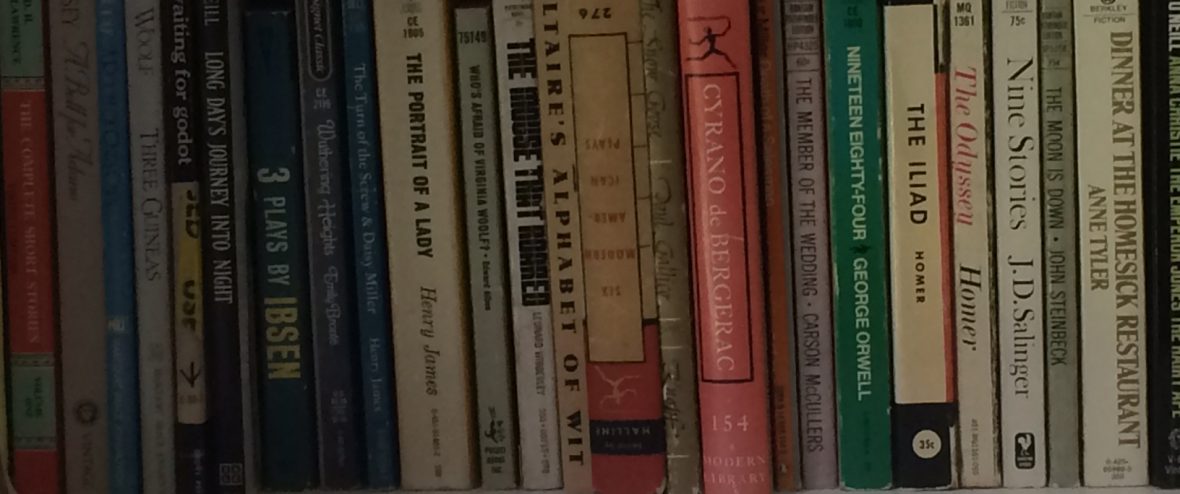
Choosing a book, I went to my bookshelf and found Proof of Heaven by Eben Alexander. After that was finished I found A Gift from the Sea by Anne Morrow Lindberg. Then my colleague Nigel suggested I read The Happy Prince by Oscar Wilde. Each of the books, a scientific search for understanding a near death experience, a reflection on life and its every stage, and a tale of giving of yourself to heal others all pointed me on a path away from sadness, and toward a purpose. Then, as if by magic, the library’s electronic version of Emily St John Mandel’s The Glass Hotel was available.
If you don’t know by now, Ms. St John Mandel’s Station Eleven has been on many “To Read” lists because it was a novel that predicted a pandemic like the flu that decimated the economies of the world and killed millions. It was a brilliant story, well written and so believable that it was eerie when COVID-19 showed up. I was eager to read her new novel. The story is written over a number of years, by a number of characters. The story weaves them in and out of each other’s lives. At the core is Vincent, a woman from Vancouver who lost her mother to a canoeing accident when she was about 12. Her half brother, Paul, comes into her life after a stint in rehab for drugs, running from the law because he shared some bad drugs with someone who died from them. Through back and forth stories we next see them at an exclusive Hotel Caiette on an island in British Columbia. The place is owned by Jonathan Alkaitis, who works in finance and owns the hotel. One night someone writes in acid ink “Why don’t you swallow broken glass” on the window of the hotel, shaking a guest, Leon Prevant, to his core. As time continues, we find that Paul, who worked at the hotel as a cleaner, was accused of the graffiti and left the next morning, and Vincent, his sister was working as a bartender that night. That night was when Jonathan gave her his business card with money as his tip.
As the story unwinds, there are small and large choices that are made by each of the players. Knowingly or not, or as one person states – knowing and not knowing together – each is faced with a question. How easy is it for you to cross the line? Some choose to stand on the morals they claim to have, while others are surprised when they cross them in hind-sight. It is this struggle between our actions and out beliefs that are the moral of the story. That, and the interconnectedness of each person to another. Throughout the changes and years, each remains connected bringing into question the idea of coincidence – is it real or is there a cosmic plan?
In the end, it is those with self-knowledge that are aware of the impact others have on them and the price to be paid for not crossing the line.
By the way – I don’t believe that it was a coincidence that these books came to me in that order.

 The Source 4 Books