books, reading

Thankfulness, over San Luis Rey

In the United States, this was a week to be Thankful.  With so much going on in the world today, it is good that we stop and look to see where we have come from.

This is the case when a Brother Juniper, a Franciscan monk, witnesses The Bridge of San Luis Rey collapse in 1714, killing 5 people but saving himself from crossing at that exact moment. Believing his escape was based upon Divine Intervention of God, Brother Juniper strives to capture the fullness of each person’s lives that were lost to prove that he was saved by God. In doing this, he examines the relationship and choices of these individuals, one at a time.  The first to be examined is Doña María, the Marquesa de Montemayor. An old woman, described as ugly, is estranged and distant from her daughter, Clara, in Spain. Letters were the only way these two women could communicate to each other, because of the distance in spirit and in proximity.  Doña Maria takes on a companion, Pepita, who is not happy with her new role. She writes to the Abbess, from the convent she was at when chosen as a companion, of how miserable she is. Dona Maria finds this, and realizes that Pepita is brave in a way she is not, and the letters to Clara become more polished, so much so that they are studied in schools centuries later.

Estaban and Manuel, twins at the same convent that Pepita was at, also had a close relationship with the Abbess. She helped raise them, teaching them to be scribes, which led Manuel to meet and fall in love with Camila Perichole. Manuel, however, is cut on his leg, and while Estaban is following directions to clean it hourly, the pain makes Manuel curse his brother. After he dies from the infection, when asked which he was, he answered Manuel. The guilt and loss make him do crazy things, such as trying to kill himself. While he was not successful, he was on his way to buy a present for the Abbess when the bridge collapsed.

Lastly, Uncle Pio and Jamie, the confidant and son respectively of Camila Perichole, come down from the place she has hidden herself away after being scared by smallpox. Uncle Pio had hoped to bring the boy back to the world and prepare him for a future away from his mother.

As Brother Juniper examines each, ultimately making a “scorecard” for the souls that were lost.  He comes to no conclusion, but faithfully put his account to paper. It is found to be heresy, and both the book and the Franciscan are burned.

After the funerals for those that had fallen, Camila Perichole seeks out the Abbess to see how she can live without Uncle Pio and Jamie. She becomes a helper for the Abbess as she begins to let go of her grand hopes for continuity. Clara also returns and works with the Abbess.  The novel ends with the Abbess’s observation: “There is a land of the living and a land of the dead and the bridge is love, the only survival, the only meaning.”

So on this thanksgiving weekend, the only meaning that remains is Love.

books, reading

The true self in life and in books

I spent this last week traveling for work, and I have not been away from the family that long ever. Happily, I returned to a standing home, with three humans happy to see me, and one dog that couldn’t lick me enough. I didn’t even see the dirty dishes and laundry that was waiting for me…..all week.  It is nice to be loved.

When I travel for work, there is a great opportunity for me to get some good reading in with little interruption, especially on a plane or in the hotel at night. This trip, while a long one, did not provide me with as much reading time as I expected, but it did provide my colleagues with much merriment at my passion for books.

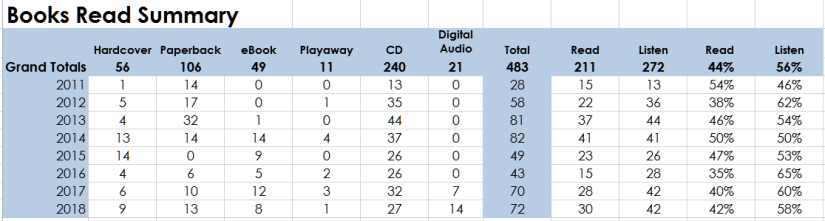
See, my work team is located around the globe, and we were mostly together this week in Toronto (thank you to those that held down the fort on the home front). As we gathered in the office, we were able to chat casually about different things more easily than on the technology we have. A few of us somehow got on the topic of getting kids started right. I related my story of how we made our kids read 100 books to earn a WII, and the conversation kept going from there. At some point, I even shared a view of the excel workbook I maintain to track my reading. We laughed and went back to our work.

That evening, we were all out at a team dinner, and sitting at a long table. The people at my end of the table included some executives that oversee the global team, new employees and internal partners. We were a diverse group. Somehow we started talking about books – I did not start this  – as my colleagues begin to tease me. Over the next hour or so they are informed that I created a dashboard of my reading history (only back to 2011) like I do for work, explain how I choose the books, where I get them, and what format I prefer and more. Aside from feeling like the largest geek there (and I will fondly state that this was not an easy title because the whole team gave me a run for my money), we had an amazing time together. The best part was getting more recommendations for expanding my reading.

With suggestions for mysteries (thank you Fifi), fantasy (thank you Allison), logic (thank you Karl) and more, my TBR list continues to expand. I am so thankful for the support of my colleagues and friends in sharing this journey with me. There are so many new things to read that I know I will never run out of suggestions, so keep them coming!

On the flight home I was able to finish the book I started on my flight there. When you were older by Catherine Ryan Hyde’s story of a man that missed being in his office at the World Trade Center on Sept 11 because he got a call that his mother died. Great book for the plane, right? The story begins in the days after, working its way back to that phone call, and then back to the aftermath. Russell’s older brother Ben needed to be looked after, as he was not able to do so himself. As the story unfolds, we are introduced to the post-traumatic stress of seeing your office collapse, watching someone jump from the towers, and knowing that only you and one other from your entire office are still alive.  Russell meets and falls in love with an Egyptian baker in his small mid-western town, and the cultures clash, while emotions run high for all. The Arabic bashing that occurs due to fear, as well as facing the reality of being responsible for his brother, brings back all kinds of stress for Russell. Ultimately, this is a story of how to come to terms with the reality of what you have gone through, and being true to yourself and your humanity. Well done, not overly morbid, but too swift and nicely packaged an ending for my taste.

Off to update my dashboard, and add to my TBR list!

dashboard

books, reading

From Riyadh to Memphis

As the world gets busy preparing for holidays, I got busy to move more books off my TBR list.  The library came through and delivered me a book to check off a country on my armchair travel list – Saudi Arabia.  Girls of Riyadh by Rajaa Alsanea, translated by Marilyn Booth was a hit in the region, and I was excited to read about life from a woman’s point of view. The book, relating the quest for love by 4 women of Saudi, is told by an unnamed person writing emails to an email group. The names of the friends were changed, but the reality of the “lives” was shared by this third person.  I admit I was expecting anything but what I got. This book was related as though the emails were sent in 2004-2005. The lives of these women, while striving for love and self worth, are complex and rich. While the society does impact who and how they can be, they all take different paths to finding themselves and their own voices. And even if you don’t like which path they took, you are faced with the undisputed fact that they did all choose their own paths.

While I was reading this story of choosing paths, I was also reading Before We Were Yours by Lisa Wingate.  In a different era, there was a horrible person that brokered babies, stealing them from poor parents and not providing safety or food properly, while doing the “good work” of finding homes for some children.  As the story is pieced together, the girls that are the focus are the “strong” ones – favorites of the fathers.  Both do their best to keep the family together, placing that above all else, until they are both faced with the fact that they need to put themselves first.  In doing so, they find a new peace.

In both cultures, across the span of time, the central characters don’t feel they have the ability to make a choice other than what their family wanted. And while the strong are the only ones left standing, the key to survival and happiness is always being true to who you are and who you want to be.

woman wearing hijab
Photo by Ambar Simpang on Pexels.com
book-review, Indigenous American, literature, reading

Stormy weather, here and in books

It was during this dark week that I finished the book Solar Storm by Linda Hogan. I have needed some time and space to process the horrifying and scary things that have occurred in the last week, as well as to process the complex story that Ms Hogan presents. As in life, this fiction has the roots of the hurt come from centuries of hate, mistrust and misunderstanding. As in fiction, hopefully life will follow; understanding, acceptance and change come next.

This is a multifaceted tale, focusing on generations of family and conflict, centered on the fictitious tribe, now known as The Fat Eaters, but truly known as The Beautiful People.  The tale begins as Angela Jensen, a 17 year old child in the foster care system, returns to stay with relatives she just discovered searching her social services file. It is here she comes to find herself, answers to the questions around the scars that mark her face, and to learn more of whom she comes from. While there she comes to know her family, her history, her gifts, and her strengths. She comes to accept herself, and her ability to adapt to the world that has changed around her, while remaining true to herself.

This book takes time to read and time to process. As the world changes slowly, the tale unfolds, one step backwards in time, then one forward. Just as the river runs on its own pace, so does the story. Similar in voice and pacing to Louise Erdrich, this seems to be a pace that is native to these tribes. Nothing is told outright, all is hinted at. You learn by listening with your heart, and seeing with new eyes.  And when the earth is to be harmed by the building of a dam, change was forced upon them. Outside intervention changes the course of the water, and impacts plants, animals and people in ways never expected.

The dam, while a fictional tale (as noted in the preface from the author) is a story that is based in truth.  In the early 1970s the Hydro-Quebec began development of a dam at James Bay on Cree and Inuit lands without permission. The hunting and fishing grounds that these tribes relied on were flooded, which resulted in mercury poisoning, entering the food chain and directly impacted these tribes.  The forced modernization that was described in the book also happened at this time. This arrogance of the company, and it’s devastating and irreversible impact on the ecosystems and the people who live on it, is shocking in its breadth and destructive power.

As the tribes band together to demand to be heard, we all need to listen. If we would only listen to the water and the earth, maybe we could all find similarities in what we learn instead of differences.  And maybe we can learn to live together in the harmony of the earth and water.

time lapse photo of stars on night
Photo by Jakub Novacek on Pexels.com
book-review, books, Family Drama, Historical Fiction, literature, reading

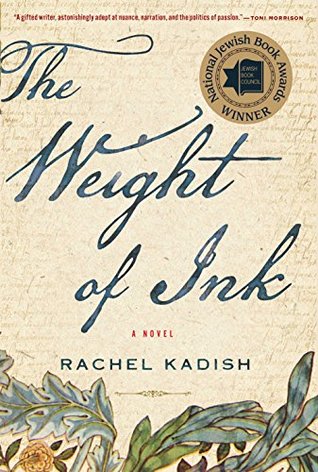
The Weight of Ink by Rachel Kadish

weightofink

This week I am excited to attend a new book group I was invited to.  The read, The Weight of Ink by Rachel Kadish, gives us much to talk about.  In advance of the group, I need to collect my thoughts on this complex book.

The Premise:

In the 21st century, a history professor, Helen Watt, is contacted by a former student to come examine some papers found within the walls of a centuries old home he and his wife are renovating. The professor, nearing forced retirement and struggling with Parkinson’s, sees immediately that these documents are historically important. She and her graduate student, Aaron, begin working on the documents and are faced with a rival academic with multiple graduate students being given access to the documents only a few weeks after she starts.

Intertwined within this is the story of Esther, a 17th century woman who came to England after losing her parents in a fire in Amsterdam. The Rabbi that has taken in her and her brother, having been their teacher when they were younger in Amsterdam. The Rabbi, blinded by an Inquisitor, comes to rely upon Esther as a scribe after her brother is murdered, because there was no one else. Esther, a gifted scholar in a time that does not allow for women to be one, struggles to learn more, question more, and she is considered not a “natural” woman in the standards of the day. The themes touched upon within the pages are many and nuanced.

Themes:

Sexism: First, there is the role of women in the 17th century. Esther Valasquez was provided an education with her brother in her father’s home, but was turned out of the lessons as she grew older. It was not seemly for a woman to do anything other than be a good wife.  Esther took it upon herself to listen in at the door as much as she could to continue her quest for knowledge. Much like her mother, and her grandmother, Esther’s passions placed her on a path that was not as society desired.

While not as specifically alluded to, the sexism continues in the 21st century, with Helen fighting with the men that control the money and department, as well as other male scholars that help others in the “network”. She was deliberately undermined by the head of the department, who led her to believe the papers were acquired by the university for her, but allowed for a better sourced man to come later, with more people, to put her in her academic place once again. The undertone here is that women are not supposed to be as learned as a man to this day.

Classism: Though shown more starkly to us in 17th century terms, the haves and the have nots are decidedly separated, in the streets, in the cities, and in theater. It is when these lines are crossed that problems arise. The same holds true, as noted above, about those with funding versus those without in the 21st century. It is also shown in those that own homes (having inherited from family, with treasures hidden in the walls) juxtaposed against those that rent small apartments for most of their lives.

Anti-semitism: The Amsterdam community, having been founded from survivors of the Portuguese Inquisition, was focused on ensuring their safety. They are unforgiving of anyone that questions the beliefs, simply because they are afraid that those thoughts would bring about annihilation of Judaism when the Inquisition had not succeeded. Thus, Spinoza was excommunicated.

The Nazi Camp survivors were equally concerned with their own survival. All around them continued to be dangers, including those whom would “romanticize” the world they were making without understanding the pain of which it was born. Thus the volunteers were dealt with harshly, in case they did not understand the need to do all for themselves to survive.

Expectations: The main characters, the Rabbi, Esther, Helen and Aaron all struggle with the expectations that others have placed on them and with what they have placed on themselves. The rabbi was to be a great man that would help rebuild the Jewish community in London after it became “safe” for Jews there. He knew he was not going to be able to do so – he was blinded by the eagerness to learn with Esther, so he turned a blind eye on her studying. It was not until later that Esther realizes that she has surpassed her teacher, but he had known for a longer time.  Esther struggled with expectations of being a dutiful woman, and an inquisitive scholar in a time you could not be both. Aaron struggles with a quest to be a scholar versus his parent’s expectations to be a rabbi, and Helen struggles with the expectations of love, order, and proper methods.

Names:

The Rabbi – a teacher

Esther – a biblical woman that took her place at her mother-in-law’s side after losing her husband. Where you go, I go. Your people will be my people.  Means Star in Hebrew.

Helen  – Means Light in Latin. In Greek mythology, Helen was the daughter of Zeus by Leda and the most beautiful woman in the world. The name was also a favorite of the William Shakespeare who used it two of his most well-known works, A Midsummer Night’s Dream and All’s Well That Ends Well. This was picked up by the fact that Aaron’s original dissertation was based upon Shakespeare’s Dark Lady having a Jewish background.

Aaron – In the Bible, Moses’ brother Aaron was Israel’s first high priest and is remembered for his staff which blossomed miraculously. Thus the reference to following in his father’s footsteps. Aaron is also a character in Shakespeare’s Titus Andronicus. Means Inspired in Hebrew.  This was what Aaron was missing most of the book – in the end, Helen inspired him, just as she inspired Paris in Troy, to greatness

There are many other themes and characters to explore in this book. At once intriguing and thought provoking, this is a story that will need years to be fully processed for me. The complex ideas brought forward are still being wrestled with by scholars world wide, as are the simpler ones, such as what is the meaning and reason for love.

Enjoy the book, I know I have.
books, reading

Clinging to Authors

When you discover a book that is well written, engaging and thought provoking, you tend to take note of the author. As with many, I read Kristin Hannah’s The Nightingale and was transported by her language and compelled to finish by her plot development.   I read Winter Garden next, and while not as page turning, just as compelling a story. I remember feeling the cold as she spoke of the garden.  Thus, when I picked up Summer Island, I was expecting the same level of engagement and complexity. This was definitely an early book of Ms. Hannah’s. The story’s central character was self-centered, egotistical and bitter person.  Under the guise of selflessness, she agrees to help her mother, who abandoned her when in high school.  In the process of gathering dirt on her mother for an expose, Ruby re-discovers who she is as she reconnects to her past. Forced to see the world differently from a teen-aged view for the first time, she is faced with the facts that life is way more complicated than she wanted to believe. The ease with how the information is provided, and the acceptance that it is given, is in the span of hours, not even days. And the re-connection of Ruby to her high school sweetheart is again too much to fast. Forgiveness of herself had been withheld for 11 years, but was found in his eyes?  When I read any more of Ms. Hannah’s books, I will stay with more recent ones, where her storytelling has matured and grown.

Another author I found was Geraldine Brooks.  A Year of Wonder, a surprisingly non-morbid story of the plague, was a book I handed back to my mother when she handed it to me, thinking this was a title from her book group that only read terrible, horrible, emotionally scarring stories. She handed it back and said to read it.  She was right.  The story of humans connecting to each other, and themselves, in order to survive, or at least not harm others, was inspiring. The place where this ends (no spoilers here) is the most uplifting and hopeful.  I wanted more of Ms Brook’s work.

I found People of the Book. I was again captivated.  The story of returning to your history while striking on your own to excavate the past in the pages that are left are fascinating to me. The Haggadah, as story of a history that you are commanded not to forget, leading to the finding of so many other histories that tie us together, was the perfect vehicle for this exodus from ourselves.

Then I started to read another by Ms. Brook – March.  While I appreciate her willingness to explore new ideas, I could not have my own vision of Marme (from Little Women) be so radically changed.  That book didn’t get finished, and I am currently taking a break from Ms. Brooks’ books.

Finding a good author that can take on different stories, themes and eras can be difficult, but there are many out there.  Once you find one, keep the name close when you need a new read.  They usually don’t disappoint.

book lot
Photo by Abene Sebei on Pexels.com


books, reading

Finding Oneself in Paris

eiffel tower during daytime
Photo by Pixabay on Pexels.com


When I am between books, typically as I wait for my next title to arrive at my library for me to read, I search the stacks for authors that are familiar to me.  That is how I stumbled upon The Little French Bistro by Nina George. Ms. George had captivated me in The Little Paris Bookshop, with the book seller matching books to help people solve life’s questions.  The Bistro, as the Bookshop, is full of older characters, wise in many ways, but foolish in others.  Marianne, a sixty year old German woman, tries to kill herself when on vacation with her husband of 41 years by jumping into the Seine after she wandered away from a tour with no one noticing. She is saved by street people and taken to a hospital. Here she sees a painting of the coast of Brittany and is compelled to go there. She begins her journey with nothing but what she had upon leaving the hospital. Along the way she is both helped by, and helps, nuns, chefs, fishermen, artists and more. As these people are drawn to her open and caring being, she is being introduced to herself in the same way.

She starts the journey with a wish for death, her life is dragging her so low. She has given up music, driving, work and more, one thing at a time, as she makes her way through her 41 years of marriage. She allows her world to be narrowed and defined by a husband that is absent in emotional and physical ways. She wishes she had children, but does not seem to have an explanation for not, other than saying her husband was unfaithful and didn’t give her pleasure.

As each day in Brittany begins, Marianne takes a walk to the water at the End of the World, what Brittany is known. It is from there that she finds pathways to new friends, like Pascal, where she is able to use her knowledge of having volunteered with seniors before.  As she meets each new person, and savors each new experience, she opens herself up to a bit more of who she wants to be. At her wedding, her father saw that the groom never asked her to dance, and asked if she was happy. This lost opportunity to express her desires and needs passed, and continued to pass, until she learned to start again in Brittany.

A lesson in knowing you have a responsibility to speak up for what you want, it also acknowledges how things can go wrong when you think you know the answers. As long as you are open with yourself, and those around you, happiness will be there for you.

books, reading

Data Science Book Selection

I seem to be slowing down on my reading. My average of 2 books a week is slowing to 1 book every week.  Still nothing to be upset about, but not what I was at. Life can get in the way of my reading, which is why I started to listen to books on CDs. They help fill the times between when I would be frustrated with not doing something productive, like commuting or waiting for soccer practice to end.

Some say that this is cheating, that I should not count them. I have started to track the mode of reading, and I am proud to say that I am about even with reading (ebooks included with paperback and hardback, in case there is any question) versus listening. And when I look back at the years I know when things are a bit off balance there were things going on that influenced this.

There are so many ways to capture information on what you have read. Location (see tab AROUND THE WORLD), Age (think Young Adult), Era (think Roaring 20s), or Themes (think dystopia) and more.  The hot industry of Data Science has either come about from our obsession with creating lists (Thanks David Letterman for the Top Ten), or actually led the charge for it.  A bit of the chicken or the egg dilemma.  Still new to the whole data tagging, I am muddling through it.  I used to be “cutting edge” of technology, but I have fallen so far behind!!!

Previously I had challenged myself to read around the world more – and I am actually searching for books that are from those cultures that are translated for me, and that is a bit harder than I expected. There is a challenge that is being run on http://www.goodreads.com Play Book Tag site in honor of a cherished member that just passed away. A widely admired woman, JoLene was a fan of historical fiction. The administrators suggested that we each read from an era that we have not read before in her honor this month. That sent me back to my lists of books to do another review, looking for a new “tag” when I never tagged before.

I seem to have done pretty well – thank you Ken Follett for covering so much time in the Kingsbridge Trilogy!   So, working backwards, I have identified one title for the following eras:

21st Century –      The Hate U Give by Angie Thomas

20th Century –     The Great Gatsby by F. Scott Fitzgerald

19th Century –     Snowflower & the Secret Fan by Lisa See

18th Century –     World Without End by Ken Follett

17th Century –     The Weight of Ink by Rachel Kadish

14th Century –     Pillars of the Earth by Ken Follett

1st Century –        The Dovekeeper by Alice Hoffman (approx. 70 BCE)

Biblical Times – The Red Tent by Anita Diamant

I see a gap between the first and 14th centuries, but I know I didn’t get too far in the Canterbury Tales or The Name of the Rose.  Not too hopeful for those.  I also see that I don’t have anything for pre-historic. So I have requested The Clan of the Cave Bear as my tribute read.

I am again looking at my library through a different lens.  Do I try to fill in from each decade of the 20th Century? Should I try to find more? Should I just defer to a new Best Books of the 21st Century (so far) list that just came out – and I think I only knew of a handful.  All I know is that as long as there is more than one book out there for me to read, someone will find a new way to capture and count it – and then it will make its way to my TBR list (To Be Read).

books, reading

The Great American Read

PBS has been sponsoring “the great American read” for months now. The fact that they are supporting reading in this manner is amazing. The number of celebrities that have joined this giant Public Service Announcement that reading is good makes me smile. Does RIF still exist? Reading IS fundamental!!!  And so, in the great American tradition, I had to see how I did against the list of books they determined as “Great.”

By the numbers:

First cut, I was proud to see I had read over 50% of them already – 53 to be exact.

From the total “I have not read yet” list, I have acknowledged to myself I will NEVER read 14 of them. Just because they are great does not mean I need to read them.  I have done my duty in school to reading those books that you “should” and I don’t need to do that anymore.  That leaves me with a total of 33 titles that I should consider adding on the “To Be Read” list (already at 104 titles before this exercise).

By the titles:

As I examine the list of books, I see many titles that I have loved, some I have hated, and some that make me shake my head. Starting with the last category – Fifty Shades of Grey?  A sub-genre of erotica, in the few passages I read, I found this to be poorly written, poorly edited, and not Great at all. If this is the bar to beat, then I don’t understand where people are. Just because it sold so many copies doesn’t mean it is a great read.  Flowers in the Attic, while completely captivating and enjoyable, wasn’t my idea of Great, also.  To place Pillars of the Earth in the same category of greatness with The Notebook seems incongruous to me.  While Nicholas Spark touched our souls with the gentle tale of love, the Follett book riveted me with the sheer scope and detail of not only the people, but also the architecture.  How many books have a sequel that took over ten years and created such excitement when it finally hit the shelves?

Then there are the books that I was told would be GREAT, but I didn’t agree. A Confederacy of Dunces I found incredibly annoying, and I truly didn’t care what happened to Oscar Wao in his brief life, wondrous or not.  I guess each person has their own taste.

What to vote for:

As I review the list of books left that I have read, I am torn.  How do I choose a favorite? These titles all touched me, helping me to become the person I am today.  So, in alphabetical order, so as not to influence your views on the titles, here are some of my impressions on the books I believe should get votes for the best book in America:

  • 1984 by George Orwell: the original dystopian novel for me.
  • A Prayer for Owen Meany by John Irving: knowing who you are and accepting your role in the world
  • Anne of Green Gables by L.M.Montgomery: Anne with an E still makes me want to go to Prince Edward Island to find my bosom friend
  • Catch-22 by Joseph Heller: A masterpiece of sarcasm and absurdity
  • Dune by Frank Herbert: My first science fiction EVER. The mark was set very high
  • The Grapes of Wrath by John Steinbeck: Still remember the feeling of dust in my mouth as I read this. Ending haunts me still.
  • The Great Gatsby by F. Scott Fitzgerald: the struggle of them and us continues today
  • The Hunt for Red October by Tom Clancy: Spy novel extraordinaire.
  • The Joy Luck Club by Amy Tan: Language transports you to China to live what moms do for their children and what the lessons they try to impart on their children are
  • The Pillars of the Earth by Ken Follett: the middle ages came to life before my eyes
  • The Sun Also Rises by Ernest Hemingway: my introduction to the Code – be true to yourself always. And while he is known as a chauvinist, Lady Brett was the first heroine I remember that lived this code openly too.

Feel free to share your Great American Title here – if it made the list of 100 or not.

books, reading

A Travelling American

Travel, whether for work or for pleasure, can be a chore. Away from your home, your family, your normal routines, you focus on where you are and how to fill the time. Especially if you are waiting in a crowded airport when your plane is delayed.  In this current trip, uncomfortably still on crutches, going through security I realized my ereader, just updated with four new titles, remained safely in the docking station in my home office. Travelling with only work equipment, I scramble to download something to read that will download to my personal phone. It is in this frame of mind that I started to read An American Marriage by Tayari Jones.

The title is a bit misleading – while this chronicles the story of a marriage, it is actually a study in the strengths and limits of love, in all different shapes and forms.  The story begins with Roy and Celestial. By mapping out the relationship by way of different perspectives, you see that these two have entered marriage with different expectations. They play at being married, sparring over everything, and not truly understanding the “communion” of the institution. Both come from homes based upon second chances, surrounded full of love and commitment. Then the scary reality of being a black man in the wrong place at the wrong time, the pair is forced to face the hardship of a forced but unjust separation.

As the years go by, life charges on. Trying to survive on the promise of dreams, finding strength within oneself to pursue them alone, and realizing the foundation of the marriage was not as strong as expected changes both. The stories told from both perspectives bring the realization that the base of the marriage was lacking, provoking guilt, grief and denial at different times.

These same revelations are shown when the stories turn to the parents. Big Roy and Olive were entirely devoted to each other. Olive had been through the passion and came through the fire alone with her son. When she met Roy, after making it clear it was a package deal, they made a commitment to each other. And the devotion continued to be shown each day until the last, when Big Roy made sure that Olive was buried by the one who loved her most, filling in the grave himself. Similarly, Celestial’s parents came together after they met when he was married to someone else. Another father devoted to the new family he built on a firm foundation – symbolized by the old hickory tree in the yard.

And then there is the love between a parent and a child. Big Roy fully embracing Little Roy; Andre embraced by Mr Henderson, Little Roy and the Biological, and even Dre and his father. Even if people leave, that does not mean they don’t care. Spoiler – finding out that Olive gives up the fight once she realizes there is someone taking care of her son was very different from the belief that Big Roy had once he hear Celestial told Olive the Biological was watching over Little Roy.

Stereotypes would be easy to fall back upon here, but the depth of these characters and the basic understanding of the underlying social injustice for the black community runs below the surface of the story. Paralleled in the river where Roy goes each day to contemplate, the river of injustice can be heard if you listen closely. The reality of it being there, always under the bridge to elsewhere, is the current running through each story. This is a most powerful image – the current remains, even if there is a bridge over it, you can’t always take it to the other side, just as The Hick is a metaphor for a marriage.

This book still surprises me as I process it. Very powerful, and beautifully written.