In this difficult year for us all, I have surprisingly been able to read. While certainly not at the same pace as I am used to, especially since it took me three months to read 20, five months for the next 20 – which included a number of books in the 90-150 page length – and then 10 in the past 3 months. Either way, I made it to my goal.
This year’s reading included a number of books, non-fiction, that captured my time. The Library Book and The Bad-Ass Librarians of Timbuktu stand out. Both are stories of how books formed the basis of the area they were made, and how the impact of the threats to them have continued throughout time. Destruction of books can kill a community. The numbers of people that step up and help in LA and Timbuktu that put themselves in real danger to save these are nothing short of inspiring.
Inspiration also came from Young Woman and the Sea as well as The Memo. Both Gertrude Ederle and Minda Harts are victims of the society they are brought into. As a girl in the early 1900s, not only was swimming not in fashion, but a woman’s ability to swim was questioned. Trudy not only broke all the women’s swim records but also the men’s. While she failed in her first attempt to cross the English Channel, it is widely documented that she believed she was poisoned by her coach to keep her from completing the feat. Minda, on the other hand, discusses the need for women of color to not only lean in, but to bring your own chair.
I read about people coming into their own understanding of the place they hold in their life, their family, society, and more. Some were laugh out loud, others brought tears, and more were in between.
From a fiction standpoint, as I look back on the titles, all seem to be searching for a place to feel fulfilled. People trying to connect, being brushed off, being hurt, just trying to survive. My favorites this year include:
The Art of Hearing Heartbeats: A lovely story about the strength of real love. This book was an amazing love story, while a bit unsettling about the legacy it left his daughter.
The Painted Drum: The history of Native Americans is something that has not been valued by the invaders. When a woman comes in to catalogue a home of a deceased man, she encounters items he stole from a tribe when he was their “representative”. Her journey to herself and her tribe, which was called to by the drum, was a lesson in the history of a people calling to its next generation, giving strength to carry on.
Where the Crawdads Sing: A compelling story, especially the isolation, that resonated due to the lock down. The ending was worthy of Chris Bohjalian.
The Bookwoman of Troublesome Creek: The concept of “colored” people in Kentucky is taken a step further when there is a group of “blue” people that are part of the community. A real thing, this was a genetic quirk that actually existed. The gradation of the color impacting the lives of people is amazing – there is always someone you can decide is lower than you.
The Queen’s Gambit: After hearing about the TV adaptation, I pick up the book. I have no idea how this book can be easily put into film, as the majority of the book is a metaphor of a game of chess, the game in question. The Queen’s gambit is a move to start a game, similar to the first step to life. As the story continues, each step in life becomes how Beth Harmon approaches the game. To her, life is chess.
Other titles that have left a lasting impression:
Say You’re One of Them by Uwem Akpen
Lilith’s Brood (Xenogenesis 1-3) by Octavia E. Butler
The Great Alone by Kristen Hanna
The One and Only by Emily Griffin
Elsewhere: A Memoir by Richard Russo
Erotic Stories for Punjabi Widows by Balli Kaur Jaswal
Finding Dorothy by Elizabeth Letts
The Dutch House by Anne Patchett
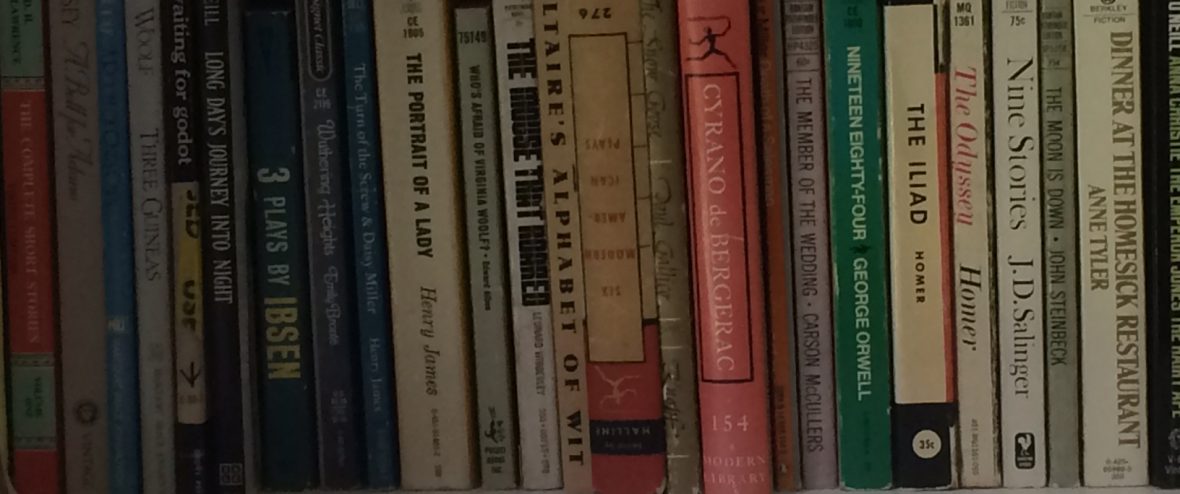
In the coming year, my focus will be to read books I own. The titles may be a bit older, but I feel the need to do my bookshelves and brain the favor of slowing down the pace.
 The Source 4 Books