book-review, books, literature, reading

death with a small “d”

I have been struggling to complete a book, Death with Interruptions by Jose Santiago, that had sounded amazing to me. The description on the dust cover was compelling me to read this book. Yet, whenever I picked up the book, I dreaded moving forward. The story plodded along, the structure was where basic punctuation was not included. Paragraphs were pages long. Dialogue was not distinguished between people. The book lulls you into a state everything is expected, yet nothing is.  It is in this manner that the book discusses how death (with a small d) decides not to work after the New Year begins.

At first, everyone is surprised, happy even, to have beaten death at her own game. They celebrate until they realize the consequences. First the funeral directors, then hospitals and assisted living facilities, Insurance companies and even the church, all struggle to find meaning for themselves in this strange world. Families are left watching those they love suffer indefinitely. They can bear it no longer, and neither can those that suffer. A way to put the balance of life back in order is found. Profiteers abound to take over and the money cycle, just like the life cycle, begins again.  As the country adjusts to a new “normal” death again steps in. A letter, on violet stationary, is received by a minister of government, and the contents are announced on television. Every person going forward will receive a letter one week in advance to allow them to settle affairs. This continues until a letter is returned, not once but twice to death.

As she explores the reasons why this would happen, as never before had death’s call been challenged in such a way, she begins to follow the cellist the card was meant for. She takes human form and presents herself to him. In the end, she stays in his embrace.

The metaphor this provides is overwhelming. The more we change the order of life, the expectations of life, the more the world works to change it back. Yet, at its core, this is a story of a need for connected-ness. How to connect a family instead of tearing it apart with death. How to allow for closure before dying. How to embrace life before letting go.

So glad I finished this. It was just hard to do. Just like life.

skull-reaper-linocut-illustration

book-review, books, Indigenous American, literature, reading

Refugee Problems in 1988 – the Kingsolver way

The first Barbara Kingsolver book I read was The Poisonwood Bible. It was soon after the release. Since then I have been reading as many of her books as I can. She is a storyteller extraordinaire.  As I was looking at my 50 States challenge, I realized I didn’t have a book for Arizona, and fell upon The Bean Trees.  One of her earlier books, this one focuses on a young woman that leaves the poverty of Kentucky to find her way in the world. She jumps in a car that is broken down, but moving, and heads west. As she goes through Oklahoma, she finds herself on Cherokee land. Here, she is faced with true need, and her fate is handed to her, literally.

As she continues her journey, she witnesses the worst that the world can be to others – especially children – and yet she remains surprised with each revelation. Her car finally gives out in Arizona, and she finds her way through the kindness of strangers. These people become her family, her home, and she comes to terms with the understanding that she was a refugee from Kentucky looking for a better life, just as refugees from other countries come to the US for another chance. Each has their past, but each also looks to the future with hope. The bean trees growing in Maddie’s back yard take root where they are, even though they came from so far away. Just like the people who tend them.

With the immigration issues still as difficult now as when the book was published, the story remains as relevant today as it did in 1988.  With this, and Letters from a Woman Homesteader, I can fill in Arizona and Wyoming on my 50 states list under the At Home Travel Log. And I will keep looking for more of Kingsolver’s books. I have never been disappointed.

aged aging background bark
Photo by Fancycrave.com on Pexels.com
book-review, books, literature, reading

Off to a Slow Start

The polar vortex may only be headed my way right now, but my brain appears to be frozen. While I may seem to be off to a good start of my new reading goals, I am not spending the time doing the actual reading lately. I have all these books checked out of the library, and I have picked them up and opened them, but for some reason I don’t understand, I am struggling to dive in.

My current theory is that the new ice age that seems to be starting is what is paralyzing me.

Not really, but maybe?

Sometimes, even if you are a big reader, you just need some time to be you. I notice that when I dive into a book, just like the water, I become immersed within the people and place. I put the book down reluctantly. The feelings and sensations that are tied to the book come with me – and not everyone around me understands because they had not been on that journey with me only 2 minutes ago, even if I was sitting next to them.

It is in this frame of mind that I listened to Autumn by Ali Smith. This story is a combination of memories and dreams of the main characters. Childhood for Elisabeth was greatly influenced by her neighbor, Daniel. She spent many hours with him as an “unpaid babysitter” after moving in when she was 10. He helps her see the world through new eyes. Each time he greeted her, he asked what she had been reading lately. He also played a game of describing art to her with words. She went on to study art at University and ended up writing her dissertation on the artist’s work that Daniel had described to her as a child. Throughout the story, Elisabeth is sitting by the bed as Daniel is unconscious near the end of his life. As her mother enjoys a newfound life, and Elisabeth is asked to face what her next step is, the concept of what is love is explored – between friends, across ages, regardless of gender. How you approach your life at each stage is important. Knowing what book you are reading – even if you are just thinking about it, opens all sort of new worlds to you. If you only let it.

architecture buildings business city
Photo by Aleksandar Pasaric on Pexels.com
book-review, Indigenous American, literature, reading

Stormy weather, here and in books

It was during this dark week that I finished the book Solar Storm by Linda Hogan. I have needed some time and space to process the horrifying and scary things that have occurred in the last week, as well as to process the complex story that Ms Hogan presents. As in life, this fiction has the roots of the hurt come from centuries of hate, mistrust and misunderstanding. As in fiction, hopefully life will follow; understanding, acceptance and change come next.

This is a multifaceted tale, focusing on generations of family and conflict, centered on the fictitious tribe, now known as The Fat Eaters, but truly known as The Beautiful People.  The tale begins as Angela Jensen, a 17 year old child in the foster care system, returns to stay with relatives she just discovered searching her social services file. It is here she comes to find herself, answers to the questions around the scars that mark her face, and to learn more of whom she comes from. While there she comes to know her family, her history, her gifts, and her strengths. She comes to accept herself, and her ability to adapt to the world that has changed around her, while remaining true to herself.

This book takes time to read and time to process. As the world changes slowly, the tale unfolds, one step backwards in time, then one forward. Just as the river runs on its own pace, so does the story. Similar in voice and pacing to Louise Erdrich, this seems to be a pace that is native to these tribes. Nothing is told outright, all is hinted at. You learn by listening with your heart, and seeing with new eyes.  And when the earth is to be harmed by the building of a dam, change was forced upon them. Outside intervention changes the course of the water, and impacts plants, animals and people in ways never expected.

The dam, while a fictional tale (as noted in the preface from the author) is a story that is based in truth.  In the early 1970s the Hydro-Quebec began development of a dam at James Bay on Cree and Inuit lands without permission. The hunting and fishing grounds that these tribes relied on were flooded, which resulted in mercury poisoning, entering the food chain and directly impacted these tribes.  The forced modernization that was described in the book also happened at this time. This arrogance of the company, and it’s devastating and irreversible impact on the ecosystems and the people who live on it, is shocking in its breadth and destructive power.

As the tribes band together to demand to be heard, we all need to listen. If we would only listen to the water and the earth, maybe we could all find similarities in what we learn instead of differences.  And maybe we can learn to live together in the harmony of the earth and water.

time lapse photo of stars on night
Photo by Jakub Novacek on Pexels.com
book-review, books, Family Drama, Historical Fiction, literature, reading

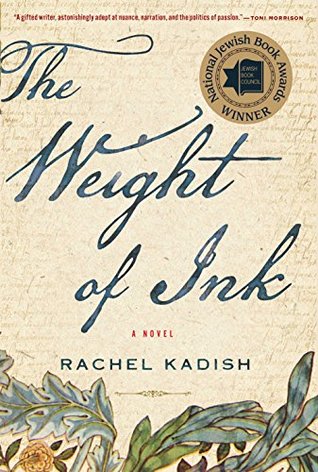
The Weight of Ink by Rachel Kadish

weightofink

This week I am excited to attend a new book group I was invited to.  The read, The Weight of Ink by Rachel Kadish, gives us much to talk about.  In advance of the group, I need to collect my thoughts on this complex book.

The Premise:

In the 21st century, a history professor, Helen Watt, is contacted by a former student to come examine some papers found within the walls of a centuries old home he and his wife are renovating. The professor, nearing forced retirement and struggling with Parkinson’s, sees immediately that these documents are historically important. She and her graduate student, Aaron, begin working on the documents and are faced with a rival academic with multiple graduate students being given access to the documents only a few weeks after she starts.

Intertwined within this is the story of Esther, a 17th century woman who came to England after losing her parents in a fire in Amsterdam. The Rabbi that has taken in her and her brother, having been their teacher when they were younger in Amsterdam. The Rabbi, blinded by an Inquisitor, comes to rely upon Esther as a scribe after her brother is murdered, because there was no one else. Esther, a gifted scholar in a time that does not allow for women to be one, struggles to learn more, question more, and she is considered not a “natural” woman in the standards of the day. The themes touched upon within the pages are many and nuanced.

Themes:

Sexism: First, there is the role of women in the 17th century. Esther Valasquez was provided an education with her brother in her father’s home, but was turned out of the lessons as she grew older. It was not seemly for a woman to do anything other than be a good wife.  Esther took it upon herself to listen in at the door as much as she could to continue her quest for knowledge. Much like her mother, and her grandmother, Esther’s passions placed her on a path that was not as society desired.

While not as specifically alluded to, the sexism continues in the 21st century, with Helen fighting with the men that control the money and department, as well as other male scholars that help others in the “network”. She was deliberately undermined by the head of the department, who led her to believe the papers were acquired by the university for her, but allowed for a better sourced man to come later, with more people, to put her in her academic place once again. The undertone here is that women are not supposed to be as learned as a man to this day.

Classism: Though shown more starkly to us in 17th century terms, the haves and the have nots are decidedly separated, in the streets, in the cities, and in theater. It is when these lines are crossed that problems arise. The same holds true, as noted above, about those with funding versus those without in the 21st century. It is also shown in those that own homes (having inherited from family, with treasures hidden in the walls) juxtaposed against those that rent small apartments for most of their lives.

Anti-semitism: The Amsterdam community, having been founded from survivors of the Portuguese Inquisition, was focused on ensuring their safety. They are unforgiving of anyone that questions the beliefs, simply because they are afraid that those thoughts would bring about annihilation of Judaism when the Inquisition had not succeeded. Thus, Spinoza was excommunicated.

The Nazi Camp survivors were equally concerned with their own survival. All around them continued to be dangers, including those whom would “romanticize” the world they were making without understanding the pain of which it was born. Thus the volunteers were dealt with harshly, in case they did not understand the need to do all for themselves to survive.

Expectations: The main characters, the Rabbi, Esther, Helen and Aaron all struggle with the expectations that others have placed on them and with what they have placed on themselves. The rabbi was to be a great man that would help rebuild the Jewish community in London after it became “safe” for Jews there. He knew he was not going to be able to do so – he was blinded by the eagerness to learn with Esther, so he turned a blind eye on her studying. It was not until later that Esther realizes that she has surpassed her teacher, but he had known for a longer time.  Esther struggled with expectations of being a dutiful woman, and an inquisitive scholar in a time you could not be both. Aaron struggles with a quest to be a scholar versus his parent’s expectations to be a rabbi, and Helen struggles with the expectations of love, order, and proper methods.

Names:

The Rabbi – a teacher

Esther – a biblical woman that took her place at her mother-in-law’s side after losing her husband. Where you go, I go. Your people will be my people.  Means Star in Hebrew.

Helen  – Means Light in Latin. In Greek mythology, Helen was the daughter of Zeus by Leda and the most beautiful woman in the world. The name was also a favorite of the William Shakespeare who used it two of his most well-known works, A Midsummer Night’s Dream and All’s Well That Ends Well. This was picked up by the fact that Aaron’s original dissertation was based upon Shakespeare’s Dark Lady having a Jewish background.

Aaron – In the Bible, Moses’ brother Aaron was Israel’s first high priest and is remembered for his staff which blossomed miraculously. Thus the reference to following in his father’s footsteps. Aaron is also a character in Shakespeare’s Titus Andronicus. Means Inspired in Hebrew.  This was what Aaron was missing most of the book – in the end, Helen inspired him, just as she inspired Paris in Troy, to greatness

There are many other themes and characters to explore in this book. At once intriguing and thought provoking, this is a story that will need years to be fully processed for me. The complex ideas brought forward are still being wrestled with by scholars world wide, as are the simpler ones, such as what is the meaning and reason for love.

Enjoy the book, I know I have.

book-review, books, Family Drama, literature, reading

Eleanor Oliphant has been here

A typical crisis for me is there are too many book to choose from. After picking book group titles last week, I had to read another title I proposed that others had already read.  Eleanor Oliphant is Completely Fine, by Gail Honeyman, was a joy.

At times reminiscent of The Rosie Project or A Man Called Ove, this fish out of water story had a bit of a dark twist.  While stumbling into real life, Eleanor is forced to face her past instead of drowning it in vodka. She begins to plan for a life with a man she has never met. As she executes this plan, she begins “self improvement” with a new haircut, new clothes, and new makeup. Outside of this plan, however, are interactions with people in ways she is unfamiliar with. Raymond, the tech support at her office, and Sammy, the person they helped when in distress on the street, provide her with more support than she knew she needed.

In fact, when she first met Raymond he found a virus on her computer and was able to clean it so it would be more effective. Same could be said of how he helped Eleanor. There were people to help around her always, she just needed to have some programs tweaked to have her work effectively with them. Another metaphor in the story is how she sets to cleaning her apartment. It transforms from a sad, uncared for space into a bright space looking for interesting things to add to the walls. She was a sad, uncared for person (she thought), but when she cared enough to buy herself things more than “useful” she is no longer just her scars, but a beautiful woman.

And while the dark part of the story was not hard to guess at due to the clues, the fact that she had so successfully fallen through the cracks of the system that was to help her was a sad comment on those the legal system that is meant to protect children.

book-review, books, literature, mystery, reading

What a Klutz!!

person seating on bench while holding knees
Photo by rawpixel.com on Pexels.com

This has been a week unlike any other. Let’s just say when you are in the ER thinking you broke your knee and get a call that your father is in the hospital with a broken knee, things seem a bit weird in the world.

I am comforted to know that my life is not stranger than fiction. Especially since I fell soon after I finished a dark and disturbing book, Behind Closed Doors. I don’t even have it a fraction of what Grace has going in this book. While not necessarily to best writing ever, it keeps coming back to me at different times as I sort through the emotions it evokes. In the same vein as Gone Girl and Girl on a Train, the story examines the evil that exists in world, just behind the curtains. If I say anymore, I am afraid I will give the whole thing away.

As a counterpoint to this, being the person who has spent way too much time in ERs waiting for xrays, I took a book with me. First one I grabbed, thank goodness, was a light read that I was able to put down and pick up often without getting too lost. The Forever Summer fit that bill perfectly. While slightly far flung, this is a Hallmark movie waiting to be made. And sometimes, you just need that.

I followed this up with The Most Beautiful Book in the World: Eight Novellas. Each story is beautifully written, and points to the most beautiful thing in the world – love in all its various forms. The best way to enjoy this is to read each story on its own, and savouir the emotions it invokes before moving to the next.

And now I feel restored in mind, if not body. While my knee is no longer the size of a watermelon, it is the color of eggplant. As I work through this, I will keep reminding myself of the lessons in the last 2 books I mentioned – there is good when you look for it.

book-review, books, literature, Middle Eastern, read around the world, reading

Women’s Rights in the 21st Century as illuminated in novels and memoirs

2017

A “watershed” year for women. Accusations of sexual misconduct by studio heads, actors, musicians, politicians and others have been in the headlines, and the #MeToo movement continues to move forward.  Ashley Judd is suing Harvey Weinstein for career sabotage.  House of Cards folds.  Bill Cosby is found guilty.  All of these are an affirmation of women and the power they hold.

Contrast that to the women in Middle East countries run by fundamentalist regimes – Saudi Arabia, Iran, Iraq, Afghanistan, and more.  While women in the western world are fighting for equal pay, equal access and job safety, the women in these other countries are looking for basic human rights.  While the struggle is real in western culture, it is life threatening for those behind the Burqa curtain.

Afghani women still commonly wear these Burqa to hide themselves from men, because the world there is still ruled by them.  In The Pearl that Broke its Shell by Nadia Hashimi, two stories, a century apart, are told of women facing a similar challenge.  In one, a father who has spent his life fighting for freedom of his country becomes addicted to the opium it provides.  In the other, a father spent his life fighting for freedom to cultivate his own land apart from his family.  In both scenarios only daughters are available to assist, and each father chooses to blind themselves as these girls take on traditionally male roles of helping, as is available to Afghani’s.  At the age of puberty, however, these girls must revert to traditional roles.  Within this book the two tales intertwine and support each other, with the older story helping to lead the way for the newer story.  In both tales, beatings were the norm.  The brutal handling of women for the slightest of perceived infraction occurs not only at the hands of men, but also of women in the attempt to exert what little power they have over their own worlds.

As the dawn of women in parliament is achieved, the reality of who is in power, the husband’s, remains real.  The access to news and learning continue to keep women in the dark of what they can achieve elsewhere, and that there are other options for them.

The facts of this echo in my head of And the Mountains Echoed and I am Malala.  Extreme violence against women remains a great threat to us all.  Hollywood’s brutality may be less physical, but it is no less demeaning or scarring.  In this light, how many of us can again echo #metoo? I know that, despite the promotions I have missed, the comments and looks I have endured, and the ceiling I have over my head, I am significantly more “free” than the women portrayed in the novels, or in the memoir mentioned.  There are so many more of these stories – remember Not Without My Daughter?

In the beautifully written and translated The Palace Walk series, the closed windows and doors of the home serve as a metaphor of how Egypt was closed from the world at the beginning of the 20th century.  As the world comes into the home, changes begin to emerge within.  This is true in The Pearl the Broke its Shell – thus the reason the TV is removed from the rooms when the women come to Kabul.  By trying to keep the walls up, and the world hidden, the power remains in the hands of those that have both the knowledge and the brute strength.  As women are allowed to see freedoms, even if to serve as a bacha posh, an ancient practice were young girls dressing as a boy before they mature in order to perform duties for the family that only a boy can do, it is hard to return to the ways of women.  If knowledge and access to others were allowed, the iron grip would weaken.  As it has in the west, women have sought so many more opportunities as they push through the doors, break down walls and crack the ceilings.  We just can’t forget those that have not even been allowed to see beyond their own courtyard.  Until all women are free to learn and choose, none of us are free.  So while #metoo is relevant, we have so many more greater battles to fight for our sisters.

books, literature, reading

My Journey Begins

Thanks for joining me!

“For one who reads, there is no limit to the number of lives that may be lived”  Louis L’Amour

My love with reading goes back to when I was a child.  I would lose myself in a book that made my world so much more fun and exciting.  I remember reading under the covers with flashlights and hiding books under my bed. In middle school, I was asked to run the student bookstore.  By the time I could get a “real” job, I was a page at our public library.  I continued to work at libraries throughout my college career.  The libraries, be them public or restricted, general or specialty, all called to me.  They were a safe place to be, full of friends and opportunities.

While I pursued a career outside of library science, my love of books and libraries has never waned.  I achieved a graduate degree at night school while I was working full time.  As graduation gifts my friends all gave me novels – the thing I missed most when I had homework.  I helped launch a book group for a non-profit organization, which I led for 3+ years before moving on.  I married and had children, bringing me back to books I loved.  My children loved to read with me.  They were in pre-school and kindergarten when they asked for a WII.  My husband and I decided they had to read 100 books together in order to earn this.  We didn’t care they were early readers or picture books, but they had to add the titles to the list on the fridge when they were done.  We have used this for other things too.

Then I turned 49.  A good friend asked me what I was going to do in my 50th year.  That got me thinking – what should I do?  That was when I created what I called the 50 for 50 challenge for myself.  I would read a best seller from the New York Times best seller list from the week of my birth for each year I have been alive, avoiding any re-reads and selecting from the top 10 (not necessarily the number one).

 Since that time I have continued to track my books, in excel.  I can look back and see if I have read something, and know how many I have read.  In the past few months people have begun to ask me for recommendations of books.  That made me think I should share my thoughts on titles I have read and want to read.  This is my journey – to share my love of reading with others so we can all be better people.

The blog title comes from The Source – James A Michener’s book.  This title that was number one on the New York Times Best Seller List on the day I was born.  I look forward to sharing this journey with you all.

Karen