book-review, books, Family Drama, literature, reading

Lost and Found

Each person leaves things behind, sometimes on purpose others, not.  These items can be keys to moments that change our lives.  This is the basis of the story behind The Keeper of Lost Things by Ruth Hogan. Throughout the book there are strings of stories of how mementoes are kept or lost, with them all coming back together in the end. 

There are two stories that this is based upon.  The first, a woman, Laura, who comes to work for an author and the second a woman, Eunice, who comes to work for a publisher.  Both women are brought into these men’s lives and become for them the way to fulfill their own destinies.  It is through the stories of people around them that show the six degrees of separation. 

Ultimately, the truth is told by a young woman with Downs Syndrome. It is through this girl’s ability to see and feel the things around her with no preconceived filter that helps her lead others to their own truth.  This girl, her given name is Sunshine, sits in the park observing those who live around her, including the author across the way.  As she realizes he has died and the woman who came each day to work with him moves in, Sunshine decides that this is her opportunity to make a new friend.  She comes around often, and at times Laura hides in the cupboards when she doesn’t want a visitor.  The gardener, Freddie asks why Laura doesn’t just explain to Sunshine about the times she wants to be alone.  After an old girlfriend comes around for Freddie, who also hides, the both come clean to those pursuing them with the reasons why.  Sunshine pragmatically states “why didn’t you just say so?” 

If we could only listen to this advice in our real lives.  How many times have we twisted ourselves into knots to avoid something instead of facing it straight on?  If we had been honest with ourselves and others, how much energy and heartache could be avoided?

As the stories continue, Sunshine later states that she is never listened to.  Again, Laura and Freddie stop and realize that there is truth to what she says.  Once they listen, they take steps toward solving a mystery at the heart of the story.  As the story progresses, tales of lost objects – how they came to be lost and how they came to be found – continue to show hints of how they are intertwined. 

When at last Sunshine puts a bet out for Freddie, the ending for both stories becomes apparent.  Sunshine has again predicted it through her simple but perceptive observation.  The tale is of love and loss, finding and discovering, and being honest to oneself.  If you are true to yourself, observant and open, you will find your happiness. 

book-review, books, read around the world, reading, time travel

Time travelling

If you were able to go back in time, would you? What if there are all sorts of rules that you need to abide by to do this? You have to sit in a specific cafe, at a specific chair, and not get up. You can only meet someone who had been in the cafe, and the present will not change. And you only have as much time there as it takes for the cup of coffee you were served to go cold.

That is the truth about a small cafe in Japan that has been serving coffee for over 100 years. Urban legend has been published, but most are scared away by the rules. This book, Before the Coffee Gets Cold translated from Toshikazu Kawaguchi’s Japanese best seller by Geoffrey Trousselot, tells the story of four people who are driven to make the choice to sit in this chair. Each has their own reasons for doing this. One goes back to confront a man who left her, one is seeking to receive a letter from her husband’s early onset Alzheimers, another to see her sister one more time, and the last to meet the daughter she has not been able to meet. All while knowing they need to wait for the seat to be empty, as it is occupied by a ghost that didn’t drink her cup of coffee in time.

The beautiful reasons why they choose to go, and the unexpected ways these visits unfold are nothing short of love stories. Written tenderly, even in translation, each woman that goes is motivated by love – unrequited, romantic, familial and maternal. Each visit, while not changing the present, has significant impact on each of these women.

The way the stories unfold is comforting and the language evokes a dark and cool underground cafe in Japan. A gentle read of love and the possibilities of reliving a moment in time.

It may be an ironic way to end 2020, but it does bring hope.

Biography, Black Experience, Family Drama, Indigenous American, literature, memoir

Year End Summary

In this difficult year for us all, I have surprisingly been able to read.  While certainly not at the same pace as I am used to, especially since it took me three months to read 20, five months for the next 20 – which included a number of books in the 90-150 page length – and then 10 in the past 3 months.  Either way, I made it to my goal. 

This year’s reading included a number of books, non-fiction, that captured my time.  The Library Book and The Bad-Ass Librarians of Timbuktu stand out.  Both are stories of how books formed the basis of the area they were made, and how the impact of the threats to them have continued throughout time.  Destruction of books can kill a community.  The numbers of people that step up and help in LA and Timbuktu that put themselves in real danger to save these are nothing short of inspiring. 

Inspiration also came from Young Woman and the Sea as well as The Memo.  Both Gertrude Ederle and Minda Harts are victims of the society they are brought into.  As a girl in the early 1900s, not only was swimming not in fashion, but a woman’s ability to swim was questioned.  Trudy not only broke all the women’s swim records but also the men’s.  While she failed in her first attempt to cross the English Channel, it is widely documented that she believed she was poisoned by her coach to keep her from completing the feat.  Minda, on the other hand, discusses the need for women of color to not only lean in, but to bring your own chair. 

I read about people coming into their own understanding of the place they hold in their life, their family, society, and more.  Some were laugh out loud, others brought tears, and more were in between. 

From a fiction standpoint, as I look back on the titles, all seem to be searching for a place to feel fulfilled.  People trying to connect, being brushed off, being hurt, just trying to survive.  My favorites this year include:

The Art of Hearing Heartbeats: A lovely story about the strength of real love.  This book was an amazing love story, while a bit unsettling about the legacy it left his daughter.

The Painted Drum: The history of Native Americans is something that has not been valued by the invaders.  When a woman comes in to catalogue a home of a deceased man, she encounters items he stole from a tribe when he was their “representative”.  Her journey to herself and her tribe, which was called to by the drum, was a lesson in the history of a people calling to its next generation, giving strength to carry on.

Where the Crawdads Sing: A compelling story, especially the isolation, that resonated due to the lock down.  The ending was worthy of Chris Bohjalian.

The Bookwoman of Troublesome Creek: The concept of “colored” people in Kentucky is taken a step further when there is a group of “blue” people that are part of the community.  A real thing, this was a genetic quirk that actually existed.  The gradation of the color impacting the lives of people is amazing – there is always someone you can decide is lower than you. 

The Queen’s Gambit: After hearing about the TV adaptation, I pick up the book.  I have no idea how this book can be easily put into film, as the majority of the book is a metaphor of a game of chess, the game in question.  The Queen’s gambit is a move to start a game, similar to the first step to life.  As the story continues, each step in life becomes how Beth Harmon approaches the game.  To her, life is chess. 

Other titles that have left a lasting impression:

Say You’re One of Them by Uwem Akpen

Lilith’s Brood (Xenogenesis 1-3) by Octavia E. Butler

The Great Alone by Kristen Hanna

The One and Only by Emily Griffin

Elsewhere: A Memoir by Richard Russo

Erotic Stories for Punjabi Widows by Balli Kaur Jaswal

Finding Dorothy by Elizabeth Letts

The Dutch House by Anne Patchett

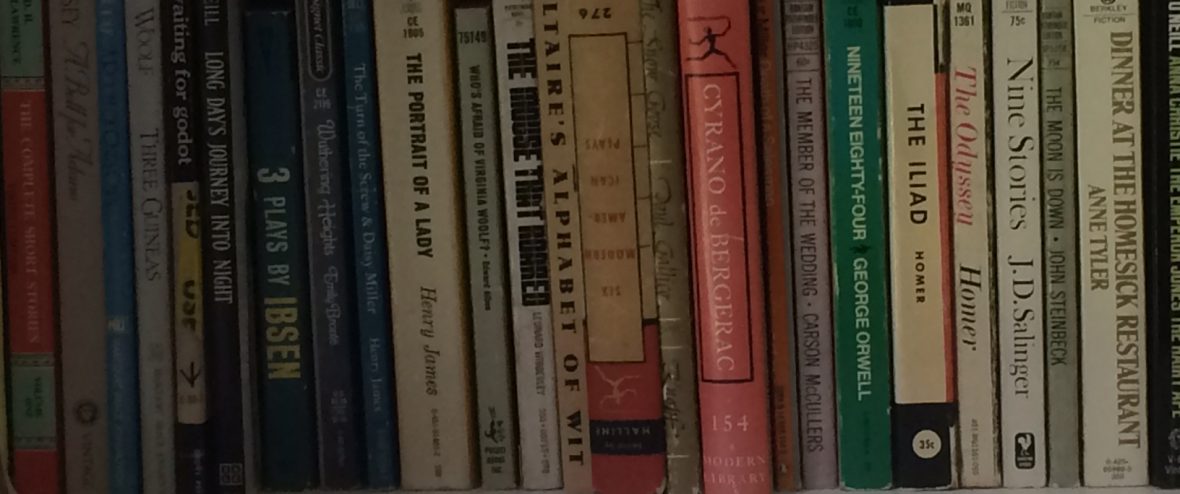
In the coming year, my focus will be to read books I own.  The titles may be a bit older, but I feel the need to do my bookshelves and brain the favor of slowing down the pace. 

book-review, Historical Fiction

As the year winds up

As I look back at the last installment of this blog, I realize I have not been reading much at all. My near constant review of Goodreads.com or the library website available ebooks has significantly fallen off. One friend just posted they made their goal of 50 books, and I realize that I had been within striking distance for months but have not gotten over the line. That was when I started to have the desire to read come back.

As I started to feel this way, I started at my own bookcase. I have a few “easy starters” ready, but they actually were put aside when I started planning and cooking for Thanksgiving. Yes, I made a 15 pound turkey with all the sides, got out the good china and set the dinning room table for just my four. We have these, so we need to use them. More stress from work, and I finally started to get bored with the holiday movies on Hallmark. It was inevitable. I usually ban these things until after Thanksgiving, but I started to indulge much earlier this year – early to mid November. The shorter days, lack of vacation, and general lack of leaving my house is getting to me. I needed a book to get me out of myself. One book group I have fallen behind on this year had just read Finding Dorothy, which I had recommended. I found it at the library and read the first chapter. I was engaged, but fell asleep. The exhaustion of life has been getting to me and I am sleeping fitfully if at all, so when it happens I go with it.

Then I start to knit again. My friend had a baby at 24 weeks, and we have all been on pins and needles. He is growing well, and is now over six months, breathing on his own, but not yet home from the NICU. I start to knit his baby “lovey” and blanket in hopes I will be able to finish before he makes it home in late January, early February. As I sit doing this, I go to hoopla and download The Queen’s Gambit. Again, this captures my attention, and with the novice knitter I am, I have plenty of time to listen to the book.

The listen is absolutely worth it. I may need to pull apart three days of work because I can’t figure out how I have extra stitches, and I have no idea what row I am on, but at least I have this book as my outcome from all the effort.

The story could have gone in many directions, but remained focused on the main character and the insular world she has built herself. The other avenues, while they are ways I would love to explore, are closed to us, as the protagonist has closed them to herself. She has control only on the chess board, and does not allow herself to explore much outside that. Taking from that, also, the writing shows options of how choices are reviewed and examined, but as the pieces of life move, you respond based upon the plan you have made. Beth’s actual playing is reflected in the choices she makes in the book, each mirroring back to the other. When things go differently than expected, she acts rashly and ultimately learns that bad choices can take her farther from herself and any goals she may have. She also learns that it is not enough to want something – you need to work for it.

This all makes more sense after you read the book, but I don’t want to give away too much here. Suffice this to say, it was an engaging book, with characters you care about but not too much, a game that most don’t fully understand, and a metaphor for how to live a life.

Biography, book-review, memoir, Non-Fiction

Non-fiction in the air – even with a mask on.

In the strange world we are living in, I am amazed that I am able to concentrate at all on any book.  It has been harder than ever for me, but every few weeks I try to pick up something new.  I tried The Water Dancer, American Dirt and Little Fires Everywhere, but I just couldn’t handle the difficult topics, even if they were so well written.  I will return to them when I feel more grounded.  Instead, I have spent the last few weeks reading books of real people, living real lives. 

This first book, after having sat upon my bookshelf for years, is The Year of Living Biblically, by A.J. Jacobs. It was surprisingly engaging.  As A.J. went through his quest to learn more traditions and live closer to the letters of the biblical law, I saw a man striving to find himself in so many ways.  This was just the method he was currently using.  I saw in myself the understanding I have always tried to have around religious rules, separating those from traditions and determining what these meant and why I would either to continue to observe it or not.  I felt light after reading this.  Somehow closer to myself and the “greater being” I believe in. 

After finishing this book, I found The Library Book by Susan Orleans.  I was expecting a novel, and jumped right in.  This is absolutely not a novel.  I found an intriguing story of how the Los Angeles Central Library was created and grew, only to be devastated by fire in the 1980s.  Hearing the story as we are taken through the halls of the rebuilt library, with a mystery of how the fire was started and how the institution has changed was fascinating for a self-proclaimed library lover.  This simply highlighted the unique and special place libraries, their caretakers, and their contents are. 

I followed this up with The Young Woman and The Sea by Glen Stout.  I was drawn to this after I heard him in a book group for my employer talking about the book.  The way he explained the world of the time, jumping in and out of the space, and the context of swimming within the larger woman’s movement made me seek this out.  Learning about Trudie Edele, the first woman to cross the English Channel, was not all I gleaned from his pages. While this was a bit long with suppositions on things going through Trudie’s mind when swimming, the details on how she was instrumental in breaking so many barriers simply by being herself was refreshing and exciting.  I had never seen her in that light before, and I gained additional admiration for her ability to put sportsmanship first and swam for the joy of it.

Who knows what I will pick up next?  Could be from the library, Amazon Prime or even my own bookshelf.  I will go where the spirit pulls, and do my best to share with you some highlights.

book-review, Family Drama, literature

A return to reading

This year has been very different from anything anyone has ever experienced.  The COVID-19 life has been full of fear, isolation, and stress.  Many people with kids (of all ages) are watching them struggle with the new normal of not seeing people they care about, more screen time then we ever thought we would allow, and generalized anxiety about how this impacts them.  That last one will tip you off that I have teenagers.

In this atmosphere I am working to maintain my own identity.  My brain has not been able to process things as well as I used to.  I am spending hours playing solitaire; I pick up books just to put them down; and I don’t even spend the time finding new titles online.

Then we went on vacation.

I should tell you now that I have been known to not move for a week, except to turn pages.  I spent a week on Martha’s Vineyard and read 8 books while still spending time with the group of people I went with.  We were headed to the ocean with my in-laws, so I needed to make sure I had things to do.  I packed a book and an eReader.  First, I read The Ambassador’s Daughter by Pam Janoff.  The characters seemed familiar but I couldn’t place them until I posted on goodreads.com.  This is a prequel to The Kommandant’s Girl and The Diplomat’s Wife.  Each story can stand on its own, and I read them years apart.  Each was an interesting take on the world, but nothing was earth shattering.

Then I started reading the only other thing I had downloaded – The House by the River by Lena Manta.  The story of a strong woman who followed love, made a life for herself and her five daughters, and watched them grow and leave the small village under Mount Olympus.  The story of each child is then told, each left with their own goals and choices, and lived their lives.  In the end, the power of love, and the hope to start anew bring the women all together again, wiser and more aware of the good place they came from.

This has stuck with me.  My mother made so many choices for her three daughters, and we have all gone away to live our own lives.  Each of us, in our own way, has found our way back to mom and the comfort of the love and familiarity of where we came from.  The women’s lives were lived full of passion and adventure, either by direct path or not.  Born from love, they sought that out, if at first or not.  The stories of these sisters have pointed me back to myself.  In order to survive and thrive I must live fully with the choices I have made and the places it has taken me.  If I do not, I would not be true to the parents that raised me to be fearless.

Now, I am fearlessly reading books again, even if I have been stopping the heavier reads and going to more non-fiction, it is reading.  And I feel better.


book-review, books, Family Drama, reading

Glass Houses

Choosing a book, I went to my bookshelf and found Proof of Heaven by Eben Alexander. After that was finished I found A Gift from the Sea by Anne Morrow Lindberg. Then my colleague Nigel suggested I read The Happy Prince by Oscar Wilde. Each of the books, a scientific search for understanding a near death experience, a reflection on life and its every stage, and a tale of giving of yourself to heal others all pointed me on a path away from sadness, and toward a purpose. Then, as if by magic, the library’s electronic version of Emily St John Mandel’s The Glass Hotel was available.

If you don’t know by now, Ms. St John Mandel’s Station Eleven has been on many “To Read” lists because it was a novel that predicted a pandemic like the flu that decimated the economies of the world and killed millions. It was a brilliant story, well written and so believable that it was eerie when COVID-19 showed up. I was eager to read her new novel. The story is written over a number of years, by a number of characters. The story weaves them in and out of each other’s lives. At the core is Vincent, a woman from Vancouver who lost her mother to a canoeing accident when she was about 12. Her half brother, Paul, comes into her life after a stint in rehab for drugs, running from the law because he shared some bad drugs with someone who died from them. Through back and forth stories we next see them at an exclusive Hotel Caiette on an island in British Columbia. The place is owned by Jonathan Alkaitis, who works in finance and owns the hotel. One night someone writes in acid ink “Why don’t you swallow broken glass” on the window of the hotel, shaking a guest, Leon Prevant, to his core. As time continues, we find that Paul, who worked at the hotel as a cleaner, was accused of the graffiti and left the next morning, and Vincent, his sister was working as a bartender that night. That night was when Jonathan gave her his business card with money as his tip.

As the story unwinds, there are small and large choices that are made by each of the players. Knowingly or not, or as one person states – knowing and not knowing together – each is faced with a question. How easy is it for you to cross the line? Some choose to stand on the morals they claim to have, while others are surprised when they cross them in hind-sight. It is this struggle between our actions and out beliefs that are the moral of the story. That, and the interconnectedness of each person to another. Throughout the changes and years, each remains connected bringing into question the idea of coincidence – is it real or is there a cosmic plan?

In the end, it is those with self-knowledge that are aware of the impact others have on them and the price to be paid for not crossing the line.

By the way – I don’t believe that it was a coincidence that these books came to me in that order.


book-review, Family Drama

The Crawdads are Singing

As this isolation continues, we all seem to be searching for something more. Is there something or someone out there orchestrating this? Is this the beginning of the end? Is there someone to lead us to safety like Neo “the one” Anderson in The Matrix?

Humans are in need of a pack. Families are one, friends are another. What happens when these disappear? Just as with other species, those that appear weak are cast out. Isolation is the theme throughout Where the Crawdads Sing by Delia Owens. With heartbreaking clarity, the detailed discoveries of an amazing young child on nature, supported by the author’s own degrees and work in Zoology, focus on the need for others to make us whole. The actions of the “flock” to someone not quite their own are also explored. While more can be said on the underlying tensions and actions that set things in motion, in our current world, it is the isolation that drew me in the most.

At the age of 5, Kya watches as her mother walks down the path and out of her life, never to return. Kya is left with her brother Jodie, 8 years older, and their father, an abusive drunk. When Jodie leaves after a beating, Kya is left alone with her father, until he also disappears. With almost no money, she begins to build a life. She walks to the Piggly Wiggly barefoot, as she has no shoes, and is shunned by “proper women” as dirty and bad because she lives in the Marshes of South Carolina with no money. No one truly reaches out to help. As she begins to become reliant on herself, she digs oysters in an effort to not take charity. She strikes up a deal with Jumpin, a black man that buys her oysters and smoked fish, and in return makes sure she is watched over and given items she needs. With his wife Mabel, these social outcasts in the south (blacks in the US in 1950 knew of her torment, but made a family together), they made sure she had clothing, supplies, and people to turn to for information and help. All in a manner that would be acceptable to Kya. There was no need for thanks, no glory requested for good deeds. They simply took care of someone in a manner that the receiver needed it.

As we continue our isolation through this virus, we need to make sure that we all open up to those in need. Blaming someone for having the virus, or passing it on by mistake is the same as blaming Kya for being abandoned. Have compassion for those around you, especially the most vulnerable. It is in times like these where the true heroes are found. Those that help with no need to tell others. Those that don’t even think they are doing anything extraordinary.

Today, do something for someone else that they need, without asking, and in a way that makes it easy for them to accept with grace.

In the end, that is all we have.

book-review, books, literature, memoir, Non-Fiction, reading, romance, Science Fiction

Happy Stories for Stressful Times

In this crazy time of social distance, self-isolation and quarantine, there is nothing better than curling up and escaping with a good book. I spend a ton of time doing this. In order to keep up our spirits, I thought I would share some titles that are fun and enjoyable to help the time go. In no order other than the one that I thought of first:

A Man Called Ove: All about a grumpy man that finds his solitary world turned on its head when a young family moves in next door. He becomes engaged despite his best intentions, leaving you smiling all along.

An Odyssey: A Father, a Son, and an Epic: Eighty-one-year-old Jay Mendelsohn enrolls in an undergraduate seminar his son teaches on the Odyssey. Explores both the story and their relationship. Sweet tribute to his father.

Born a Crime: Stories From a South African Childhood: Trevor Noah’s memoir of growing up in South Africa and coming to America to host The Daily Show on Comedy Central.

Daisy Jones & The Six: A fictional band who’s only album is an anthem for 70’s rock and roll broke up and no one knows why – until now. Hearing this story is a bit like Almost Famous, but even better.

Mrs. Queen Takes the Train: What would happen if the Queen of England went on a stroll without the knowledge of her courtiers? Find out here.

Roommates Wanted: 1990, Toby Dobbs is gifted a house for a wedding gift from his father. One month later his wife leaves, and Toby advertises for roommates. 15 years later they are still there. How to move forward in his life, now that his father is about to show up for the first time in 15 year? Smile and read on.

The Daily Show: An Oral History: How the show came into being, hosts changed, and how the show changed the country. As a fan of the show, and of Jon Stewart, I loved reading the behind the scenes and remembering when I first watched the shows/events they mentioned.

The Martian: A young adult book that had my son at the opening line (“I am F*&^*&%). I loved it because it was fun, stressful, and funny.

The Most Beautiful Book in the World: Eight Novellas: Eight separate stories populated by a wide cast of characters, all exploring what beauty is.

The One and Only: Love of football and romance combine in this story of a super football fan with a crush on the legendary head coach, her best friend’s father.

book-review, books, reading, Science Fiction

What Station am I at?

Every day life gets weirder. Fewer people are working in the office. Streets normally bustling are empty. No rush hour traffic. All of this makes me grow more spooked.

As a new convert to the dystopian genre, I don’t have that many books to reference back to. I have always expected things to happen like Orwell’s 1984 with the government tracking your every move. All they need is access to your fitbit or iphone. If they want to get rid of your books, like Bradbury’s Fahrenheit 451 just access your hoopladigital or amazon account. Say what you want about who is in charge in government, but to me, it certainly feels that all pigs are equal, just some more equal than others (another shout out to Orwell.) Access to birth control and OBGYN doctors is so limited, and fertility treatments are so expensive, its just time before we are all looking like handmaids.

But Emily St. John Mandel’s book Station Eleven is haunting me right now. Four years after I read it. In her story everyone started to catch colds and die. Only some survive, and no one knows why or how. Self isolation had been part of the story, too. As I remain in my home with my family, keeping away from others who may have been in contact with people that have been tested positive, it makes me wonder. Will I need to strike out to find others?

The bonus of being isolated is there is plenty of time to catch up on my reading. Let me know if there is anything you think I should pick up during this incredibly strange time.