books, read around the world, reading

The Unlikely Adventures of the Shergill Sisters by Balli Kaur Jaswal

Three sisters bicker across India as they complete a final pilgrimage taking their mother’s ashes to her homeland to be scattered. Each sister, Rajni, Jezmeen and Shirina is harboring secrets and pain as they follow the directions their mother set down for them before she died.

This is a typical story of sisters misunderstanding each other, the culture they live in, and the sacrifices that people make to help them grow. With each step of the journey the sisters face past hurt and current grief, thinking only of themselves. Over the 10 days on the Pilgrimage, they are able to achieve what their mother wanted – to have them face who they really are, and what they really want – to themselves and to each other. Through this journey they are able to come together and stand up for themselves.

Even if the secrets could be guessed at, it was a well written and fun to read book, and there were some twists that I truly didn’t expect. Those kept me on my toes and wanting to read more. 

books, read around the world, reading

Infidel by Ayaan Hirsi Ali

This is the story of courage. Of a young woman, born in Somalia on the brink of war, carrying the weight of clan, gender and religious expectations, who is able to raise her head to question Why? She is able to do this despite the institutions around her trying to beat her into complete submission – literally and figuratively.

Ayaan is the eldest child of her father’s second marriage. Her beloved father, a prominent scholar and revolutionary leader in Somalia, was away fighting to build Somalia into an Islamic country for much of her childhood. This left her mother and grandmother to raise Ayaan, her sister and brother by the grace of clan members that were providing funding and other supports while the family was in exile – in Saudi Arabia, Ethiopia and Kenya. Devoted to Islam, the family was exposed to the developing Muslim Brotherhood and the strict rules of observance demanded by the religion. Ayaan was able to survive despite the obstacles set before her. She was beaten by her mother for not doing enough around the house (cleaning, cooking, laundry) even though Ayaan was actually trying to complete her school work; when in Ethiopia her cousins arranged for all three children to be circumcised – for a woman that mean cutting out her clitoris and sewing her genitals together to keep her pure; friendships outside of the religion are shunned – it is forbidden to befriend someone outside the faith – and the Quran was taught to be a holy book that could not be questioned. But when men began asking for Ayaan’s hand in marriage – never to her directly – she began to question why she had no choice or voice in who or when she was to marry.

After years of deflecting, and a hidden marriage that was not consummated due to her circumcision, her father came home from the mosque and announced she was to marry a man from Canada he had met that morning. Without asking, her fate was bound to a man her father knew for two hours. After pushing back, and not attending the wedding ritual (she was not required to be there, only her father) the deed was done. As her new husband was a Canadian, she was sent to Germany to improve her odds at getting a visa. While there, Ayaan planned her escape and made it to the Netherlands where she was granted refugee status. While there Ayaan became enthralled with the way the government worked – so helpful and caring. But what she witnessed was her clansmen – and her religion – keeping to the words of the Quran to not mix with non-believers. Through her strong ability to learn languages, she became a translator and was able to hear the stories of women being beaten by husbands and not prosecuting, honor killings for having a boyfriend, doctors trying to help women through births after being sewn as a child, and more “norms” that are foreign to people outside the construct of what Ayaan was brought up in. When the planes hit the World Trade Center in New York on 9/11, she heard the words from the Quran being used to justify the attacks, and knew that was not a fringe element, these were quotes from the Quran that are meant to be literal. Through this horror, Ayaan realized that Muslim Brotherhood had no desire to become part of the societies they moved to as refugees – that they wanted the protections but also wanted to remain outside the norms of the society they now resided in. That included the ongoing subjugation of women.

It became her purpose in life to speak out about the injustice women in the closed Muslim communities faced, and worked to encourage a reformation of Islam to not live by the Quran as unquestionable – she saw it as a way to remain in the middle-ages when it was written – but to interpret its texts for the age we live in. It was through her outspokenness that she came to be part of the Dutch parliament, trying to raise her voice to have others speak about the atrocities that were occurring that were being explained away by “multiculturalism” and allowing others to be different while turning a blind eye to the fact that there was no interest in becoming part of the social ethics that created the space for these people to come to. Due to her need to be heard, she did not shy from debates. Now under constant threat for her life, the fear was realized when her collaborator on a film, Theo Van Gogh, was murdered in broad daylight, with a 5 page memo to her stabbed in his torso on why she must die too.

While she is now in hiding, she continues to work for an American think tank to help create policy for protecting these Muslim women and girls. No longer in touch with her family for turning her back on Islam, she is nevertheless cut from the same cloth as her father – both worked to make a government bring about a better world for others.

For me, the biggest why is why is are you not allowed to ask questions? Why, in so many places on earth, for so many millennium, is a woman denied a voice? What makes us so powerful that we are to be smothered? Is it because Eve tempted Adam with an apple? Is that the reason women are not allowed to speak, to be seen, to be beaten into complete subjugation? For asking what else there may be in the world? This placing of blame ignores the fact that Adam – or any man – should have a brain, and ethics, to react and be held accountable for their own actions. By removing any responsibility for making choices creates a world where power is absolute and unquestioning.

We need to make sure that women and men understand that each has responsibility for each other – to treat each other with compassion, to do what is right for others now and in the next life, and to be judged by this alone. Until we lift each other up, protecting those who can’t, we are all doomed to remain in the dark.
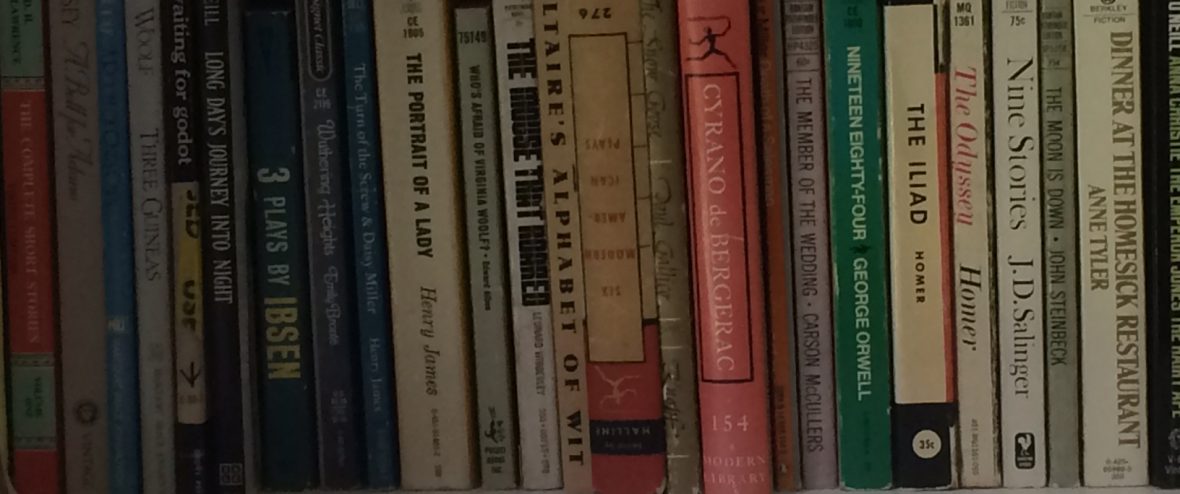
books, read around the world, reading

Pieces of Happiness by Anne Ostby

What would you do if your childhood friend from 50 years ago sent you a letter asking you to leave your life and come live with her in Fiji on a cocoa farm? That is what happens to four 66 year old women in Norway. They have each gone their own ways, with their own secrets and pains. How would this work out? How has everyone changed? How have they not changed? And what about all the cultural difference between Norway and Fiji? How will they navigate this?

This is the story of five women facing the reality of getting older, at a stage where they are no longer who they thought they were. They come together and face with who they were, who they became, and who they want to be next in the time they have left.

An endearing story of how to find a new chapter when most people write you off, including yourself.   

book-review, books, memoir, Non-Fiction, read around the world, reading

Visiting Oceania with J Maarten Troost

J Maarten Troost is a travel writer that has lived an extraordinary life. First, he follows his girlfriend to the Equatorian Atoll of Kiribati for two years, returned to Washington DC, only to get restless again. He then follows his wife (same person) to the Islands of Fiji and Vanuatu. Through both of his books, The Sex Lives of Cannibals and Getting Stoned with Savages, the raw truth, and the raw sewage, is exposed while living on the other end of the earth. While never taking himself quite seriously, these books impart both the absurdity of island life and some well researched facts on the areas he visits. You actually hear of the colonial history, the remains of this including racial hatred, as well as details of the Neckowiar of Tanna (a rare three-day alliance ceremony between villages) they witnessed, including details of the leaf men wear over their penis for a full day of dance. You learn about the tribal history of the people of Vanuatu, the colonial history of invasion, cannibalism, how to make kava, and how centipedes there can kill. Through it all, you learn of the differences in the cultures of other, how the customs came about, and how it may seem like paradise, but don’t look too closely to see the cracks. These were two fun reads.

book-review, books, Family Drama, Middle Eastern, read around the world, reading

A woman is no man

A woman is no man by Etaf Rum

Regardless of what religion or nationality, there is a universal truth – women are victims of violence.

In too many cultures women are not valued for anything other than to cook, clean and procreate. This is true in middle-eastern, eastern and western civilizations. These is no corner of this earth that has not been dominated by men, and women are taught on some level of consciousness that they are inferior. There are cultures that adhere more to this belief, and enforce this rigorously. The number of women that are being beaten each day into submission is staggering. The fact that is it accepted as normal and supported by other women is a sad truth to how far the lessons of low worth are ingrained to the communities. This remains true, regardless of the work women have been making in the last century. Books like The Pearl That Broke its Shell, Big Little Lies, Girl on the Train, Black and Blue, and so many more continue to tell these tales. These books cover the world (Afghanistan, Australia, England, and United Stated) and are only a small sample of a much broader and enduring problem. Etaf Rum’s A Woman Is No Man is the story of a Palestinian woman’s life in these circumstances.

In Palestine, an Arab girl named Isra is brought up in her mother’s kitchen, learning to cook and clean. At 17 she is married to a man she meets once and is take to America – Brooklyn – to be his wife. With no money, no connections, and not able to leave the house unaccompanied, Isra works to ensure she does not besmirch her family’s name by doing what is expected.

As the story unfolds, it alternates between Isra’s voice and her daughter Deya’s 18 years later. Deya is about to graduate high school and her grandmother, who is raising her after her parents die in a car accident, is insisting she make a match so she will not continue to be a burden to the family, as girls always are.  Deya receives a letter with a card to contact a familiar figure that she can’t place. As Deya’s quest to find answers brings more questions, we are all faced with the limitations of what we set on ourselves as options.

As the story progresses, we learn of Isra’s fading hopes for love and connection and of the growing violence against her by her husband, of her growing despair and depression, and of her mother in law’s insistence that bruises be covered from other’s eyes. We also learn of Deya’s memories of her mother’s sadness and of her fears that not all was right, of Deya’s fear of being pushed into marriage and inability to continue to learn.

We learn that Deya doesn’t share her memories with her younger sisters to save them from pain. We also learn of other secrets that are kept that are meant to reduce other’s perceived pain.  We learn of choices made in the hope of saving face, in the hope of protecting others, in the hope of convincing yourself, in the hope of being loved.

In the end, we are all exposed for doing these things. Are we complicit if we don’t act against it? How often are we afraid that our actions will make things worse? Or that we are overreacting to something that was not as it seemed.  Etaf Rum has pulled the curtains back on what is largely unspoken inside and outside the Palestinian culture – in the US and abroad. The courage to write of this taboo topic and shameful reality of too many from every background reminds us that by not finding our own voice, question our choices, and think through consequences, the result will perpetuate the pain for others. We must not be complicit in allowing this to continue. We must find the strength to break the cycle of violence. 

African Experience, book-review, books, literature, read around the world, reading

Seven Moons of Maali Almeida

by Shehan Karunatilaka

Maali Almedia introduces himself with what should be on his business card:  Photographer, Gambler, Slut. He awakes to find himself in what seems to be a government office. He isn’t sure he if he is dreaming or awake because of the “silly pills” he had taken the night before. He slowly comes to realize that he is dead – murdered. Around him are lines and chaos as people try to figure out where they are and what comes next. He is faced with a dead political activist, who is to help him prepare to go “into the light” after having seven moons (days) to come to grips with this and prepare himself. He is also pursued by a slain member of the JVP (communist Janatha Vimukthi Peramuna’s group) that is seeking to gather an army to exact revenge on those that killed them and thousands of innocents.

Through eavesdropping and memory, we learn of Maali’s history, of the country’s history, and the history of people he knew. He roams through the rooms where his friends and his enemies are looking to find him. Along the way he also meets some that he photographed when they were dead.  We learn of the atrocities he witnessed and documented. He decides it is time to show the reality of what he has seen now that he is dead. To do this, Maali makes pacts with The Crow Man, a medium, to give information to Jaki, his best friend, to find his photos. You also meet DD, Jaki’s brother and Maali’s lover, and their father, a minister in the government. Other players are leaders of waring factions across the spectrum: Army, Tamil, LTTE, arms dealers from Israel, CIA and CNTRE from Canada and Europe. Everyone has a hidden agenda, and if you get in someone’s way you end up dead. We follow those sent to get rid of the bodies, too.

In the end, Maali must come to a decision – what did his life stand for and how does he want to move forward. You need to read to the end to see if he goes to the light or not, and to discover what he finds his role is in this life. I can tell you, however, that people end up where they are supposed to be. 

Very well written. I was surprised how much this story captured me. Going back and forth from the in between and life, as well as to memory, worked seamlessly. You felt the confusion, and the despair, and the absurdity, as well as the relief when things are finished, even if they didn’t work out the way it was hoped. There is always time to do better. Not an easy story, but I am glad I read it.  

books, read around the world, reading

Beyond the Rice Fields by Naivo

This is the first book translated to English from Madagascar. Set in the turmoil of the late 1800s, this is a sweeping tale of human bondage, revenge and faith. Palace intrigues, clan wars, forbidden religion, neighbors turning on neighbors, innocence proven by evading death, and life-long feuds for family revenge. Everything you would expect from Dickens, Hawthorn, or Hugo. There are many twists and overarching themes, as well as history in a different culture as it fights colonization while adopting modern industrialization.

Set in a small but prosperous village, we meet three generations of women – Bebe, Bao, and Fara – and their slave Tsito. Bebe, the matriarch, has a hair lip now, but was once a beauty that never married. Her daughter Bao was a famed dancer who entranced men with her first dance competition, winning the heart of Rabo, who left without marrying her. Fara is the daughter of that union. Tsito, enslaved when his village was attacked and his family murdered, was provided by Rabo to help the women when he left.

From the time of inception, Bao’s only pregnancy was decreed evil by the local seer, who wanted to kill Fara to kill the evil, but was tricked into dismissing the traditional methods when a European priest interrupted. Fara and Tsito were inseparable even though they had different social standing, but evil was always nearby, as the seer predicted. 

The history of the country is reflected the pair’s stories and the stories of their childhood friends. Letting Europeans enter the country with crazy ideas of worship and learning was not at first considered threatening. As the new religion caught on, however, the Sovereign Queen sought to eradicate it from her country by killing those that believe. She stopped listening to clans that had supported her father’s reign, instead taking away wealth and freedom. Each day brought new fears. It is in this atmosphere that Fara realizes she had always been in love with Tsito. Many trials are put in front of these two, and I will not spoil the book by sharing them.

The story is complex in its telling, yet simple at the core. Value all human beings. Trust in love. Turn from hate. Work hard for what is right.

Well worth the read!   

books, read around the world, reading

2022 Year in Reading

Key statistics:

I have read 54 books and listened to 9:  51 Fiction; 11 Non-Fiction; and 1 Poetry

Average book size = 293 pages   

  • Longest 561
  • Shortest 23

These books were based in 32 different countries or regions of the world, helping me expand on my quest to read around the world. Of the 117 countries I am working toward reading, I have read books from 93.

Ten favorite reads of the year (in alphabetical order):

  • A General Theory of Oblivion by Jose Eduardo Agualusa
  • Baking Cakes in Kigali by Gaile Parkin
  • Black Cake by Charmaine Wilkerson
  • Burial Rites by Hannah Kent
  • In the Midst of Winter by Isabel Allende
  • Lessons in Chemistry by Bonnie Garmus
  • Olga Dies Dreaming by Xochitil Gonzalez
  • The Unseen World by Liz Moore
  • Trust by Hernan Diaz
  • Women Without Men: A Novel of Modern Iran by Shahrnush Parsipur

There were many other books that were good, but these were my favorites this year.

I now have over 150 titles in my “To Be Read” list, and it keeps growing. Next year’s goal is to read from 10 more countries on my list.

Happy new year all! 

books, read around the world, reading

Reading Dangerously

I am not what you can consider “cutting edge” when it comes to technology and what is offered. I have only recently joined Spotify and found some podcasts that I am really enjoying, and I am sure there are many more for me to find. One podcast that I have been enjoying is The Book Case with Kate & Charlie Gibson. In the episode I am currently listening to (originally aired June 9, 2022) they are interviewing an author, Azar Nafisi. Her new book “Reading Dangerously” is a challenge to readers to choose books outside our comfort zone. She contends that reading fiction can be a liberating and even subversive act. She should know, having been an intellectual leader in Iran when the clerics took over.

This is something that I have been thinking about a lot lately. In the US the number of book bans is on the rise. The news stations are bifurcated so you choose what slant you want to hear before you choose the source. We are interacting less with people that are not like ourselves. Personally, I believe that this insular world we are living in has created deeper fissions. The concept of “News” is no longer a factual reporting of just who, what, why, where, when and how. It is all about sensationalism. Edward R Morrow, the man that single-handedly went after and exposed the lies of the McCarthy era, is rolling in his grave. Only opinion is spouted – not the facts. Just look at the differences in how Fox news spoke about the attack on Paul Pelosi versus how CNN spoke of it.

My biggest concern is that in our race to be MORE and BIGGER we are putting others down to achieve this. It is not until you can walk in someone else’s shoes that you can begin to understand why they feel a certain way. That is why the concept of reading dangerously is so intriguing to me. If I don’t know what someone else’s view of the world is, how am I to understand why their stance may be different? I don’t need to agree, but it would be good to understand why so that perhaps there can be a way that each person’s beliefs can be respected.

I have been reading around the world to provide myself with different perspectives and learn about how others live. I know this has impacted me. I had been a lover of the pomp from the Royal families since I was a child. Now, however, when I was watching the funeral of Queen Elizabeth II, I have a different reaction. I am disgusted by the pomp, especially seeing the military in force. It is the egos of this family’s ancestors that went around the world spreading disease and hatred, killing off cultures that had been in place long before them. The legacy they left is something that the world continues to struggle with daily.

Azar Nafisi’s theory that having a curious mind leads to challenge and understanding is one I believe in. It is two sides of a coin. You are to ask questions, but also gain empathy toward others. It should be our responsibility to do both. If we do not, we will only continue to divide ourselves into small groups that continue to belittle and dismiss others. That is the most dangerous thing to do. The lack of empathy will be the fall of our civilization.  

So go out and choose something to read that you would not usually pick.

book-review, books, Family Drama, literature, read around the world, reading

The King’s Cartographer by Jair Alcalay

The story starts out in the late 1600s with an introduction to Jewish brothers that are running from a mob that have been sent by the Catholic Church to kill them for their religion. You are introduced to the particulars of leaving Spain, how the sea faring business they owned was organized, and about the ships they sailed. I was looking forward to hearing how the family escaped, built a new life in Portugal, and continued to grow and navigate around the world.

What you get, however, are the details that the family moved and settled in. You do not hear of the family and how they deal with the changes in circumstance and the future planning they are doing to find somewhere they can practice their religion openly. You learn how new ships were built, how a new person comes to the family and learns of the sea and how to create new maps – and even how they were created and used in the early days of naval investigation. With each new person you are following in the story, you hear details on how they faired at sea, a few comments of who they may have married, but the focus was on the exploration and the ships.

While these details were very interesting, this left me confused about this novel. The story was more of a travel log that passed from people. At the end, there were indications as to how Jews moved to the new world, now New York, but nothing was ever noted explicitly. I wanted to hear a story around these facts. This, in my opinion, was a lost opportunity to tell a fascinating historically based story that fell way short of the mark.

I will keep searching.