book-review, books, Non-Fiction, reading

Cybersecurity Awareness Month

October was cybersecurity awareness month. While it is technically over, we are in an actual state of war every time we log onto the web. With Phishing, Spearhunting; Spoofing and more, you must be aware of every click. With this in mind, I actually picked up a book to learn more about Information Technology and Protection.

Adventures of an IT Leader was the BEST text book I have read on this subject. Written as novel, each chapter reviews a challenge that the brand new head of IT is facing. You are engaged, and feel the tension and confusion as each challenge arises to be dealt with. The conditions that are challenging are realistic, and the people delivering the information are engaging also. This was an excellent way to put in front of any person, be they a “techie” or not, to understand.

This made me think of all the other books I have read that have engaged me over the years around technology. Here are some of the ones that still come to mind easily:

Soul of a New Machine by Tracy Kidder Followed Data General’s creation of a minicomputer in one year in the late 1970s that brought on the tech revolution.

He, She, and It by Marge Piercy Fiction that predicted what AI can do – in 1991 it even predicted that we would be talking to our houses.

The Phoenix Project: A Novel About IT, DevOps, and Helping Your Business Win by Gene Kim, Kevin Behr, and George Spafford. Just as the Adventures book, this is an engaging and easily accessible way to learn how to handle DevOps.

Permanent Record by Edward Snowden The story of how he helped build and then bring down a system similar to “Big Brother”

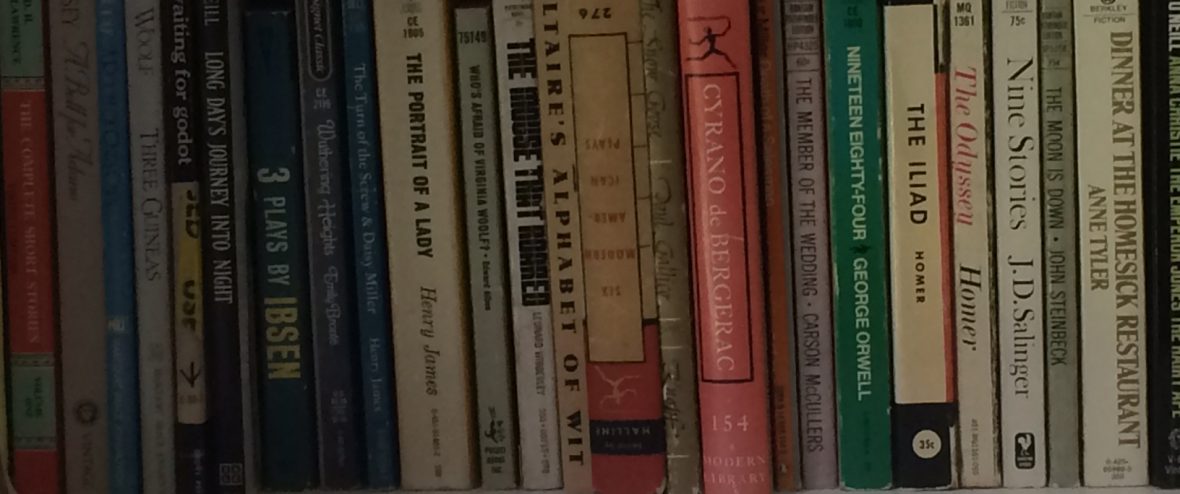
1984 by George Orwell – The book that introduced us to “Big Brother”

Ready Player One by Ernest Cline A Young Adult novel about hiding in the internet, and how it can take over your life.

Mr Penumbra’s 24 hour Bookstore by Robin Sloan – A novel about how data can be both useful and not.

Invisible Women: Data Bias in a World Designed for Men by Caroline Criado Pérez Unconscious Bias in the collection of data.

Enjoy!!

book-review, books, Hispanic and Latinx Cultures, reading

Hispanic Heritage Month 2021

In honor of Hispanic Month (September 15, 2021 – October 15, 2021), I decided to read about a place I didn’t know much about.  Cuba, an island that was forbidden, ruled by a man that lived longer than anyone expected, cut off from its closest neighbor, with its people fleeing on makeshift rafts at sea.  What did I know about this island?  Bits and pieces – the Cuban Missile Crisis, the Bay of Pigs, Cuban cigars, and the place where Sky Masterson takes Sarah Brown in Guys and Dolls.  I figured it was time to learn more about the people, and maybe something about the politics of the place.

Since I love historical fiction, and learn about cultures and how they got there from novels, it made sense for me to pick one for the task.  Next Year in Havana is a mix of historical details, sociological analysis, and a love story.  Told from two women’s perspectives and times – Elisa Perez, debutante Cuban in high society of 1958 and Marisol Ferrera, freelance writer and member of Miami’s Cuban exile community in 2017. 

Marisol, raised by her grandmother Elisa, is coming home to Cuba, where her grandparents fled with the family when Castro took over.  She brings with her memories of stories told to her about the way things had been, and a tin containing the ashes of her grandmother, who told her those stories.  Marisol is to find the final resting place for the ashes in Elisa’s beloved Cuba.  Met at the airport by Elisa’s childhood best friend’s grandson, Marisol comes into possession of a pack of love letters from her grandmother to a man that was not her grandfather.  This leads her on a quest for the truth.

Then, as before, asking questions can be bad for your health.  Through eyes of revolutionaries, each woman in her time is faced with the stark reality that their lives were pampered, and that poverty was real and near.  The details on how hard life had been on those that remained in Cuba, making a life through the hardships, versus those that left Cuba and settled in Miami clinging to what Cuba had been.  It even goes into some detail on how the island nation had always wanted to be free, but was always at a larger country’s whim – America, Russia, and even Venezuela.  The war that brought about Castro’s revolution, and the war that put Batista in power before him, were all about democracy – and the hope to return to constitutional law.

Ultimately, the question “are you a Cuban first or an American first”, and what that means to those that stayed and those that left simmers under the surface, as does the uneasy peace made to allow the regimes continue the grip on the people.  Love, family love, romantic love, and love of country are at odds with each other in this novel.  Nothing is easy, choices must be made, and you make the best of what you are given. 

Other books that I have enjoyed from Hispanic authors, in no particular order:

One Hundred Years of Solitude by Gabriel Garcia Marquez

Love in the Time of Cholera by Gabriel Garcia Marquez

Chronicle of a Death Foretold by Gabriel Garcia Marquez

The House of Spirits by Isabel Allende

How the Garcia Girls Lost their Accent by Julia Alverez

In the Time of Butterflies by Julia Alverez

Afterlife by Julia Alverez

The Alchemist by Pualo Coehlo

Black Experience, book-review, books, reading

The book of lost friends

This is a book with at least two stories, all that intersect around family, and history.  We start meeting Benedetta Silva, known as Benny as she starts her first job teaching at a poor rural school in Louisiana to help pay off her student debt.  Although she is white, she is living in poverty until her first paycheck arrives.  She is intimidated by the unruly teens that await her, fighting with each other, and never listening.  She tries everything to get them engaged, even buying treats for those that are hungry from her low salary. 

Next we meet Hannie and her slave family were being moved from Louisiana to Texas by a relative to keep them from being set free.  Out of sight of the owners, the relative starts to sell off the family in ones or twos the whole way there.  The last to be sold, Hannie finally gets the buyer to understand that she was stolen and sold away from her rightful owner.  Along the way, she had kept track of who was sold where, in the hopes to reunite with them in the future.

As we follow Hannie, who is returned to the original plantation alone but strikes out as a sharecropper with a few other slaves that had remained, we see that she is smart and resourceful.  Lavinia, the plantation owner’s pampered daughter, meets with Juneau Jane, the plantation owner’s mulatto daughter by his mistress.  Afraid that Lavinia’s arrival meant that the head of the Gossett plantation was dead, Hannie listens in to find out what is happening because there was only one year left on the lease before the sharecropping land was to be free and clear for her and those working it.  The three end up in an odyssey to find the father, to determine who was entitled to what property.  At one point the three end up in a church, where the walls were covered in posters of letters to friends, where people were looking to reconnect with those that had been sold away. 

Benny, who is renting out a home near the plantation because it was the cheapest she could find, needs help when the roof starts to leak. Through this challenge, Benny meets marvelous women that have kept the community together and give Benny hope for surviving.  Through the stories that Benny hears from Mrs T, she decides that this is the story that would resonate with her students, and asks her to come and tell it to the kids.  The kids are hooked and come up with a way to bring the stories to life.  While not approved by the school board, made up of rich white folks, the stories are coming from the Carnegie Library, a source of pride of the community at one time.  Facing a threatening police force, and the school board that sends their own kids to a private school instead, Benny is told to just let the kids get a vocational education as they were not better than that. 

Throughout the chapters flipping between the two, actual letters written and sent are included.  These had been published in the Southern Methodist newspaper and was shared via pulpits across the country.  The heartwrenching stories behind each of these hit home for me.  I did not know that these adverts had been created for people to finds each other in the late 1800 – early 1900s.  I did, however, understand these completely.  As a Jew, I am fully aware that after WWII, the same was happening in the displacement camps throughout Europe with people searching for any connections that may be left.  It is the guilt at being alive, combined by the fear of being alone, that makes these so sad.  While the longing is always there, sometimes it is easier not to ask the question for fear of the answer.

That also is true when it comes to a hard past.  In the Louisiana is the reality that slavery did happen.  Ancestors we part.  But in order to remain in power, the stories and intimidation continued.  It is this need to keep the power structure as it is, and the fear of what will happen if it is not, that keeps the true history of the plantation and those that lived on it.  Until you face the choices that you made, good or bad, and acknowledge them, you are doomed to spend your life covering up for them. 

book-review, books, Family Drama, literature, reading

Lost and Found

Each person leaves things behind, sometimes on purpose others, not.  These items can be keys to moments that change our lives.  This is the basis of the story behind The Keeper of Lost Things by Ruth Hogan. Throughout the book there are strings of stories of how mementoes are kept or lost, with them all coming back together in the end. 

There are two stories that this is based upon.  The first, a woman, Laura, who comes to work for an author and the second a woman, Eunice, who comes to work for a publisher.  Both women are brought into these men’s lives and become for them the way to fulfill their own destinies.  It is through the stories of people around them that show the six degrees of separation. 

Ultimately, the truth is told by a young woman with Downs Syndrome. It is through this girl’s ability to see and feel the things around her with no preconceived filter that helps her lead others to their own truth.  This girl, her given name is Sunshine, sits in the park observing those who live around her, including the author across the way.  As she realizes he has died and the woman who came each day to work with him moves in, Sunshine decides that this is her opportunity to make a new friend.  She comes around often, and at times Laura hides in the cupboards when she doesn’t want a visitor.  The gardener, Freddie asks why Laura doesn’t just explain to Sunshine about the times she wants to be alone.  After an old girlfriend comes around for Freddie, who also hides, the both come clean to those pursuing them with the reasons why.  Sunshine pragmatically states “why didn’t you just say so?” 

If we could only listen to this advice in our real lives.  How many times have we twisted ourselves into knots to avoid something instead of facing it straight on?  If we had been honest with ourselves and others, how much energy and heartache could be avoided?

As the stories continue, Sunshine later states that she is never listened to.  Again, Laura and Freddie stop and realize that there is truth to what she says.  Once they listen, they take steps toward solving a mystery at the heart of the story.  As the story progresses, tales of lost objects – how they came to be lost and how they came to be found – continue to show hints of how they are intertwined. 

When at last Sunshine puts a bet out for Freddie, the ending for both stories becomes apparent.  Sunshine has again predicted it through her simple but perceptive observation.  The tale is of love and loss, finding and discovering, and being honest to oneself.  If you are true to yourself, observant and open, you will find your happiness. 

book-review, books, read around the world, reading, time travel

Time travelling

If you were able to go back in time, would you? What if there are all sorts of rules that you need to abide by to do this? You have to sit in a specific cafe, at a specific chair, and not get up. You can only meet someone who had been in the cafe, and the present will not change. And you only have as much time there as it takes for the cup of coffee you were served to go cold.

That is the truth about a small cafe in Japan that has been serving coffee for over 100 years. Urban legend has been published, but most are scared away by the rules. This book, Before the Coffee Gets Cold translated from Toshikazu Kawaguchi’s Japanese best seller by Geoffrey Trousselot, tells the story of four people who are driven to make the choice to sit in this chair. Each has their own reasons for doing this. One goes back to confront a man who left her, one is seeking to receive a letter from her husband’s early onset Alzheimers, another to see her sister one more time, and the last to meet the daughter she has not been able to meet. All while knowing they need to wait for the seat to be empty, as it is occupied by a ghost that didn’t drink her cup of coffee in time.

The beautiful reasons why they choose to go, and the unexpected ways these visits unfold are nothing short of love stories. Written tenderly, even in translation, each woman that goes is motivated by love – unrequited, romantic, familial and maternal. Each visit, while not changing the present, has significant impact on each of these women.

The way the stories unfold is comforting and the language evokes a dark and cool underground cafe in Japan. A gentle read of love and the possibilities of reliving a moment in time.

It may be an ironic way to end 2020, but it does bring hope.

book-review, books, Family Drama, reading

Glass Houses

Choosing a book, I went to my bookshelf and found Proof of Heaven by Eben Alexander. After that was finished I found A Gift from the Sea by Anne Morrow Lindberg. Then my colleague Nigel suggested I read The Happy Prince by Oscar Wilde. Each of the books, a scientific search for understanding a near death experience, a reflection on life and its every stage, and a tale of giving of yourself to heal others all pointed me on a path away from sadness, and toward a purpose. Then, as if by magic, the library’s electronic version of Emily St John Mandel’s The Glass Hotel was available.

If you don’t know by now, Ms. St John Mandel’s Station Eleven has been on many “To Read” lists because it was a novel that predicted a pandemic like the flu that decimated the economies of the world and killed millions. It was a brilliant story, well written and so believable that it was eerie when COVID-19 showed up. I was eager to read her new novel. The story is written over a number of years, by a number of characters. The story weaves them in and out of each other’s lives. At the core is Vincent, a woman from Vancouver who lost her mother to a canoeing accident when she was about 12. Her half brother, Paul, comes into her life after a stint in rehab for drugs, running from the law because he shared some bad drugs with someone who died from them. Through back and forth stories we next see them at an exclusive Hotel Caiette on an island in British Columbia. The place is owned by Jonathan Alkaitis, who works in finance and owns the hotel. One night someone writes in acid ink “Why don’t you swallow broken glass” on the window of the hotel, shaking a guest, Leon Prevant, to his core. As time continues, we find that Paul, who worked at the hotel as a cleaner, was accused of the graffiti and left the next morning, and Vincent, his sister was working as a bartender that night. That night was when Jonathan gave her his business card with money as his tip.

As the story unwinds, there are small and large choices that are made by each of the players. Knowingly or not, or as one person states – knowing and not knowing together – each is faced with a question. How easy is it for you to cross the line? Some choose to stand on the morals they claim to have, while others are surprised when they cross them in hind-sight. It is this struggle between our actions and out beliefs that are the moral of the story. That, and the interconnectedness of each person to another. Throughout the changes and years, each remains connected bringing into question the idea of coincidence – is it real or is there a cosmic plan?

In the end, it is those with self-knowledge that are aware of the impact others have on them and the price to be paid for not crossing the line.

By the way – I don’t believe that it was a coincidence that these books came to me in that order.


book-review, books, literature, memoir, Non-Fiction, reading, romance, Science Fiction

Happy Stories for Stressful Times

In this crazy time of social distance, self-isolation and quarantine, there is nothing better than curling up and escaping with a good book. I spend a ton of time doing this. In order to keep up our spirits, I thought I would share some titles that are fun and enjoyable to help the time go. In no order other than the one that I thought of first:

A Man Called Ove: All about a grumpy man that finds his solitary world turned on its head when a young family moves in next door. He becomes engaged despite his best intentions, leaving you smiling all along.

An Odyssey: A Father, a Son, and an Epic: Eighty-one-year-old Jay Mendelsohn enrolls in an undergraduate seminar his son teaches on the Odyssey. Explores both the story and their relationship. Sweet tribute to his father.

Born a Crime: Stories From a South African Childhood: Trevor Noah’s memoir of growing up in South Africa and coming to America to host The Daily Show on Comedy Central.

Daisy Jones & The Six: A fictional band who’s only album is an anthem for 70’s rock and roll broke up and no one knows why – until now. Hearing this story is a bit like Almost Famous, but even better.

Mrs. Queen Takes the Train: What would happen if the Queen of England went on a stroll without the knowledge of her courtiers? Find out here.

Roommates Wanted: 1990, Toby Dobbs is gifted a house for a wedding gift from his father. One month later his wife leaves, and Toby advertises for roommates. 15 years later they are still there. How to move forward in his life, now that his father is about to show up for the first time in 15 year? Smile and read on.

The Daily Show: An Oral History: How the show came into being, hosts changed, and how the show changed the country. As a fan of the show, and of Jon Stewart, I loved reading the behind the scenes and remembering when I first watched the shows/events they mentioned.

The Martian: A young adult book that had my son at the opening line (“I am F*&^*&%). I loved it because it was fun, stressful, and funny.

The Most Beautiful Book in the World: Eight Novellas: Eight separate stories populated by a wide cast of characters, all exploring what beauty is.

The One and Only: Love of football and romance combine in this story of a super football fan with a crush on the legendary head coach, her best friend’s father.

book-review, books, reading, Science Fiction

What Station am I at?

Every day life gets weirder. Fewer people are working in the office. Streets normally bustling are empty. No rush hour traffic. All of this makes me grow more spooked.

As a new convert to the dystopian genre, I don’t have that many books to reference back to. I have always expected things to happen like Orwell’s 1984 with the government tracking your every move. All they need is access to your fitbit or iphone. If they want to get rid of your books, like Bradbury’s Fahrenheit 451 just access your hoopladigital or amazon account. Say what you want about who is in charge in government, but to me, it certainly feels that all pigs are equal, just some more equal than others (another shout out to Orwell.) Access to birth control and OBGYN doctors is so limited, and fertility treatments are so expensive, its just time before we are all looking like handmaids.

But Emily St. John Mandel’s book Station Eleven is haunting me right now. Four years after I read it. In her story everyone started to catch colds and die. Only some survive, and no one knows why or how. Self isolation had been part of the story, too. As I remain in my home with my family, keeping away from others who may have been in contact with people that have been tested positive, it makes me wonder. Will I need to strike out to find others?

The bonus of being isolated is there is plenty of time to catch up on my reading. Let me know if there is anything you think I should pick up during this incredibly strange time.

books, reading

Awesomeness of Reading

This week my company had its first ever Global Employee Forum. A speaker at the forum was Neil Pasricha. Neil has written the popular The Book of Awesome and has been an inspired TedTalk speaker, among many other accomplishments. For those who have seen his talks, you know his incredible story of how he found his voice in the world. During his talk about how to find “happy” he suggests three ways to do this. First – walk in the forest. It seems the trees create a chemical reaction within us that makes us happy. Second – journal every day. Write down something that went well to continue to relive it happening, and then feel good about it when you read what you have written. A good thing that keeps giving. Third – read 20 pages a day. Of Fiction. From a book. This will transport you from where you are to a new place.

Well, DUH.

The whole reason why I have been reading my whole life is to escape from what reality around me was. I was never a popular kid in grade school, made fun of throughout my childhood, and felt invisible. I hid in these books, where I was able to be part of something without being judged. This year has started off in a difficult manner, and to be honest, I have averaged 90 pages a day to take me to another reality where I wouldn’t feel so much pain and loss. I have used reading to expand upon my world. Just because I haven’t travelled to 50 states doesn’t mean I can’t glean something of what the world there is from a book – the lush but hot world of the Hawaiian Islands or the rough and unforgiving Alaskan winters. I continue to push myself, with you sharing in my journey, to read around the globe, and open myself to new cultures and experiences. I may have started this as an exploration of how times have changed in my lifetime, and now look to expand my understanding of other’s experiences in this world.

Does this reading make me “happier?” Maybe. I know it frustrates my husband when I get lost in a book or I am so filled with emotions from the story I take it out on him. I know I have things to talk about with just about anyone, from a small child just introduced to The Runaway Bunny to senior executives in my firm about my favorite format for reading – ebook or paperback.

I am very proud that people know me as a reader. My boss thought of me when she heard of a book group at work. My daughter asked me to drive a friend home and by way of directions she said “now drive to your favorite place, the library, and it’s the third house after that.” I have experienced many lives through my reading, and hopefully I have become a more sensitive, understanding and accepting person by having been open to learning of how other people have lived and survived.

So, if you see me smiling for no reason, its probably because I just met a new friend in a new place, and we are off on a new adventure. And I am happy about that.

book-review, books, reading

New place for books, new format

As I have started the quest to increase my reading, it has been heartening to see there are so many ways in which I can access books. My first instincts are old fashion – the good old corner bookstore and the public library. Nothing in this world is better that these. The smell, the possibility, the comfort that can be found there. Local is best, as the personality of the area comes through. As our world has become more digital, however, the opportunities to access books has been altered. Even from the public libraries, I am downloading ebooks and digital audiobooks for free. I borrow spoken CDs, playaways, and I use Hoopladigital. Then I discovered that the mother of all companies had opportunities for me to borrow books too. As an Amazon Prime member, I have begun to make this feature one more of my methods of access to books.

As I scanned my way through what was available, I found a short story by Alice Hoffman. This was the first of an “Amazon collection” called Inheritance. Made up of five books by five authors, the collection explores different ways in which family history is hidden from others, but the consequences are never what is expected. Each story explores different times and relationships, laying bear feelings you never expect, regardless of your own experience.

Alice Hoffman’s Everything My Mother Taught Me tells the story of an unfaithful wife whose daughter stops speaking when her father dies; Julie Orringer’s Can Your Feel This? tells the fear of childbirth; Anthony Marra’s The Lion’s Den tells of a son’s realization of why it is important to share your beliefs with those you love while you can; Jennifer Haigh’s The Zenith Man tells of a man’s devotion and loyalty; and Alexander Chee’s The Weddings tells of what it means to make a family for yourself by being true to yourself.

Each of these capsules struck me differently, with the strongest being Julie Orringer’s. With each description of fear, pre-mature birth, terror of not knowing what to do with a new born and the of what you are now responsible for my own experiences were brought back to me vividly. To know that I am not alone in experiencing these fears, even 17 years after going through them, gives me comfort.

Within this and the other stories, even if you do not have a direct link to the world that is created, these stories are written to provide you with a new way to look at the way your family, both by birth and by choice, impact the person you are and how you react. I recommend these short stories unreservedly.

Each of these are noted as part of the collection, but is also part of a standalone story. In order to experience the total, you need to download all five.  In a unique way to structure the access to short story collections, this provides you, the reader with the suggested structure (each book is numbered in the series), but you can download for yourself discreetly.  In traditional books like this, the stories are collected and delivered together. To me, this makes the reading experience more a deliberate choice to experience the collection, an interesting way to change not only the delivery of the books but the structure too.