books, reading

Trust by Hernan Diaz

This will have spoilers, because that is the only way I can describe this book. I read this after hearing the author on The Bookcase podcast. Charlie Gibson gave away the first part, so I am not sure if I would have understood this as easily. I tried to not spoil it for my mom, but needed to clarify why it was worth finishing the book.

The key to this book is the table of contents. You will see there are four parts:

BONDS

Harold Vanner

MY LIFE

Andrew Bevel

A MEMIOR, REMEMBERED

Ida Partenza

FUTURES

Mildred Bevel

After you turn the page from there, you will see a title page: BONDS, A Novel by Harold Vanner

You will then proceed to read a story of the Rask Family, Benjamin and Helen. A story of how Benjamin was brilliant at money, and how Helen was brilliant in her own right and a supporter of the arts, with an ending that insinuated that Benjamin was the reason for the death of Helen. Even though you have been told it is a novel, you believe this is all the truth. You may have even missed it that this was called a novel.

The second part of the book is called MY LIFE by Andrew Bevel. It is a new story, similar to the first, but with some glaring differences. The way the family money is made, a father’s affair in Cuba, and other “sordid” details are no longer there, or even refuted directly. Somewhat jarringly, there are notes at times to fill in information later. You come to understand this narrative by Andrew Bevel better with information you receive in the next section.

The third part of the book is a memory of Ida Partenza. She is an assistant that had been hired by Andrew Bevel to help write the biography. Here we learn MY LIFE consisted of his notes to write a memoir, but he needed help finishing. Ida was chosen from stiff competition to get this job. Ultimately, a test to type information about themselves gave Ida an edge. Ida’s response was not to answer the questions but to change it to be something close but not quite the same. This is exactly what Andrew wanted. Once hired, and under strict non-disclosure contracts, Ida learned that the memoir was specifically to set the record straight – that BONDS was just a story that resembled the Bevels, not reality, and that Mildred was a saint. To ensure this, in addition to wanting this written, Andrew bought every book published and the publisher to kill the novel. All to keep people from believing that story was based on truth, as he believed the story did.

As Ida tries to diligently capture facts, each time there is a question about what Mildred was and how she felt, Andrew was keen to change the subject. When Ida asked if Mildred had kept journals, Andrew stated they didn’t add anything, simply take his notes and go from there. Mildred’s defense was to remain without her voice. A MEMOIR REMEMBERED is a memory because the book was never finished. Andrew died before the project was completed. Ida was remembering this because she was actually going to the Bevel house as a journalist decades later, when it opened as a museum. Ida is able to come into the house once again, and is actually able to gain access to the journals of Mildred.

The last section is from Mildred’s journals. Yet another version of the truth is then shared. She was the mastermind behind the financial wins in the market. She knew she was dying of cancer. She chose to die in Switzerland. All information that had been put forth before was therefore to be questioned again.

Through this thoughtful structure, the point of the book is not that of Trust in the business sense, but in the human sense. Who do you trust to tell your story? Can you fully trust only one version of a story? What is trust? Why do we get so bogged down in the details of the money, when the real story is of the people – who they are, how they react, how they connect and what they actually know. Who do you trust to tell your story to? And who do you trust to tell it to others? In this lens, the titles of the sections have new meaning.

Bonds are not about the financial market bonds. These are used heavily throughout the first two sections as a way to hide truths. Money is not a connection – Rask has no friends or connections regardless of the money. Helen makes a connection with Benjamin in the same way as his money. Both are there to help open doors, but true bonds of friendship and support are made through her connections to the people she meets and supports through her charity. Similarly, Mildred’s charities provide her with an outlet and connection to the world outside her marriage. They give her a purpose in life and a way to have a separate identity from Andrew – even if he doesn’t want to admit it.

Similarly, the title of the last section FUTURES is again a reference to financial markets. The intention of these market securities is to take bets on what the markets and people will do in the future. This section focuses on Mildred’s story as told through her journals. The future she sees for Andrew after her knowledge pushes Andrew to action in 1929, saving his fortune, but knowing that in the she would not be there to push him to action for much longer.  The knowledge she was to be invisible behind him, and the knowledge that she needed to keep her own voice for her own truth via her journals.  

The author’s use of structure to help build this story is a technique that was used to perfection. It helped to build trust, and at the same time lull you into seeing how each person builds a truth by what they are seeing and what they are telling, and why it is so important to be skeptical. With so much disinformation in the world, especially in the United States news, it is important to remember this, and work to discover what truths are and what they are hiding.
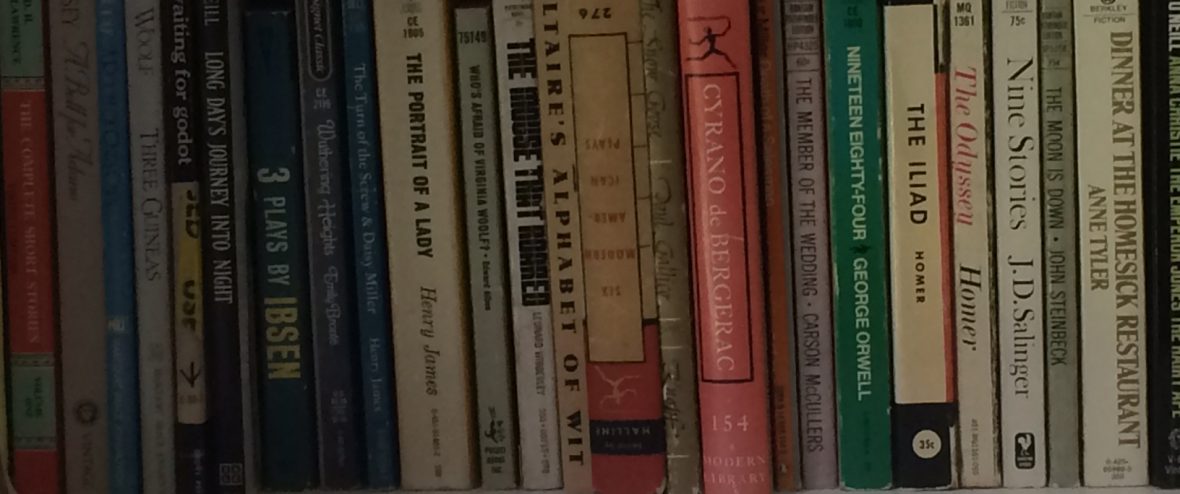
books, read around the world, reading

Reading Dangerously

I am not what you can consider “cutting edge” when it comes to technology and what is offered. I have only recently joined Spotify and found some podcasts that I am really enjoying, and I am sure there are many more for me to find. One podcast that I have been enjoying is The Book Case with Kate & Charlie Gibson. In the episode I am currently listening to (originally aired June 9, 2022) they are interviewing an author, Azar Nafisi. Her new book “Reading Dangerously” is a challenge to readers to choose books outside our comfort zone. She contends that reading fiction can be a liberating and even subversive act. She should know, having been an intellectual leader in Iran when the clerics took over.

This is something that I have been thinking about a lot lately. In the US the number of book bans is on the rise. The news stations are bifurcated so you choose what slant you want to hear before you choose the source. We are interacting less with people that are not like ourselves. Personally, I believe that this insular world we are living in has created deeper fissions. The concept of “News” is no longer a factual reporting of just who, what, why, where, when and how. It is all about sensationalism. Edward R Morrow, the man that single-handedly went after and exposed the lies of the McCarthy era, is rolling in his grave. Only opinion is spouted – not the facts. Just look at the differences in how Fox news spoke about the attack on Paul Pelosi versus how CNN spoke of it.

My biggest concern is that in our race to be MORE and BIGGER we are putting others down to achieve this. It is not until you can walk in someone else’s shoes that you can begin to understand why they feel a certain way. That is why the concept of reading dangerously is so intriguing to me. If I don’t know what someone else’s view of the world is, how am I to understand why their stance may be different? I don’t need to agree, but it would be good to understand why so that perhaps there can be a way that each person’s beliefs can be respected.

I have been reading around the world to provide myself with different perspectives and learn about how others live. I know this has impacted me. I had been a lover of the pomp from the Royal families since I was a child. Now, however, when I was watching the funeral of Queen Elizabeth II, I have a different reaction. I am disgusted by the pomp, especially seeing the military in force. It is the egos of this family’s ancestors that went around the world spreading disease and hatred, killing off cultures that had been in place long before them. The legacy they left is something that the world continues to struggle with daily.

Azar Nafisi’s theory that having a curious mind leads to challenge and understanding is one I believe in. It is two sides of a coin. You are to ask questions, but also gain empathy toward others. It should be our responsibility to do both. If we do not, we will only continue to divide ourselves into small groups that continue to belittle and dismiss others. That is the most dangerous thing to do. The lack of empathy will be the fall of our civilization.  

So go out and choose something to read that you would not usually pick.

book-review, books, Hispanic and Latinx Cultures, reading

Olga Dies Dreaming by Xochitl Gonzalez

This book is very complex, but also very simple.

The story begins with us following Olga while she is working to make a bride and her uber-rich family happy by ordering hand-made napkins, while making sure she has added enough to use at her cousin’s wedding in a few weeks. We meet her congressman brother, Prieto, as he greets his constituents – the part of the job he loves most. After he returns to his office, we hear him being summoned for a meeting with Arthur Selby – someone not a constituent or a donor – which will be resentfully attended.

As we learn more from each of these siblings, you learn of how their father Johnny was a revolutionary looking to change schooling to make the next generations of kids more equal, but returned from Vietnam as a heroin addict. After meeting and marrying Blanca, also a revolutionary, they had two children. While clean for a stretch, Johnny descended back into drugs, crack and became infected with HIV/AIDS. Blanca kept her eye on the revolution, giving speeches globally, until one day she left on one of these trips, but never returns. Olga was 13 and Prieto was 17 when their mother left. Because of their father’s habit that kept him in and out of jail, their Abuelita raised them, with the large family all helping.

While physically abandoned, each child continued to hear from Blanca and what she thought of their life choices via mail – no return address and no way to contact her. Neither shared with the other that they received these communications. The revolutionary diet of rhetoric they were brought up on, even with absent parents, impacted them, as did watching their father struggle with trying to provide for them while being chained to his addiction.  

Prieto took a grassroots approach to this revolution, first as a councilman, then as a congressman. Teased as “pollyanna” he didn’t have a side hustle – something that everyone else seemed to have going as an open secret. Olga took the educational route, gaining entry into an ivy league school where she looked safe enough, but never felt like she fit in or what to do next. Getting in had been the goal for her, while for those of Ivy-type families it was only the start of the chase.

Both siblings were faced with the realities of what the “establishment” was and how this establishment abused the power of it. Those with money, status, and skin were always plotting to keep it, and more importantly keep it from people not like them. Because of the systemic biases that have been built into all systems, education, housing, pay, healthcare and more, life is stacked against everyone “else.” The story highlights how people of color must decide on buying into the establishment version of success, or their own culture’s version.

The story is about how to use power to get what you want. It also highlights that these traits exists on both sides of the coin – the revolutionary mother was manipulating them and countless others to get what she wanted. It is the extremes of each side that pit us against each other – and that power itself, regardless of where it comes from, corrupts.

Extremely well written, engaging and thought provoking. This story of disenfranchisement, hidden secrets and the desire to be loved lays bare that we each must find our own definition of success, embrace the life you have and be open to ask for help when you need it.  

book-review, books, Family Drama, literature, read around the world, reading

The King’s Cartographer by Jair Alcalay

The story starts out in the late 1600s with an introduction to Jewish brothers that are running from a mob that have been sent by the Catholic Church to kill them for their religion. You are introduced to the particulars of leaving Spain, how the sea faring business they owned was organized, and about the ships they sailed. I was looking forward to hearing how the family escaped, built a new life in Portugal, and continued to grow and navigate around the world.

What you get, however, are the details that the family moved and settled in. You do not hear of the family and how they deal with the changes in circumstance and the future planning they are doing to find somewhere they can practice their religion openly. You learn how new ships were built, how a new person comes to the family and learns of the sea and how to create new maps – and even how they were created and used in the early days of naval investigation. With each new person you are following in the story, you hear details on how they faired at sea, a few comments of who they may have married, but the focus was on the exploration and the ships.

While these details were very interesting, this left me confused about this novel. The story was more of a travel log that passed from people. At the end, there were indications as to how Jews moved to the new world, now New York, but nothing was ever noted explicitly. I wanted to hear a story around these facts. This, in my opinion, was a lost opportunity to tell a fascinating historically based story that fell way short of the mark.

I will keep searching.

books, reading

Keeping up to date

Even before I created this site in 2018, I had been keeping a spreadsheet with information on the books I had read in the hopes that I would not re-read something. Then came my initial personal book challenge and I was hooked with my tracker. Over the years I have kept including more information that I was collecting. Initially started with the name of the book, the author and my rating, I had included the book format, where I sourced the book, categories, pages and more. Over the last few months, I decided to take the spreadsheet to the next level and combine the years (previously each year had a different tab) and start using pivot tables to keep up with the data.

For anyone that has ever created or maintained a database, you know how this seemingly easy task takes on a life of its own. As I started to backfill information on the books from my early years (2011) and on, I started to do a data cleanse that I had never needed to do before. With each year closed, it never impacted my next year’s data too much as long as the summary data was picking up the right data on the new sheet. Suffice it to say, my idea of doing this in one night has become a much longer process.

If you are keeping track, I have added new countries to my Armchair Travel List, as well as filling in titles for many countries. Having started with 94 countries, I am now up to 116 – still can’t believe I missed countries like Sweden and Norway! I have been focusing on reading from this list as a personal journey toward Diversity and Understanding. I have now read 83 of these countries. With the constant addition of countries, I have been holding steady at approximately 70% completed, but I am learning so much from this I will keep adding on – even considering adding regions to the list!

While I still have work to do on the database, I am hoping to keep up with my books. There hasn’t been too much time left with all the cleansing, but with the long weekend coming up in North America, I am up for the challenge!!!

African Experience, book-review, books, read around the world, reading

Hate has too many places to live: Abyssinian Chronicles / Uganda

Written as a novel, this is a semi-autobiographical tale of a family’s existence in Uganda in the 20th century. The racial, religious, gender and economic strife is all here. The story begins in a confusing way, setting the stage to meet the main character. At approximately 100 pages in I finally figured out when and who we were supposed to be focusing on. The historical information on the family, however, was needed to make the next 300 pages make sense.

Set in Uganda, we are introduced to the deep-rooted Catholic church’s influence, as well as the Muslim and Pagan traditions. These traditions tend to mix together, with some being incorporated into others. The influences of the outside cultures, Catholic and Muslim, is due to the evangelical history of Ethiopia (formerly Abyssinia) and the traders from the Middle East that came with the British. This becomes important when the reign of Idi Amin begins.  

Having an understanding of the history of Uganda would have helped, but this was covered in the first 100 pages through how the family members were impacted. The politics were not the focus, but the impact on the family. Information on what was happening was not central to living lives in the villages at that time. Early in the 20th century the tsetse fly spread a “sleeping sickness” pandemic, killing approximately 300,000. 1962 brought independence from Britain, the first election bringing Dr Milton Obote to power. 1967 brought a new constitution, giving more power to the Prime Minister, Obote. In 1971 Idi Ami overthrew the government and began a reign of terror – killing anyone that did not agree with him. Then the war with Tanzania, which Amin lost, and Obote returned to run a country that was decimated economically and ecologically. A new “plague”, HIV/AIDS then swept the African country.

The story starts in the time of independence, with the beginning being like the sleeping sickness – slow but gotten through. The family is a macrocosm of the country. Serenity (the son of a clan elder that had no interest in leading) and Padlock (a woman that was too brutal with her charges as a nun that led her to be thrown out of the nunnery) were the first despots that we encounter. Padlock required complete obedience from her children, and was brutal in enforcing her rule, while Serenity allowed this to happen as long as he was not impacted.   Mugezi, their eldest son, was never liked by Padlock and took the brunt of her hatred. He learned early on how to survive, instigate, and infuriate those in power. Padlock gets her way to send Mugezi to become a priest. Within the church walls, however, the next set of despots is found, with upperclassmen terrorizing the new students as the priests look the other way, or the controlling nature of the priest to have feasts of good food while the students watched and received mealy porridge.   

Through all of these tests, Mugezi learns how to survive, profit and exact revenge. These skills are what will allow him to survive the ongoing tragedy he is living through. To the very end, Mugezi relies upon his understanding of human nature and his ability to leverage this while not being too greedy.

This story is not easy to read. Awash with violence, the value of human life is cheap. The outright bigotry, of whites against blacks, blacks against Indians, Catholic versus Muslim, is prominent – the white Priest calling the black ministry students monkeys, the glee of the blacks when the Indians were deported, the smugness of the Catholics that only sinners got the “slimming” sickness (AIDS) – are all in the open. The hatred for each of the “others” is breathtaking in strokes, and the root of the cause of so much destruction. I kept looking for hope at the end, but I am not sure I found it.

While this book was well written, you need to be able to handle the horrors that are brought forth. I read this book at a time when I am personally struggling with the ongoing exposure of the deep hatred that remains in the Unites States. The fact that this has never gone away, or truly lessened for those that believe and teach this hatred is overwhelmingly depressing for me. In a world that has become so connected, how does this hatred of others still exist? As with Uganda, the answers are tied in not only racial issues, but are complicated by economic, religious and gender constraints also. These are all entangled and cannot be separated. We need brave souls to stand together to work toward a total solution that is based in respect for human life and beliefs. In 2022 they say there is much to look forward to for Uganda. I hope that is true there, and everywhere else in this world.

book-review, books, Family Drama, Middle Eastern, read around the world, reading

The world of Henna makes a mark

Henna House / Yemen

Set in 1920’s Yemen, this is a story of a small but distinctive Jewish community in Yemen. There is a law called the Orphan’s Decree – if a Jewish child’s father passes away, even if there are other relatives, the government can take them away and place them in a Muslim home to be converted immediately. This law has stolen many children, and marriage arrangements for children as young as 2 have been made in order to try to prevent this from happening. It is in this world that we are introduced to Adela, the youngest girl in a Jewish family with a father seriously ill.  Adela’s mother, who beats her regularly, delayed the search for a suitable match, but at the age of 6, a high ranking official in the government has made it clear that he wants to take her as a present for his wife.

When Adela father’s condition worsens, the task is undertaken. After three failed engagements, Adela is considered “cursed” as tragedy befell all that agreed. Her father’s long lost brother arrives with his son Asaf in tow. An engagement is arranged. The child Adela begins to allow herself to fall in love with her betrothed. Her adoration of Asaf was mixed with confusion of his hiding his ritual side hair in order to ride horses, something forbidden by law for Jews.  The uncle and Asaf leave abruptly to seek greater fortune, with no goodbyes. 

Another uncle falls from grace and arrives with his family. He was a wealthy merchant that came to folly because of superstition over his wife, a famous Henna artist. It was rumored that she caused a woman to die because of the charms she wrote in the henna art that was drawn before a wedding. This brought the two families together and provided a sister for Adela. They became inseparable. Adela learns the Henna art over years of helping her aunt and cousin, which introduces her to a greater world outside her village. Marriage comes to the girls, and things that drew them together now pull them apart. Jealousy and deceit create pain for the entire family.

The lives of the two cousins represent the choices that Jews of that time were making – do you leave your home village, forsake the heritage you were brought up in and build a new fortune, or do you cling to the old ways while you build a future uniquely your own? Each avenue leads to peril, but some stories should not have ended the way they did.   

Henna is a way to create beauty for someone’s life. It is a celebration. When it is used for other things, then the magic can take on darker meanings. To mark someone with pain is to write your own tragedy. To receive the painful message on your skin may seem temporary, but the marks will remain forever. In order to release herself from the power of the henna, Adela wrote her own story. It is a story of emerging from a life that was existing in the past and arriving in a future that no one ever expected. Leaving the village in Yemen, where running water did not exist, and emerging from the dessert in Palestine at the dawn of a new country in the matter of months was as jarring as the reality that the Hani, her cousin found in Europe. 

The story, while slow to unfold, follows the speed of life in Yemen. The resolution and revelations near the end speed up as Yemen and Adela are thrust into modern times. The language is beautiful, and like a henna this left a mark. Family can be both salvation and destruction. Ultimately, the choices each girl makes leads them to their own futures.

African Experience, book-review, books, Family Drama, read around the world, reading

Baking Cakes and Burying Hoopies

Baking Cakes in Kigali / Rwanda & When Hoopies go to heaven / Swaziland

Baking Cake in Kigali is in a similar vein as the No. 1 Ladies Detective Agency. Meet Angel. She makes the most wonderful cakes. She has started this business while her husband Pius is a special consulting in Rwanda, rebuild the country after the genocide. They are not from Rwanda, they are Tanzanian. Angel and Pius are raising their five grandchildren. Three are their late son Joseph’s children. He had tested positive, but he was shot in a robbery. The other two are their daughter Vinas’ who died “from blood pressure.”  Pius and Angel are working so hard to provide for this second family, as so many grandparents across the African continent are doing.

Angel, who prides herself on being a professional person, faces the realities of life with grace and humility. The family lives on a compound for the many volunteers that have come to rebuild after the war. She takes people under her wing, and cares for them. Her main concern is to make people happy. We learn through Angel the difficulties that people face everyday. The status of women – the number of men being so scarce – pit them against each other as they look for partners. The unavailability of work leaving no choice but to sell their bodies in order to feed their families. Undercurrents through the country are the knowledge that you may have survived, but you are not sure if the person next to you was part of the massacre, or is somehow related to someone that was. Then there is the ever-present HIV.

This book takes on these difficult topics, such as the HIV crisis that has left so many grandparents raising children and the genocide with skill. While ever present, it is not maudlin or gratuitous. You see though different characters what it is like to be a child of a collaborator, to be the only survivor of a family, and the pain that remains as people try to move on with life.

All of this while you watch Angel go to HIV positive women that are being taught how to sew to keep them from selling themselves on the streets, buying fabric from women that are making their own patterns to survive, and standing in for a mother in jail for collaboration at a wedding. The wedding itself shows how the country is trying to heal – step by step learning to live together in the present with people from all over Africa, and the world, coming together – even the different groups that had been at war in Rwanda.

Through this empathy and openness to learning something new, Angel helps to heal hearts and make differences, both large and small for the whole community. There is hope for the country in what Angel is able to accomplish, which leads you to believe there is hope for the country in real life. Well worth the read.

I actively search for more stories with Angel and found When Hoopies Go to Heaven. The family has left Rwanda and moved to Swaziland. This installment is told from the point of view of the middle child of Joseph, Benedict.  Benedict is fascinated with all animals. Through his attempts to do the right thing, what he felt Angel or Pius would do, similar connections are made between different groups. While the changed POV was not as compelling as the first book, the same humanity and wonderful writing is found. I will continue to look for more books by Gaile Parkin for the pure delight in reading, and the added bonus of learning about different cultures. 

book-review, books, Hispanic and Latinx Cultures, reading

The history of tango in Argentina

When I started this blog I created a list of books from countries around the world – 101 – and called it my armchair travel log. I have not been diligent with updating this list, or even considering it. Then the world “woke”. You need to walk in someone else’s shoes before we judge them. The best way I know how to do that is to read about life from someone else’s point of view. I recommitted to the task.  The first thing I realized is I missed some countries – Austria, New Zealand, Lebanon and Swaziland. I am afraid I missed many more.

My kickstart landed me in Argentina, chasing The Tango Singer. Tomás Eloy Martínez creates a cast of characters that includes the city of Buenos Aires. The main character, Bruno Cadogan, is an American – New Yorker – writing his thesis on Jorge Francisco Isidoro Luis Borges, a famous Latin short story writer. Borges’s 1940’s publication The Aleph is a collection of his stories with common themes. [Borges style was to influence the magic realism movement in 20th century Latin American literature. It is assumed that you are familiar with him and his work but it is not necessary to enjoy this book.]

Bruno is encouraged to experience Argentina, where Borges lived and created, but the New Yorker was reluctant to leave, preferring the safety of the United States. The implication here is that those in the U.S. like to know more than anyone else, but never leave and experience that which they are to know so well. This also implies that you must travel in another’s steps to truly learn about life.

After being awarded a scholarship, he is persuaded to go and find a new angle to write something new for his thesis – a story he hears about an unsung tango singer. Thus begins Bruno’s quest to find this illusive singer that was rumored to be better than Carlos Gardel [the internationally acclaimed singer, songwriter, and most prominent figure in the history of tango – so says wiki-pedia].

Upon arrival in Buenos Aires, Bruno is taken in hand by someone that sets him on his magical journey. By coincidence this person takes him to stay at the actual hotel where The Aleph was said to be written. From this place he meets a man that lives in the basement where Bruno believes the Aleph actually exists, as well as other characters. In his friend’s [I returned the book to the library and forgot this character’s name] desire to get into the basement, Bruno contacts the owner of the building to see what can be done.

After that, we are following the steps of Julio Martel, an ailing and aging man. He never announces where he will sing, instead just appearing from nowhere where Bruno arrives too late to hear him. Bruno attempts to find the reason why these sites were chosen. The stories of how Julio became a singer, and of the places and people related to each, are peels of an onion. Layered and nuanced, with bits being given out of order and disjointed. By examining the pattern of Julio’s impromptu concerts, the dark history of the country is laid bare, with years of abuses of power being highlighted. As Argentina again spirals into chaos of changing regimes, soring inflation and increasing desperation, you see Bruno’s desperation to see Julio, who has since ended in the hospital critically ill, just as the country is.

It is in this chaos that the owner of the building where the Aleph was to be found evicts everyone. This parallels the chaos within the country. Regardless of the past, the present is to be re-written regardless of the cost to human lives. It also reflects the impact of outside countries, such as the United States, on the country of Argentina.

Bruno never does hear Julio sing, and he leaves Argentina to return to New York, forever changed by the stories that Julio made sure were not lost to history. To hear the stories is to carry the burden of what happened. This shared burden is what provides the empathy to remember the sacrifices of others and to have respect for those that survived.

Black Experience, book-review, books, reading

Homegoing

In my first attempt of the year I head to my library’s website.  My first stop – my lists of saved titles to read.  Around the World – my list of books to read from every country – beckons me.  After reading many Top Ten lists of 2021, I choose Homegoing by Yaa Gyasi. I click the button to reserve my copy.  In one week, it is in my house. 

The story pulls me in immediately. First, we meet Effia, a girl in a village in Ghana.  Her father is “a big man” in the village.  Her mother beats her often.  The chief is set to marry her when she becomes a woman, but her mother tells her to keep that a secret.  Instead of earning an honored place in the village as a first wife, Effia is given into marriage with a British officer.  When she goes to Cape Coast Castle, she discovers there are people that look like her in the dungeon that will be sold as slaves.  She learns quickly that the British will become “mean” when questioned about this.

Next you meet Esi.  She is the daughter of “a big man” in a different village.  Her mother loves her and is always near her side.  It is in this story that you start to hear that people in the North are not human.  The Villagers have conducted raids across the country, being known as a strong tribe to be afraid of.  Prisoners are held in cages in the village center, with people walking by to spit on them because they are not people.  Esi’s mother is forced by her husband to pick a girl to be a house girl.  The mother protects her as best she can.  It is not until after the girl is whipped by the father for dropping two drops of water, at the urging of the rest of the family, that Esi learns that her mother had been a slave before.  As fate has it, it is Esi that ends up in the dungeon below where Effia is.  This is when we learn that these are half sisters, each traveling a very different path from the other. 

I am very uncomfortable reading this book, which is probably the point.  From the first, when I realize that the villagers participated and profited from enslaving their own kind, just from a different village, I am sick.  When I realize the animals that are found around those villages become what these people are called in derogatory terms, I am horrified – I knew of the slur, but this put the pieces together of where the slur came from.  The way groups of people dismiss others – making it easy to treat them badly by stripping them of any humanity – is way too familiar.  This is the tactics that the Nazis took in 1930s Germany against the Jews, homosexuals, gypsies and more.  These tactics are not just our history.

This history continues to haunt us.  The legacy of slavery remains in the systemic structures of our world, including education, economic support for the poor, and access to proper mental and physical health resources. We continue to be faced with the stark realities of continued prejudice: Floyd George’s murder, LGBQT+ being thrown off roofs, and women like Malala being shot.  Until we start looking at others as part of us, this will not change.  There continue to be people that need to be better at someone’s cost. They lead the way for others to feel better about themselves by putting others down. They strip the belief in the humanity from those they push down.  All those that participate in this, or that stand by and let it happen, ultimately lose their own humanity. We need to open oppressor’s eyes to this.  Unless we all understand we are in this together, there will be no end. 

This is my reaction from the first third of the book.  My soul is crying, and I can’t continue.  If the rest of the story continues as well written, I can only guess at the depth of feeling and thought it will provoke in its readers.  As for me, I am too saddened by the reality of what this represents, and gripped by the fear that we have not learned enough to keep it from happening again.