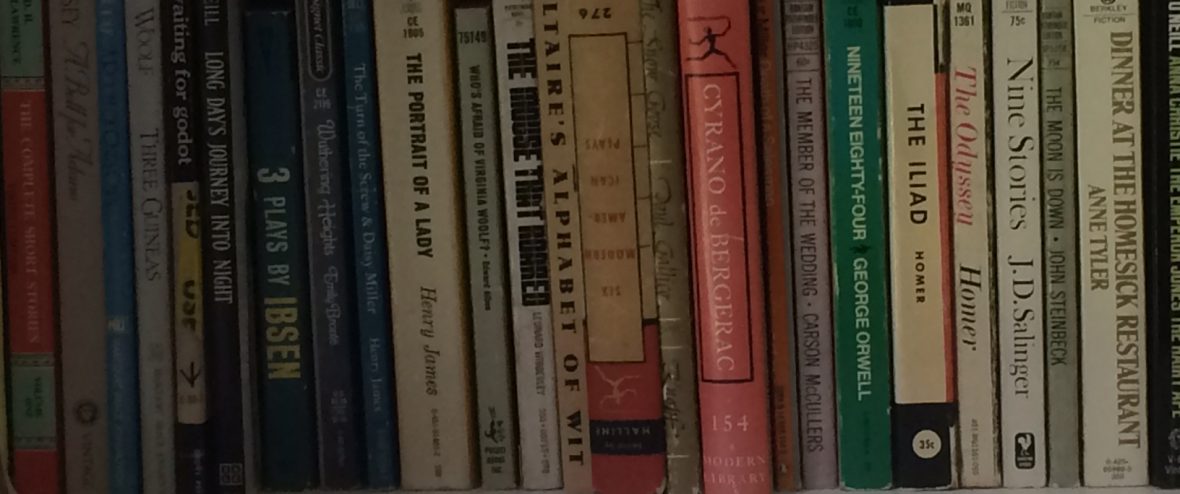
books

To My Dad

My father died March 21, 2020. He had celebrated his 90th birthday in February, and was ready to go. While he knew he was loved by his family, I live 800 miles away. With the country starting on lock down, and borders being closed, the idea of driving from my home in Massachusetts to my parents in Michigan was becoming a nightmare. If we even made the 12 hour trip through Canada, where the borders were closing, or 14 hours around the lakes, we didn’t know if there would be restaurants or gas stations open for us on the way. Since my parents had just moved into an apartment on March 3, I didn’t even have somewhere to stay if I actually made it there. So I live streamed the funeral with my family here. Staring at the bench my father teased his mother-in-law about all my life. It was like he made sure I would smile thinking of him. He knew I was there.

While I know in my head he is gone, the reality of seeing a coffin and watching it lower into the ground, and then the worst sound in the entire world – that of dirt hitting a coffin – are missing for me. It was three days after the funeral when I finally had a visit from my dad in my dreams. He was letting me know it was ok that I didn’t come, because I still needed to hear that.

My dad’s good opinion of me was everything. The last three times I saw him we both made sure that we knew that we loved each other and that nothing needed to be forgiven or explained. We had made that peace. I wanted to honor him in ways that reflected on our relationship. We had both loved Hemingway’s writing. Not only were we admirers of the clean clear sentence structure, but we both felt a connection to the writer. The summer camp my father helped build with his friend, the one that my dad sent his three daughters to, was next door to the property that Hemingway had. The Nick Adams stories were written about this place. The Horton Bay General Store is real, and we have been there. I read In Our Times in his honor. The stories I had loved so much, however, fell flat for me this reading. I did go back to our conversations about Sherwood Anderson, and it made me smile to think of our discussions on the stories that made up Winesburg Ohio. But I didn’t feel closer to him.

As time moved on, and I began to heal, my daily life and routines kept me going. I started to pick up more at work, and started reading more too. I ended up looking at my bookshelf, since we can’t go to the library, and a book called to me. Proof of Heaven by Eben Alexander. The true story of a neurosurgeon’s Near Death Experience. When I was reading about his experience, and the fact that the thing he learned was that we were all loved and we can’t do anything to make that stop, I sobbed. I thank my dad for reminding me that we had that love. No matter what. Nothing I do in this life will ever change that.

In the world of crisis we live in, send out the love. That is all that matters. That is the start and the end of it. Let go of all else. Connectedness matters. I was told today about an affirmation someone was given – you are enough. She passed it on for herself, but I hear it for me too. We are all enough.

The world is trying to remind me of the love I am missing. I will do my best to honor you all the rest of my days. I love you daddy.

book-review, Family Drama

The Crawdads are Singing

As this isolation continues, we all seem to be searching for something more. Is there something or someone out there orchestrating this? Is this the beginning of the end? Is there someone to lead us to safety like Neo “the one” Anderson in The Matrix?

Humans are in need of a pack. Families are one, friends are another. What happens when these disappear? Just as with other species, those that appear weak are cast out. Isolation is the theme throughout Where the Crawdads Sing by Delia Owens. With heartbreaking clarity, the detailed discoveries of an amazing young child on nature, supported by the author’s own degrees and work in Zoology, focus on the need for others to make us whole. The actions of the “flock” to someone not quite their own are also explored. While more can be said on the underlying tensions and actions that set things in motion, in our current world, it is the isolation that drew me in the most.

At the age of 5, Kya watches as her mother walks down the path and out of her life, never to return. Kya is left with her brother Jodie, 8 years older, and their father, an abusive drunk. When Jodie leaves after a beating, Kya is left alone with her father, until he also disappears. With almost no money, she begins to build a life. She walks to the Piggly Wiggly barefoot, as she has no shoes, and is shunned by “proper women” as dirty and bad because she lives in the Marshes of South Carolina with no money. No one truly reaches out to help. As she begins to become reliant on herself, she digs oysters in an effort to not take charity. She strikes up a deal with Jumpin, a black man that buys her oysters and smoked fish, and in return makes sure she is watched over and given items she needs. With his wife Mabel, these social outcasts in the south (blacks in the US in 1950 knew of her torment, but made a family together), they made sure she had clothing, supplies, and people to turn to for information and help. All in a manner that would be acceptable to Kya. There was no need for thanks, no glory requested for good deeds. They simply took care of someone in a manner that the receiver needed it.

As we continue our isolation through this virus, we need to make sure that we all open up to those in need. Blaming someone for having the virus, or passing it on by mistake is the same as blaming Kya for being abandoned. Have compassion for those around you, especially the most vulnerable. It is in times like these where the true heroes are found. Those that help with no need to tell others. Those that don’t even think they are doing anything extraordinary.

Today, do something for someone else that they need, without asking, and in a way that makes it easy for them to accept with grace.

In the end, that is all we have.

book-review, books, reading, Science Fiction

What Station am I at?

Every day life gets weirder. Fewer people are working in the office. Streets normally bustling are empty. No rush hour traffic. All of this makes me grow more spooked.

As a new convert to the dystopian genre, I don’t have that many books to reference back to. I have always expected things to happen like Orwell’s 1984 with the government tracking your every move. All they need is access to your fitbit or iphone. If they want to get rid of your books, like Bradbury’s Fahrenheit 451 just access your hoopladigital or amazon account. Say what you want about who is in charge in government, but to me, it certainly feels that all pigs are equal, just some more equal than others (another shout out to Orwell.) Access to birth control and OBGYN doctors is so limited, and fertility treatments are so expensive, its just time before we are all looking like handmaids.

But Emily St. John Mandel’s book Station Eleven is haunting me right now. Four years after I read it. In her story everyone started to catch colds and die. Only some survive, and no one knows why or how. Self isolation had been part of the story, too. As I remain in my home with my family, keeping away from others who may have been in contact with people that have been tested positive, it makes me wonder. Will I need to strike out to find others?

The bonus of being isolated is there is plenty of time to catch up on my reading. Let me know if there is anything you think I should pick up during this incredibly strange time.

African Experience, Black Experience, book-review, literature, read around the world

Stories from Africa

As I begin reading through my list of books to be read, I check out Say You’re One of Them by Uwem Akpan. As I turn to start the book, I am met by a map of Africa. I see the following countries highlighted for me: Sierra Leone, Liberia, Benin, Gabon, Nigeria, Niger, Ethiopia, Kenya, and Rwanda. There are so many countries on this continent – and yet all of these are part of this book. I start to think about my arm chair travelling.

Without fully comprehending until the first story has finished, I begin to realize the richness of the collection that is before me. With as many religions as languages throughout Africa, this is an extremely complex and confusing place. A continent that had been under siege, either by force or not, the contradictions that the people bring on to themselves is so sad, especially in the context of the children’s eyes we are looking through. Africa is a story of stolen children’s lives.

Each story begins with innocence, and ends in terror, or death. The capacity for hatred, and for adjusting to survive, are just a hairs breath away from each other. We have heard of the terrors on tv, but these stories, told from a child’s point of view, kick you harder. Where innocence should be, there is nothing but wariness and fear. There is no way this will not impact the future generations and how they relate to each other and themselves.

book-review, books, reading

New place for books, new format

As I have started the quest to increase my reading, it has been heartening to see there are so many ways in which I can access books. My first instincts are old fashion – the good old corner bookstore and the public library. Nothing in this world is better that these. The smell, the possibility, the comfort that can be found there. Local is best, as the personality of the area comes through. As our world has become more digital, however, the opportunities to access books has been altered. Even from the public libraries, I am downloading ebooks and digital audiobooks for free. I borrow spoken CDs, playaways, and I use Hoopladigital. Then I discovered that the mother of all companies had opportunities for me to borrow books too. As an Amazon Prime member, I have begun to make this feature one more of my methods of access to books.

As I scanned my way through what was available, I found a short story by Alice Hoffman. This was the first of an “Amazon collection” called Inheritance. Made up of five books by five authors, the collection explores different ways in which family history is hidden from others, but the consequences are never what is expected. Each story explores different times and relationships, laying bear feelings you never expect, regardless of your own experience.

Alice Hoffman’s Everything My Mother Taught Me tells the story of an unfaithful wife whose daughter stops speaking when her father dies; Julie Orringer’s Can Your Feel This? tells the fear of childbirth; Anthony Marra’s The Lion’s Den tells of a son’s realization of why it is important to share your beliefs with those you love while you can; Jennifer Haigh’s The Zenith Man tells of a man’s devotion and loyalty; and Alexander Chee’s The Weddings tells of what it means to make a family for yourself by being true to yourself.

Each of these capsules struck me differently, with the strongest being Julie Orringer’s. With each description of fear, pre-mature birth, terror of not knowing what to do with a new born and the of what you are now responsible for my own experiences were brought back to me vividly. To know that I am not alone in experiencing these fears, even 17 years after going through them, gives me comfort.

Within this and the other stories, even if you do not have a direct link to the world that is created, these stories are written to provide you with a new way to look at the way your family, both by birth and by choice, impact the person you are and how you react. I recommend these short stories unreservedly.

Each of these are noted as part of the collection, but is also part of a standalone story. In order to experience the total, you need to download all five.  In a unique way to structure the access to short story collections, this provides you, the reader with the suggested structure (each book is numbered in the series), but you can download for yourself discreetly.  In traditional books like this, the stories are collected and delivered together. To me, this makes the reading experience more a deliberate choice to experience the collection, an interesting way to change not only the delivery of the books but the structure too.

book-review, Family Drama, read around the world, romance

Lucinda Riley’s The Sun Sister

Some times life can overwhelm you, and you just want to escape. That is the best time to pick up a good book and dive on in. Last week I took the opportunity to do that with the sixth book in Lucinda Riley’s Seven Sisters series, The Sun Sister.

As a reminder, this series is centered around a family of adopted daughters – six in total, that are named for the Seven Sisters constellation. Each is brought to their adoptive father’s home in Geneva but none ask for information on where they have come from. After Pa mysteriously dies and the body is whisked away, there remains some questions about what has happened. Coordinates are left for where they were born, as well as a quote to start them on their quest. The sister’s stories are all explored in each book. In this book, Electra is the focus. The sixth sister, she is a famous model, who is drowning herself in vodka and sleeping pills. After a breakup with Mitch, a rock star that she thought was “the one,” Electra has been using alcohol and pills to face each day, quieting the voices in her head. She had run away from her boarding schools, and was expelled from others. She had moved to Paris at 16 and was discovered at the café she was working as a waitress at. From that time, she had been on the road constantly. One evening Mitch told her she he was going to announce his engagement to another woman, and all Electra’s belongings that had been at his house were returned via moving van. It is in these boxes that the final letter from Pa and the coordinates are found. Electra finds out she has a grandmother. Electra downed at least one bottle of vodka and an unknown number of sleeping pills, and her assistant found her and helps her survive what could have been a fatal mistake. After this, Electra agrees to enter a rehab center recommended by her sister.

As the story progresses, we learn a story from her Grandmother, Stella. Cecily, a woman in 1930s New York society, is abandoned by her fiancé, and suffers the humiliation of being overlooked as the former future husband introduces a new woman as his new fiancé weeks after the breakup. In order to remove herself from the snubs that were happening daily, she chooses to travel to Kenya with her godmother, Kiki. Upon the insistence of her mother, Cecily goes via England, to stay with her mother’s best friend. While there she is romanced by the heir to the earldom, who disappears before she leaves. When Cecily and Kiki finally arrive in Kenya, Cecily is overwhelmed by how beautiful the country is. As she meets people and makes friends, and ends up marrying Bill. As their story progresses, you see glimpses of “Out of Africa” on the love and beauty of Kenya, misunderstanding and forgiveness.

As both stories are unravelled, the stark reality of race relations is examined. It is revealed that Electra is black, and that has kept her felling different and outside always. These themes were more serious than the other sister’s, so I was much more wrapped up in the story here, both for Cecily and for Electra.

I started the series last year, not realizing that I was going to catch up and overtake the author in the books being finished. This one was published in October – and now I probably have to wait two years to finish this series. It will be hard but I have no choice.

books, read around the world, reading

Year End Review

As this year draws to an end, I reflect back on what I have read and what I have experienced. This year was a difficult one in terms of meeting my goals. With the significant shift in the workload at the office, I spent much more time listening to books in the car as my commute doubled. My once happily reading slant to old fashion books was, for the first time ever, over 60% listened to! This, in light of the fact I have only been listening to books for about three years, I was blown away.

Over this year, I have been working on my at home travel log, as well as the Goodread’s Horizons, where a different part of the world was chosen for each month. As I previously reported, I have now completed my tour of the United States, and I am over half my way through the 100 countries I have identified. As I was stretching myself geographically, I also expanded my reading horizons to include more memoirs (11), and essays (5). My two favorite memoirs this year included An Odyssey: a father and son by Daniel Mendelson and We should all be feminists by Chimamanda Ngozi Adichie. These were thought provoking and brought me to action, even if in different ways.

As I mentioned earlier, this year has been a difficult one. I selected some titles that I would not usually in order to expand my horizons. The President’s Garden by Muhsin Al-Ramli, Chronicle of a last summer: a novel of Egypt by Yasmine El Rashidi, and In the time of butterflies by Julia Alvarez were all fiction based upon the realities of political horrors in Iraq, Egypt and the Dominican Republic. Each show the consequences of being honest in a society that is not open. Powerful in their own ways, each are a testament to those that survived the brutality and confusion.

Other authors take the horrors and stand them on their head. Examples of these include A woman in Jerusalem by A.B. Yehoshua, Death with Interruptions by Jose Saramago, and Death is Hard Work by Khaled Khalifa. In each, death is what starts everything. As assumptions on what should be and who should care, the absurdities of a corpse being arresting in Syria, or detained in Russia, can not be minimized. But when it is Death sending engraved letters that she is coming soon, that takes a whole new level. These were even more poignant to me as I face aging parents, and friends who are experiencing deaths that are way too early to have to face.

I have learned about the history of Mormons, the tranquility of Hawaii’s royal family, the breadth and depth of the Ojibwe, the brains of Hedy Lamar and the lengths men go to deny beautiful women, and that a fictional rock band can feel all too real. In the end, I feel that I have learned much more about people of my world, and hope that I can extend empathy towards others. I fear there is too little of this currently. I hope to bring more tolerance to others through what I have learned from these books.

Happy reading in 2020.

books, read around the world, reading

At Home Travel Log of US Update

As the year draws to a close, I have focused these last few months to completing my 50 states of reading. With New Mexico and Hawaii bring up the rear, I should be able to finish the last state by year end. Going through the list, now, I am amazed at the breadth of what is available for reading just here in my own country.

From pure fiction in Alaska (Michael Chabon’s The Yiddish Policeman’s Union) to fiction based on political beliefs (The Cider House Rules by John Irving) in 1950’s Maine, I have traversed the settings of the country. Interestingly, the memoirs and non-fiction I have read (a total of 10), these are mostly focused from the West Coast to the Mid-west of the country. The time frame of the books covers the late 1800s (Hawai’i, Wyoming, and Texas) through times of trouble (Cold Mountain, East of Eden, Snow Falling on Cedars, To Kill a Mockingbird) and faced the changing reality of our world (The Help, Eleanor & Park).

While the era, settings and circumstances were location specific, each of these stories, both fiction and non-fiction, had a similar thread. Each brought us closer to understanding the humanity that we have. These books open our eyes to ourselves, and to others. The Bell Jar shows the need to care for your mental welAs the year draws to a close, I have focused these last few months to completing my 50 states of reading. With New Mexico and Hawaii bring up the rear, I should be able to finish the last state by year end. Going through the list, now, I am amazed at the breadth of what is available for reading just here in my own country.

From pure fiction in Alaska (Michael Chabon’s The Yiddish Policeman’s Union) to fiction based on political beliefs (The Cider House Rules by John Irving) in 1950’s Maine, I have traversed the settings of the country. Interestingly, the memoirs and non-fiction I have read (a total of 10), these are mostly focused from the West Coast to the Mid-west of the country. The time frame of the books covers the late 1800s (Hawai’i, Wyoming, and Texas) through times of trouble (Cold Mountain, East of Eden, Snow Falling on Cedars, To Kill a Mockingbird) and faced the changing reality of our world (The Help, Eleanor & Park).

While the era, settings and circumstances were location specific, each of these stories, both fiction and non-fiction, had a similar thread. Each brought us closer to understanding the humanity that we have. These books open our eyes to ourselves, and to others. The Bell Jar shows the need to care for your mental well being, as does The Virgin Suicides. The Lovely Bones shows how to watch out for yourself, as does The Color Purple. Throughout all, it is our job to take the lessons from each book, learn from it and extract wisdom to help us be better people. These books are a part of the author’s humanity, and we need to be open to having it touch ours. Thus the reason I love to experience different worlds, cultures and times through books.

book-review, Family Drama, Indigenous American, literature

There, There a story of a place that doesn’t exist anymore

Years ago I had been a participant in a program on diversity. During this program we were asked to create a spectrum of I am no sure what. I do, however remember that the facilitator stated that the Natives and the Jews should be together since we were both parts of tribes. At the time, I remember it was intriguing, but I didn’t explore it much.

As I listen to There There I am struck by the sad similarities and differences between our tribes. The book is made up of twelve separate stories that are tangentially collected. Early on we meet Jackie Red Feather and her sister Opal Victoria Viola Bear Shield. Their mother, recently battered by one of the girl’s father’s, takes the girls to join other Natives taking over Alcatraz. This reminds me of the Jews that fled Jerusalem after the first and second temples were destroyed. They fled to a fortress also to keep their way of life alive. Ultimately both fail to gain their demands, but they came together to build a community, which at the core of each is the most important part.

Other stories are added, where Natives are spoken down to, not heard, not given opportunities. They are herded together, but they don’t believe it can be that bad, people are not that evil. Both the Jews and the Natives were wrong in that belief, as they both face massacres in scale and scope that truly underline how evil exists in the world.

One character, Dene, earns a grant to capture the stories of Natives – who they are, what it means to be Native, and how they came to be there. This is also something that the Jews have done since the end of World War 2, bearing witness and sharing.

One way that is not similar is the susceptibility of Natives to addiction. Tobacco, alcohol, and drugs are devastating to these people. The number of children born addicted is disproportionately high versus the US population. One section shares the speech of a suicide prevention specialist that was especially compelling. It is that just telling them to stop doing it does not address the real problem. That was hopelessness. If there was hope, there would not be as many choosing to check out.

All roads lead to the Big Pow Wow in Oakland. This is a trial for the Indian Center – if it goes well, they will do more. Its an opportunity to dance, to learn from the big drums, to be with your people, and to try for big prize money. It is also where the White parts of the Natives, illustrated by the White 3d printed guns, does random destruction and irreparable damage to those in attendance.

As all tragedies do, it tears some apart, while bringing others together. Either way, none are the same. They are all just trying to survive and honor who they are and where they came from.

book-review, memoir, Non-Fiction, read around the world

Jerusalem – the heart in four chambers

Jerusalem Drawn and Quartered by Sarah Tuttle-Singer was a memoir I was very much drawn to read.  The premise of the book was to live for one year within the walls of the old city, time spent in each one of the quarters.  I was excited to read the stories about how each section was, the differences and the similarities. 
What the book ended up being, however, was a woman that is still processing traumas.  From the onset of reading the book, you learn of the author’s love of Israel, how she came as a teen and how she fell in love with the place.  Her mother had done the same thing, and had passed on this love of the country. 
You are then plunged into half stories and innuendo on her mother’s death, a possible sexual assault, a stoning, an abusive relationship, and a divorce and another sexual assault.  The story telling of this is all in the backdrop of explaining the different parts of Jerusalem, friends and acquaintances.  She spends 3 days at a time in the old city, so she can be with her children the other days near the kibbutz they live on with their father.  She is not a resident in any quarter, but a short time visitor.  She is always looking for the rooftop, echoing a story of her grandmother’s first time in Israel and being caught kissing someone on a roof before being sent to Chicago.  There are sparks of conversations and insights that I wish the author would have explored more:  
  • The person who’s fiancé was born in the old city, but left in 1967 to be with his father in Jordan, and cannot get a visa to come back, so the fiancé needed to chose between the person she loved or the city she loved.
  • The Muslim family that invited her in one night when she was out near dark and it was not safe. This matriarch, with a girl and boy just like the author’s, was never fully developed.  We never learn of the ways of the family, just the fact that both mothers wanted their children to go out and save the environment together.  The common ground between the two were only explored on the surface. 
  • The Arab man that sat with her over coffee to tell her that his family fled in 1948 to stay safe from the war. They came back when it was done and someone else was in their house.  They want their house back. 
  • The Muslim tailor that gave the author’s daughter her first Jewish Star necklace, the taxi driver that thanked her for making friends with Arabs and apologized for all the terror that had been done on behalf of his people (which the author reciprocated). 

All of these were mentioned, but not examined in anything more than the observation that these things happen. 

A major part of the story is her processing her mother’s death, an abusive relationship, a possible assault, a stoning and more.  I have tried my best to see if these are to be metaphors for the city of Jerusalem, but I am just not convinced these are.  The loss of innocence, the spilling of blood, the abuse of those you love – while there may be some similarities, they remain too vague to be real, in my opinion.  That is why I am so unsure about what the point of the book was.  To me it was more of an exercise to see if she could be strong for herself and her children, while putting herself in danger with stupid decisions (really – why on earth would I feel this woman is strong because someone followed her to a hotel and she yelled at him, when earlier she just stood and took it when someone undressed her when she didn’t want it at a different one?)  She kept relaying both sides of herself – again not sure if was supposed to be metaphor for the city or not, but it made me not like her.

After reading the book, I want even more to understand the differences between the quarters.  Why they are there, what motivates them, and what commonalities or assumptions that everyone has – so we can break down barriers toward a real peace. 
In this time of forgiveness and atonement, I was hoping for more.