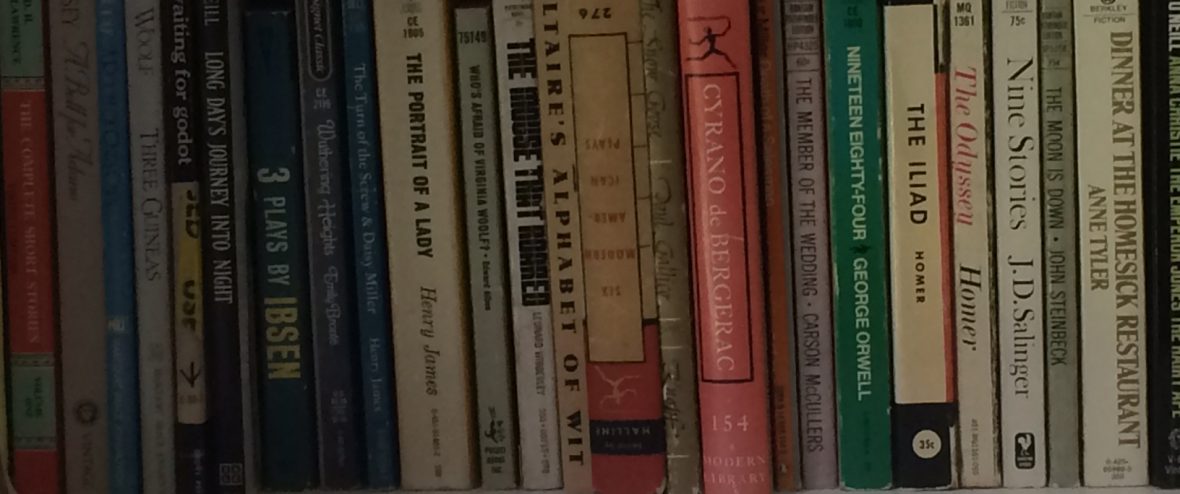
As I have started the quest to increase my reading, it has been heartening to see there are so many ways in which I can access books. My first instincts are old fashion – the good old corner bookstore and the public library. Nothing in this world is better that these. The smell, the possibility, the comfort that can be found there. Local is best, as the personality of the area comes through. As our world has become more digital, however, the opportunities to access books has been altered. Even from the public libraries, I am downloading ebooks and digital audiobooks for free. I borrow spoken CDs, playaways, and I use Hoopladigital. Then I discovered that the mother of all companies had opportunities for me to borrow books too. As an Amazon Prime member, I have begun to make this feature one more of my methods of access to books.
As I scanned my way through what was available, I found a short story by Alice Hoffman. This was the first of an “Amazon collection” called Inheritance. Made up of five books by five authors, the collection explores different ways in which family history is hidden from others, but the consequences are never what is expected. Each story explores different times and relationships, laying bear feelings you never expect, regardless of your own experience.
Alice Hoffman’s Everything My Mother Taught Me tells the story of an unfaithful wife whose daughter stops speaking when her father dies; Julie Orringer’s Can Your Feel This? tells the fear of childbirth; Anthony Marra’s The Lion’s Den tells of a son’s realization of why it is important to share your beliefs with those you love while you can; Jennifer Haigh’s The Zenith Man tells of a man’s devotion and loyalty; and Alexander Chee’s The Weddings tells of what it means to make a family for yourself by being true to yourself.
Each of these capsules struck me differently, with the strongest being Julie Orringer’s. With each description of fear, pre-mature birth, terror of not knowing what to do with a new born and the of what you are now responsible for my own experiences were brought back to me vividly. To know that I am not alone in experiencing these fears, even 17 years after going through them, gives me comfort.
Within this and the other stories, even if you do not have a direct link to the world that is created, these stories are written to provide you with a new way to look at the way your family, both by birth and by choice, impact the person you are and how you react. I recommend these short stories unreservedly.
Each of these are noted as part of the collection, but is also part of a standalone story. In order to experience the total, you need to download all five. In a unique way to structure the access to short story collections, this provides you, the reader with the suggested structure (each book is numbered in the series), but you can download for yourself discreetly. In traditional books like this, the stories are collected and delivered together. To me, this makes the reading experience more a deliberate choice to experience the collection, an interesting way to change not only the delivery of the books but the structure too.
 The Source 4 Books