book-review, Family Drama, read around the world, romance

Lucinda Riley’s The Sun Sister

Some times life can overwhelm you, and you just want to escape. That is the best time to pick up a good book and dive on in. Last week I took the opportunity to do that with the sixth book in Lucinda Riley’s Seven Sisters series, The Sun Sister.

As a reminder, this series is centered around a family of adopted daughters – six in total, that are named for the Seven Sisters constellation. Each is brought to their adoptive father’s home in Geneva but none ask for information on where they have come from. After Pa mysteriously dies and the body is whisked away, there remains some questions about what has happened. Coordinates are left for where they were born, as well as a quote to start them on their quest. The sister’s stories are all explored in each book. In this book, Electra is the focus. The sixth sister, she is a famous model, who is drowning herself in vodka and sleeping pills. After a breakup with Mitch, a rock star that she thought was “the one,” Electra has been using alcohol and pills to face each day, quieting the voices in her head. She had run away from her boarding schools, and was expelled from others. She had moved to Paris at 16 and was discovered at the café she was working as a waitress at. From that time, she had been on the road constantly. One evening Mitch told her she he was going to announce his engagement to another woman, and all Electra’s belongings that had been at his house were returned via moving van. It is in these boxes that the final letter from Pa and the coordinates are found. Electra finds out she has a grandmother. Electra downed at least one bottle of vodka and an unknown number of sleeping pills, and her assistant found her and helps her survive what could have been a fatal mistake. After this, Electra agrees to enter a rehab center recommended by her sister.

As the story progresses, we learn a story from her Grandmother, Stella. Cecily, a woman in 1930s New York society, is abandoned by her fiancé, and suffers the humiliation of being overlooked as the former future husband introduces a new woman as his new fiancé weeks after the breakup. In order to remove herself from the snubs that were happening daily, she chooses to travel to Kenya with her godmother, Kiki. Upon the insistence of her mother, Cecily goes via England, to stay with her mother’s best friend. While there she is romanced by the heir to the earldom, who disappears before she leaves. When Cecily and Kiki finally arrive in Kenya, Cecily is overwhelmed by how beautiful the country is. As she meets people and makes friends, and ends up marrying Bill. As their story progresses, you see glimpses of “Out of Africa” on the love and beauty of Kenya, misunderstanding and forgiveness.

As both stories are unravelled, the stark reality of race relations is examined. It is revealed that Electra is black, and that has kept her felling different and outside always. These themes were more serious than the other sister’s, so I was much more wrapped up in the story here, both for Cecily and for Electra.

I started the series last year, not realizing that I was going to catch up and overtake the author in the books being finished. This one was published in October – and now I probably have to wait two years to finish this series. It will be hard but I have no choice.

books, read around the world, reading

Year End Review

As this year draws to an end, I reflect back on what I have read and what I have experienced. This year was a difficult one in terms of meeting my goals. With the significant shift in the workload at the office, I spent much more time listening to books in the car as my commute doubled. My once happily reading slant to old fashion books was, for the first time ever, over 60% listened to! This, in light of the fact I have only been listening to books for about three years, I was blown away.

Over this year, I have been working on my at home travel log, as well as the Goodread’s Horizons, where a different part of the world was chosen for each month. As I previously reported, I have now completed my tour of the United States, and I am over half my way through the 100 countries I have identified. As I was stretching myself geographically, I also expanded my reading horizons to include more memoirs (11), and essays (5). My two favorite memoirs this year included An Odyssey: a father and son by Daniel Mendelson and We should all be feminists by Chimamanda Ngozi Adichie. These were thought provoking and brought me to action, even if in different ways.

As I mentioned earlier, this year has been a difficult one. I selected some titles that I would not usually in order to expand my horizons. The President’s Garden by Muhsin Al-Ramli, Chronicle of a last summer: a novel of Egypt by Yasmine El Rashidi, and In the time of butterflies by Julia Alvarez were all fiction based upon the realities of political horrors in Iraq, Egypt and the Dominican Republic. Each show the consequences of being honest in a society that is not open. Powerful in their own ways, each are a testament to those that survived the brutality and confusion.

Other authors take the horrors and stand them on their head. Examples of these include A woman in Jerusalem by A.B. Yehoshua, Death with Interruptions by Jose Saramago, and Death is Hard Work by Khaled Khalifa. In each, death is what starts everything. As assumptions on what should be and who should care, the absurdities of a corpse being arresting in Syria, or detained in Russia, can not be minimized. But when it is Death sending engraved letters that she is coming soon, that takes a whole new level. These were even more poignant to me as I face aging parents, and friends who are experiencing deaths that are way too early to have to face.

I have learned about the history of Mormons, the tranquility of Hawaii’s royal family, the breadth and depth of the Ojibwe, the brains of Hedy Lamar and the lengths men go to deny beautiful women, and that a fictional rock band can feel all too real. In the end, I feel that I have learned much more about people of my world, and hope that I can extend empathy towards others. I fear there is too little of this currently. I hope to bring more tolerance to others through what I have learned from these books.

Happy reading in 2020.

books, read around the world, reading

At Home Travel Log of US Update

As the year draws to a close, I have focused these last few months to completing my 50 states of reading. With New Mexico and Hawaii bring up the rear, I should be able to finish the last state by year end. Going through the list, now, I am amazed at the breadth of what is available for reading just here in my own country.

From pure fiction in Alaska (Michael Chabon’s The Yiddish Policeman’s Union) to fiction based on political beliefs (The Cider House Rules by John Irving) in 1950’s Maine, I have traversed the settings of the country. Interestingly, the memoirs and non-fiction I have read (a total of 10), these are mostly focused from the West Coast to the Mid-west of the country. The time frame of the books covers the late 1800s (Hawai’i, Wyoming, and Texas) through times of trouble (Cold Mountain, East of Eden, Snow Falling on Cedars, To Kill a Mockingbird) and faced the changing reality of our world (The Help, Eleanor & Park).

While the era, settings and circumstances were location specific, each of these stories, both fiction and non-fiction, had a similar thread. Each brought us closer to understanding the humanity that we have. These books open our eyes to ourselves, and to others. The Bell Jar shows the need to care for your mental welAs the year draws to a close, I have focused these last few months to completing my 50 states of reading. With New Mexico and Hawaii bring up the rear, I should be able to finish the last state by year end. Going through the list, now, I am amazed at the breadth of what is available for reading just here in my own country.

From pure fiction in Alaska (Michael Chabon’s The Yiddish Policeman’s Union) to fiction based on political beliefs (The Cider House Rules by John Irving) in 1950’s Maine, I have traversed the settings of the country. Interestingly, the memoirs and non-fiction I have read (a total of 10), these are mostly focused from the West Coast to the Mid-west of the country. The time frame of the books covers the late 1800s (Hawai’i, Wyoming, and Texas) through times of trouble (Cold Mountain, East of Eden, Snow Falling on Cedars, To Kill a Mockingbird) and faced the changing reality of our world (The Help, Eleanor & Park).

While the era, settings and circumstances were location specific, each of these stories, both fiction and non-fiction, had a similar thread. Each brought us closer to understanding the humanity that we have. These books open our eyes to ourselves, and to others. The Bell Jar shows the need to care for your mental well being, as does The Virgin Suicides. The Lovely Bones shows how to watch out for yourself, as does The Color Purple. Throughout all, it is our job to take the lessons from each book, learn from it and extract wisdom to help us be better people. These books are a part of the author’s humanity, and we need to be open to having it touch ours. Thus the reason I love to experience different worlds, cultures and times through books.

book-review, Family Drama, Indigenous American, literature

There, There a story of a place that doesn’t exist anymore

Years ago I had been a participant in a program on diversity. During this program we were asked to create a spectrum of I am no sure what. I do, however remember that the facilitator stated that the Natives and the Jews should be together since we were both parts of tribes. At the time, I remember it was intriguing, but I didn’t explore it much.

As I listen to There There I am struck by the sad similarities and differences between our tribes. The book is made up of twelve separate stories that are tangentially collected. Early on we meet Jackie Red Feather and her sister Opal Victoria Viola Bear Shield. Their mother, recently battered by one of the girl’s father’s, takes the girls to join other Natives taking over Alcatraz. This reminds me of the Jews that fled Jerusalem after the first and second temples were destroyed. They fled to a fortress also to keep their way of life alive. Ultimately both fail to gain their demands, but they came together to build a community, which at the core of each is the most important part.

Other stories are added, where Natives are spoken down to, not heard, not given opportunities. They are herded together, but they don’t believe it can be that bad, people are not that evil. Both the Jews and the Natives were wrong in that belief, as they both face massacres in scale and scope that truly underline how evil exists in the world.

One character, Dene, earns a grant to capture the stories of Natives – who they are, what it means to be Native, and how they came to be there. This is also something that the Jews have done since the end of World War 2, bearing witness and sharing.

One way that is not similar is the susceptibility of Natives to addiction. Tobacco, alcohol, and drugs are devastating to these people. The number of children born addicted is disproportionately high versus the US population. One section shares the speech of a suicide prevention specialist that was especially compelling. It is that just telling them to stop doing it does not address the real problem. That was hopelessness. If there was hope, there would not be as many choosing to check out.

All roads lead to the Big Pow Wow in Oakland. This is a trial for the Indian Center – if it goes well, they will do more. Its an opportunity to dance, to learn from the big drums, to be with your people, and to try for big prize money. It is also where the White parts of the Natives, illustrated by the White 3d printed guns, does random destruction and irreparable damage to those in attendance.

As all tragedies do, it tears some apart, while bringing others together. Either way, none are the same. They are all just trying to survive and honor who they are and where they came from.

book-review, memoir, Non-Fiction, read around the world

Jerusalem – the heart in four chambers

Jerusalem Drawn and Quartered by Sarah Tuttle-Singer was a memoir I was very much drawn to read.  The premise of the book was to live for one year within the walls of the old city, time spent in each one of the quarters.  I was excited to read the stories about how each section was, the differences and the similarities. 
What the book ended up being, however, was a woman that is still processing traumas.  From the onset of reading the book, you learn of the author’s love of Israel, how she came as a teen and how she fell in love with the place.  Her mother had done the same thing, and had passed on this love of the country. 
You are then plunged into half stories and innuendo on her mother’s death, a possible sexual assault, a stoning, an abusive relationship, and a divorce and another sexual assault.  The story telling of this is all in the backdrop of explaining the different parts of Jerusalem, friends and acquaintances.  She spends 3 days at a time in the old city, so she can be with her children the other days near the kibbutz they live on with their father.  She is not a resident in any quarter, but a short time visitor.  She is always looking for the rooftop, echoing a story of her grandmother’s first time in Israel and being caught kissing someone on a roof before being sent to Chicago.  There are sparks of conversations and insights that I wish the author would have explored more:  
  • The person who’s fiancé was born in the old city, but left in 1967 to be with his father in Jordan, and cannot get a visa to come back, so the fiancé needed to chose between the person she loved or the city she loved.
  • The Muslim family that invited her in one night when she was out near dark and it was not safe. This matriarch, with a girl and boy just like the author’s, was never fully developed.  We never learn of the ways of the family, just the fact that both mothers wanted their children to go out and save the environment together.  The common ground between the two were only explored on the surface. 
  • The Arab man that sat with her over coffee to tell her that his family fled in 1948 to stay safe from the war. They came back when it was done and someone else was in their house.  They want their house back. 
  • The Muslim tailor that gave the author’s daughter her first Jewish Star necklace, the taxi driver that thanked her for making friends with Arabs and apologized for all the terror that had been done on behalf of his people (which the author reciprocated). 

All of these were mentioned, but not examined in anything more than the observation that these things happen. 

A major part of the story is her processing her mother’s death, an abusive relationship, a possible assault, a stoning and more.  I have tried my best to see if these are to be metaphors for the city of Jerusalem, but I am just not convinced these are.  The loss of innocence, the spilling of blood, the abuse of those you love – while there may be some similarities, they remain too vague to be real, in my opinion.  That is why I am so unsure about what the point of the book was.  To me it was more of an exercise to see if she could be strong for herself and her children, while putting herself in danger with stupid decisions (really – why on earth would I feel this woman is strong because someone followed her to a hotel and she yelled at him, when earlier she just stood and took it when someone undressed her when she didn’t want it at a different one?)  She kept relaying both sides of herself – again not sure if was supposed to be metaphor for the city or not, but it made me not like her.

After reading the book, I want even more to understand the differences between the quarters.  Why they are there, what motivates them, and what commonalities or assumptions that everyone has – so we can break down barriers toward a real peace. 
In this time of forgiveness and atonement, I was hoping for more.
book-review, books, literature, Middle Eastern, read around the world, reading

Chronicle of a last summer

As the summer of 2019 draws to an end, there is much in the world that has not changed in the last 30 years, and yet there is also much that has changed.  One place where this is most evident is in the Middle East.  Conflicts there go back millenniums.  In the cradle of civilization – Egypt – there is a long history of rulers and those that overthrow them.  The monuments built to honor these rulers are a never ending source of fascination and discovery.

Modern Egypt, however, has had its own struggles.  Since the British came to install a monarchy there have been struggles between those in power and those that are not.  If you have not read The Palace Walk by Mahfouz, you truly need to.  His descriptions of the household take me back to those that Henry James wrote in his novels – with the position of the shades helping to illustrate the manners of those that inhabit the home.

In this month’s Horizon’s challenge to read something from Egypt, I therefore picked Chronicles of a Past Summer by Yasmine El Rashidi. An Egyptian author, this is another book that was translated to English. Although at times I felt that the translation was a bit flat in tone, the story was so compelling that I remained dwelling on this for days.  The story is told by a woman who grows up through the book.  You are never given her name.  At the start she is 6 years old and Sadat had just been murdered.  Her father has disappeared, and her mother sits on the phone talking in foreign languages so she doesn’t understand what is being said.  The girl sits with her mother in front of the TV with 3 channels, all muted.  There is only state run programs, and they are only available for parts of the day.  The power is cut off for at least one hour a day, and the summer has been hotter than she has ever experienced.  She is living in the home her mother grew up in, with her grandmother and aunt (Nesma) living downstairs.  Nesma has downs syndrome and must be cared for. She was hidden away in the house and the family did not speak of her much.  Her grandmother, however, had people streaming in and out of the apartment, which was filled with food, conversation and debates.  This is a metaphor for the country.  While there are people invited in to celebrate all that is good, there remains parts of the country that are closed off to others who must speak the proper language to get what they need or want. It appears that the mother’s family was connected to Sadat, and when the Brotherhood murders him, there is great turmoil in who will take over.  The girl, however, does not ask questions or understands much, and simply goes with the flow of the tide.

After a time we return to the girl, now in college.  The downstairs part of the house has been closed off, as the grandmother and Nesma have died – the old and innocent ways are now gone.  She begins to see things around her. Her cousin Dido meets with her often, speaking of politics and trying to get the girl to write a book about what is happening.  She is not as convinced, since she is still learning what her voice is. They drift apart as he becomes more strident in his protests against the government. He wants the overthrow of President Mubarak.  There is now tv that runs all day long, but there are still cutoffs happening to the power.  There are discussions on how Nasser – the first revolutionary in modern times, was idealistic, but made mistakes by promising to give away things. That sapped the desire to work, and corrupted others into just hustling to not pay for anything.

More time goes, and the girl is now in Graduate School.  She has lost touch with Dido because she was not as passionate about speaking out as he is. Her father returns home with no explanation. She begins to film documentaries. As she spends more time with her father, he begins to explain that the more things change the more they stay the same.  Another leader promising better futures, and the delivery of those promises are not achievable, or can even be detrimental. Anything to move them forward. The power cuts still come, but now for about one hour a day. Dido is in jail and will pay the full price for his dissidence.

In the last section of the book, the girl, now older again, has come to the conclusion that there is a cycle of hope and disillusionment that they are caught up in. It keeps circling and repeating itself. It will not stop if you are silent, nor if you speak. We just keep the record playing until there is a scratch that does not allow for the same thing to continue.  That typically means another revolution is on its way.


book-review, books, literature, Middle Eastern, read around the world, reading

There is no place like home

I have been reading many books that have been translated this year.  I have found that my reactions to the translation can impact the experience of the book.  I find that especially on books translated from middle eastern languages.  With this in mind, I started reading Homesick by Eshkol Nevo.

This book was designed to switch from perspective to perspective, with no indication of the point of view until you read the words.  The characters here represent different sections of Israeli society.  The community that the story is focused on is made up of Jewish immigrants from Kurdistan that settled there after the war of 1948, when the Arabs living there abandoned the village. Moshe and Sima are a couple that struggles with the pressure of being religious Jews.  Yotam lost his older brother in the conflicts, and his parents are lost in grief.  Noa and Avram have travelled around the world in search of themselves.  As each of these families go about struggling through their lives, unaware that they are settled where a village used to be.  Saddiq, who’s family owned the land for centuries under Turkish rule, is now working in the village building a new house.

Throughout this, Avram’s friend is writing him, talking of love, adventure and more. As the story concludes, the community that is built helps define what it means to be home, with all its various meanings.

Even with the translation, the language is compelling and thought provoking.  I recommended this book.

book-review, books, memoir, Non-Fiction, reading

Odyssey – the epic that keeps teaching us about ourselves

When I saw a book [An Odyssey:  A father, a son and an epic] about a father taking his son’s college level seminar on the Odyssey, I was intrigued.  Daniel Mendelson’s story, entwined with the epic itself, takes the opportunity to teach us parts of the classic story while mirroring what he is teaching.  The poem tells you what will happen at the beginning, in the first lines of the poem.  That is also done in this story.  As the circles of the poem are wrapped around us, Mendelson does the same, going back and forth in time, as the epic does.  It is so well done, and even though I know what happens, when I got to the end, I burst into sobs – not just tears.  He had made this epic of his life, his own journey to find his father, that I was caught up with him.  As I take the lessons taught in this book, I am thankful for the truth of knowing my parents.  I had time with them when both my sisters were off at college.  During that time we were able to forge a special relationship, able to build more adult relationships.  I pray that I am able to do the same with my children.  They taught me well.

book-review, books, literature, Middle Eastern, read around the world, reading

Humanity seen through A Woman in Jerusalem by A.B. Yehoshua

A woman is killed in Jerusalem by a terrorist attack.

No one comes forward that someone was missing.

A paystub was found, and a journalist contacted the business owner to question his humanity.

The owner – in his 80s, became enraged that his humanity was questioned. He demands his Human Resource Manager find out who she was.

He is told to cancel on taking care of his daughter, as promised to his ex-wife that night.  The Office Manager is sent instead.

The HR Manager goes to his office, demanding his secretary come back to the office to help find the paperwork on the person. She is forced to bring her baby, which the HR Manager cares for while she searches.

The personnel file is found. The HR Manager had written notes. She was an electrical engineer in her home country but wanted to work. She was brought on as a cleaner who requested the night shift for extra pay.

Was the task done? No.  Off they march to the bakery to speak with the supervisor.

Turns out that after being accused by the secretary and questioned by the HR Manager, the initial story of her being fired but mistakenly left on the payroll was found untrue. The supervisor admits that he had lusted for this woman, who was too smart and beautiful to be near him or in this type of job. He sent her home while still being paid, so he didn’t have to be tempted by her. Thus no one realized she had not come to work, because she was not expected

When the HR Manager reports to the Owner all this, it appears that he has been told everything. He then asks the HR Manager to take the woman back to her son and mother in the old country to be buried. The trials that they go through, including almost poisoning himself to death, get him to the woman’s home town, only to be questioned why the woman had not been buried in Jerusalem where she had moved to.

The parallels to the Israeli society here are too obvious to miss.  One woman unclaimed meant no one had any humanity. When investigating, they find that she was not the woman they thought she was – not just a cleaning woman but a mother, daughter, lover, and engineer.  She may not have been Jewish, but the orthodox family that gave her housing also gave her a Hebrew name. And through all of these twists, it appears the old man seems to be aware of all these pieces as the HR Manager just discovers it.

The humanity of Israeli society is being questioned daily, both internally and in the press.  Every person, be them Jewish or not, has a reason for wanting to be “going home” to Jerusalem, as the woman’s mother states.  To assume that they would not want to die there and stay is foolhardy. We each need to cleanse ourselves fully to realize this folly – our humanity must always guide us and cannot just be apologized away. Until there is a way found back for all, we should all be questioning our humanity/

books, literature, reading

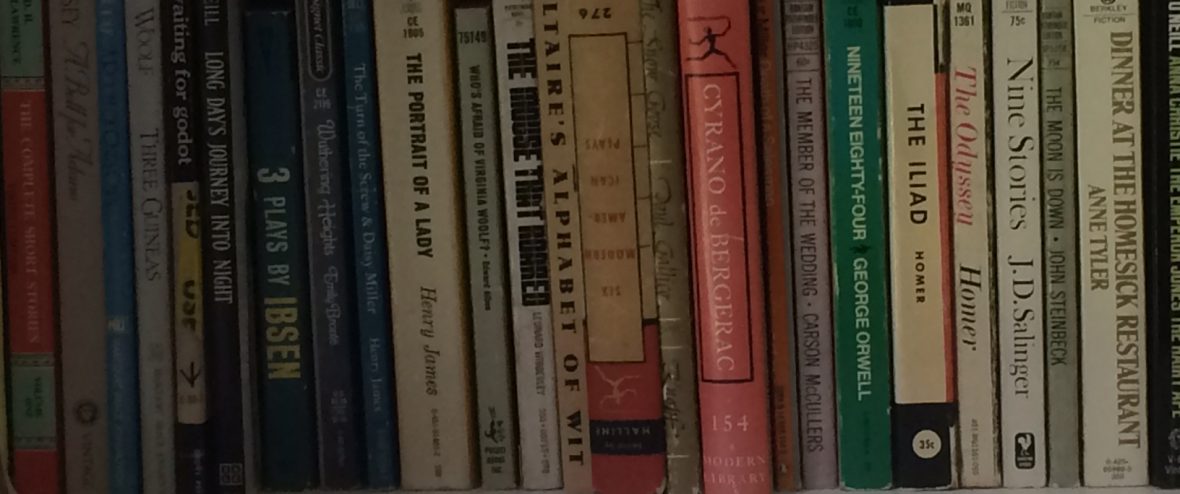
Books everyone should read

One great thing that happens when people know you are a reader is they ask for recommendations.  I am always THRILLED to help people find books that they will connect with. As I have mentioned before, my co-workers think it’s funny to keep track of my target numbers, but most times they just chuckle and walk away with their heads shaking.  So this week, I was over the moon when I was asked to help suggest book titles for a teen reader, and then I got THE QUESTION.  What books do you say are the SHOULD BE READ BY EVERYONE?  There are so many lists out there for this type of thing.  Everyone has their own take on the Classics, but each of us come to these stories with life experience and beliefs that change how we react to the story as we read this at different points in our life.  For example – I loved the Little House books.  I have fond memories of these books and how they transported me to a different time and place when I was young.  When I read them aloud to my daughter, however, I realized that the language was much more passive and I was less engaged. It was still fun to watch my daughter be transported, but I was focusing on many different aspects of the story now that I had more life experience to measure it against.

So I approached this question by only looking at the books that I have read – how can I opine on something that I have not actually read?  Then the struggle over a book that I loved, but do I think that everyone should read this?  Most times yes, but not always.  Then I noticed that many of the books I have selected are focused on the struggles of women – such a shock because it is something I relate to!  Are those all required reading for men? Many should be.  So I kept paring down my list – until I reached the smallish number of 103 titles.  Because – why not?

Then I set to describe why I chose the titles.  After doing this, I got down to 64. I kept at it, until, after a number of times walking away, I came to the nice round number of 15.  These are the titles that I currently believe everyone should read, and why.

The Red Tent by Anita Diamant

An alternative narrative to the matriarchs of the three largest religions in the world, this takes a blank story – the women’s lives are not illuminated in the Bible – and provides a full rich life for them.  Sets the story of our religion on more even ground than without them. Beautifully written, completely believable.

The Poisonwood Bible by Barbara Kingsolver

Taking religion on the road, and trying to convert “savages” in their own lands takes a certain amount of arrogance and strength of will. This is the story of a man that has both in large quantities, and he takes his wife and daughters along for the ride.  How he is received by the tribe he is bent to convert, and how the tribe shapes his family’s views, are a revelation in international relations, the folly of those unwilling to learn, as well as human frailty.

Fall of Giants by Ken Follet (one of a trilogy, this first was the best, in my opinion)

This is a novel that takes the intricacies of the world in the early 1900s, and explains very well how the world fell into the Great War, and the cost paid by a generation for the arrogance of men. If we don’t learn from mistakes, we are bound to repeat them.  The facts are so well integrated to the story, you don’t realize how much you are learning while engaged with compelling narrative of well written characters.

Night by Eli Weisel

A first-hand account of surviving the death camps of Adolph Hitler. A slim volume that will paint a picture you will never forget. That is the point – don’t forget.

Catch-22 by Joseph Heller

Set in the middle of WWII, this is an indictment on the absurdity of war. The easily manipulated reality that is discovered when playing with those in charge. Rules are made to be broken, officers to be subverted, all in order to stay alive.

The Cellist of Sarajevo by Steven Galloway

In my last title set in war, I believe this is the most compelling and sensitive one I have read on the atrocities of war.  The war here was just as savage as WWII, with ethnic cleansing a goal. You need to know about that to understand the subtleties of the writing. The goal of the cellist, and the lengths that each side will go to either stop or protect him, are an allegory for what each stands for. Never letting go of what makes us human is what will keep us all alive in the long run.

The Secret Garden by Frances Hodgson Burnett

A story of neglect and forgiveness, this traces how three children find themselves in the gardens of life, and bring to life those around them. The richness of the garden versus the starkness of the house continue to reveal more layers of depth as I grow to see the parallels to people’s lives.

Anne of Green Gables by L.M. Montgomery

When a girl shows up at the farm when they wanted a boy, she shows that while bringing different skills, they are just as important to people looking to live a full life.  Dreaming can bring about both calamity and celebration, both which keep you wanting to move forward.

Alanna: The First Adventure by Tamara Pierce

With so many action adventures led by boys, it was high time a girl took over the role of Hero.  In this series, launched by this first book, Alanna proves she is just as good, if not better, than the boys in their own games, and she has more to give too.

A Yellow Raft in Blue Water by Michael Dorris

The story of three Native American women, three generations of a family, and how they each experienced their own lives and challenges to make them connected.  It brings each generation’s story their own voice, while seeing the difference between their reality and other’s impression of what that is.

Chronicle of a Death Foretold by Gabriel Garcia Marquez

Shorter then his typical epics, this story is what it says – the same story told from different people’s view. Each time, even though you know how it will end, you expect a different outcome. Fresh and well written, it underlines the reality that the story is in the eyes of the beholder.

The Most Beautiful Book in the World: Eight Novellas by Aric-Emmanuel Schmitt

Eight novellas, each focused on a different view of what is beauty. As with Marquez and Dorris, this is in the eye of the beholder, but this helps open them where you may have overlooked.

Wonder by R.J. Palacia

The story of children and adults that learn the lesson of being open to all – the wonder of life can be shown to you by anyone.

The Pearl by John Steinbeck

With so many of his novels being so good, I chose this one because the lesson is one that the current fame obsessed world should remember.  Be careful what you ask for, it may take you further from where you want to be.

Inherit the Wind by Jerome Lawrence

A reflection on the US at a period in time, this is a fictional telling of the Scopes Monkey Trial.  Thought provoking, still relevant as the struggle between faith and science continues. My favorite quote of all time comes from this:  “God created man, and man returned the favor.”  I used it last week.

The Hate U Give by Angie Thomas

Another reflection on the US at a period in time, this a story based upon the actual events in Ferguson. A black man is killed by a white cop. The man was unarmed, stopped at a traffic light. His friend, Starr, was in the car. How the community, police, and family react are all highlighted here with raw emotion and real conflict of doing right by your community while doing right for yourself.

Hope you enjoy them as much as I did!