book-review, books, Family Drama, literature, reading

Peace Like a River by Leif Enger

This novel is a tribute to family, faith, and love. Told through the voice of 11‑year‑old Reuben Land, the story begins with the miracle of his birth. His father, Jeremiah, arrived late to the delivery room. After 12 minutes without breathing, the doctor told Reuben’s mother there was nothing more to be done. But Jeremiah picked up his son and commanded him to breathe in the name of the living God—and Reuben did. From then on, however, Reuben lived with severe asthma.

Jeremiah had once studied medicine but gave it up to follow the path of God. He worked humbly as a janitor at the town school. A man of deep faith and honor, he saved his son’s teenage girlfriend from being attacked in the boys’ locker room during a football game. The boys involved were known troublemakers who had terrorized the town, and they soon turned their anger on the Land family. They harassed them repeatedly, even kidnapping the youngest daughter, Swede, and hurting her before returning her home. At that point, Reuben’s older brother Davy realized the danger would never end. Armed with a shotgun, he waited in his room. When the two boys broke into the house, Davy shot them dead.

Although Davy believed he was protecting his family, he knew he had taken human lives. He was arrested but later escaped from jail and disappeared. Jeremiah, desperate to find his son, gathered the family into an Airstream trailer and set out toward the Badlands.

Both Davy and Reuben were the focus of their father’s prayers, but those prayers came with a cost. Reuben had been given life, yet his breathing remained weak and difficult. Davy knew his father prayed for God’s help against the family’s tormentors, but the price was heavy—Davy’s own act of violence. The novel suggests that faith can bring solutions, but those solutions are not always the same as justice.

The writing is strong, though at times the events feel a little unbelievable. Still, the family’s love and faith in one another never waver, making this a powerful story about resilience and devotion.

books, reading

A tribute to my Mom

My mom has died.

I have no other way of saying this. It is a hard truth that I am now an orphan.

My mom loved to read. There was always a book on the kitchen table, in “her” chair in the family room, a pile on the desk, and more by her bedside. She was never far from something. She introduced me to Are You My Mother? Mrs. Piggle-Wiggle, Amelia Bedialia, The Secret Garden, and The Snow Goose. She read Harlequin romances, historical fiction, art history, biography, and titles that simply sounded interesting. She tried it all. And she shared books with everyone. Recommendations were a staple of each call we had. Mom taught me that each book becomes a part of you. When she sold her house, I was struck by how many books I wanted from her shelves. When I then sold mine, it was agony deciding what to take versus what to share with others.

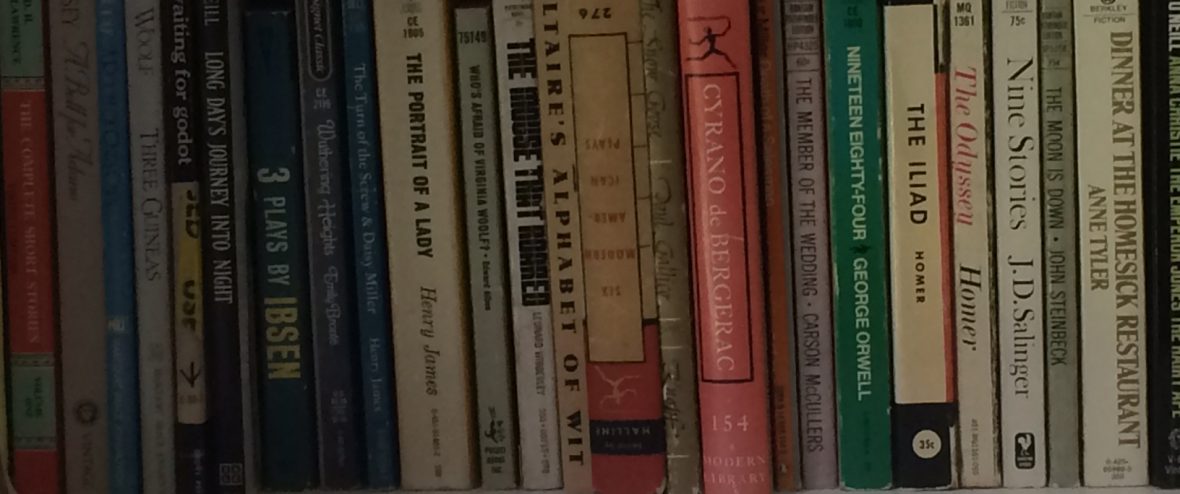
I started this blog to share my love of books. I will continue this as a way to share what my mom loved, as well as what I love. Read to expand your understanding of others, gain empathy for what you have not experienced directly, and find a bit of fun and learning away from the everyday hum of your life. You will grow in ways you never expected.

I love you mom.

book-review, books, Historical Fiction, read around the world, reading

Green Island by Shawna Yang Ryan

Set on February 28 in Taiwan, the story begins with a birth, a death, and martial law. The night the narrator is born is the crack down of Chinese Nationalists on the rebellious Taiwan. Her father, Dr Tsai, is brought a man that has been shot in the first street protests and delivers his youngest daughter into the world. This juxtaposition is the theme of the story – something bad and something good are bound together in this hectic world.

The next day Dr Tsai registers a protest against the violent crackdown, and is quickly arrested and sent to jail by secret police, the KMT, as are thousands of men in what is known as the 228 Massacre. How the family survives the stain of the arrest, and the wider distrust of the family when the doctor names anti-Chinese agitators, is one of perseverance under pressure. The family moves to the countryside and is shocked when a decade later a skeleton of a man returns to them.

While he has returned, he is a shadow of the man he was. Broken by the KMT, and despised by those in his community, the family struggles under the weight of the aftermath of the arrest. The four children all go different ways, with each being influenced by the events of the arrest/crackdown.

The youngest daughter moves to California with her husband. There, far from Taiwan, her husband joins the resistance. She is approached by the KMT in America, where they continue to sow discontent and fear between the Taiwanese people. The repeat of history around innocent words spoken continues to haunt the family, and all of those that live through the cycle of history and its never ending repeating.

This story examines the legacy of speaking out, its impact on those left behind, and how history continues to repeat itself. Not an easy read with such a heavy topic, with details about the brutality endured by those sent to “Green Island” for their crimes, but I am glad I read this and learned more about this period in Taiwan.

book-review, books, Family Drama, reading

The Berry Pickers by Amanda Peters

A migrant family from Nova Scotia picks berries in Maine each summer. These regular workers come and set up house, welcoming the same migrant families to the farm with them to share the labor. The families are full of love and joy as they gather each year together. One summer, however, things take a bad turn. The two youngest – Joe and Ruthie, 8 and 4 respectively – are out one afternoon. Joe leaves Ruthie sitting on a rock in the sunshine not far from the house, and she disappears. The family is distraught, and spends days, and then years searching for her. They only stop returning each summer after Charlie is killed. While neither of these tragedies is their fault, they are blamed because they are Indian.

Norma grows up in a home stifled by an overprotective mother. Norma was the miracle child after many miscarriages. She spent her life under constant watch of her mother, never allowed to be out of her sight. Photos of her before the age of 5 don’t exist, and Norma was told they were lost in a fire. Her Aunt June provides a respite from this stifling love. Norma was plagued by nightmares as a child – the smell of open fires and potatoes, a mother that is not her mother, and more. She is told they are her imagination. She even names her doll Ruthie and has an imaginary friend named Joe.

Told in alternating voices of these two people as they reflect on what had been real, what had been hidden in plain sight, and the agony of not putting things together are heard from both. The regrets of things not understood, things being ignored, or things being kept from them, shaped their lives.

Anger and sadness – two sides of a single coin. Anger consumes Joe, the last person to see Ruthie before she disappeared, as he runs from his family, himself, and his sadness for decades. Sadness consumes Norma, the person that chooses to be by herself because she can’t accept joy of building a family when she feels there is something missing, and the anger at being lied to by all she thought she loved. By facing themselves, forgiving others, and allowing others to help, both are given the gift they were both looking for – love.

book-review, books, literature, Middle Eastern, read around the world, reading

Fencing with the King by Diana Abu-Jaber

This story is a fictional telling of a family from the middle east, with roots throughout the region. The author starts and ends the book with assurances that the story, while similar to her family’s, is a true fictional tale.

As the story opens, Amani and her father are at an exhibition of falconers for the King of Jordan’s 60th birthday. Falcons had been used by the Bedouins to hunt as they migrated throughout the middle east. These falcons have become symbols of good luck, excellence and inner strength. They are seen as spiritual messengers, asking you to pay attention to your intuition and focus on what is important.  They remind you to look at things from a different perspective and forgive yourself for your past. Being on the alert for possibilities, to be decisive in decisions and actions, and to adapt to change are especially important to the context of the story. These lead the way into the heart of Amani’s story.

Amani is a woman living in two cultures – America of her birth and upbringing, and Jordan of her ancestry. Her father Gabriel (Gabe) came to America by chance to work with his hands in carpentry and construction, while his brothers stayed in Jordan. His older brother Hafez has become a trusted adviser of the King of Jordan after studying in Syracuse, NY. He has risen in power and is in charge of arranging the King’s 60th birthday celebrations. He asks his brother Gabe to return to the land of his birth after 40 years to reprise his role as fencing partner to the King. Gabe does not want to return, but his daughter Amani wants to return to learn more about her grandmother, whom she has been told she resembles by all in the family. She persuades him by with a letter she finds from her grandmother.

Amani and Gabe stay at his brother Farouq’s guest home. Her cousin Omar becomes a close confidant. As she searches for answers about her grandmother, you see she is enamoured with Hafez. He and his wife try to take her in hand as if she were their heir. But when Amani begins asking questions, they put her off. Unknown to Amani, Hafez has ulterior motives for asking Gabe to come. Hafez believes that a family heirloom knife that his father gave to Gabe should be his and has asked that it be brought on the trip for him to see it one more time. The more complicated reason is not revealed until later in the story.

As the falcon introduction suggested, Amani comes to accept her past and looks to her own future. She searches for the family’s past, and is able to find joy and forgiveness in doing so. It also brings truth to the family and consequences for the person that started the family down a dark path. 

Throughout this family story are facts about those that settle in Jordan – and what makes a real Jordanian. It outlines the refugees from the Ottoman empire to the present, including the fact that the King was selected by the French. It is with true compassion that these are facts interwoven in the story but not used to accuse anyone person or culture.

This was a truly beautiful book about family, self-awareness, consequences, and forgiveness.   

book-review, books, Family Drama, reading

Herring Cove Road Trilogy by Michael Kroft

On Herring Cove Road: Mr Rosen and the 43lb anxiety

Still on Herring Cove Road: Hickory, Dickory Death

Off Herring Cove Road: The trouble with being Blue

This is a series that is heartwarming and heartbreaking at the same time. In the first book you meet Ruth and Avriel Rosen. An older couple that has retired and recently moved to a new home on Herring Cove Road. In the first book you first meet Dewey Dixon, a ten year old boy that lives next door to the Rosen’s. Being unwelcome as Jews by the father, Mr. Rosen is a bit offended when addressed as Mr. Jew by the young child. Ruth, however, befriends Dewey’s mother Lisa, who is horrified to hear her son call them this, as she didn’t know her bigoted husband had impacted her son this way. Dewey, however, just thought it was their last name. 

As the friendship between the two families grow, Lisa and Dewey come to rely on the Rosen’s. Through death, poverty, drugs, and kidnapping, a family of choice emerges. They take care of each other, and put all on the line to ensure the safety, physical and mental, are taken care of for all. 

Over three books you see the back stories of these people, how they became who they are, and how they learn to rely upon each other. With the first book being my favorite, the other books give a satisfying if not joyful conclusion to the story. There is also a prequel in the series but I did not read that.

A fun and gentle story of how we all rely on each other; how we just need to be open to allowing others to help.

books, reading

The Heaven and Earth Grocery Store by James McBride

James McBride has impeccable timing, befitting an accomplished jazz musician. His latest book, The Heaven and Earth Grocery Store, is just like a jazz composition. Each story within it has its own pace, its own focal point, and its own heart, but the soul of all is the same, just like a great improve jazz session. 

You begin with the police asking questions about bones found in a well on Chicken Hill, the poor section of Pottsville, Pennsylvania where Jews and African Americans live together in a marginalized neighborhood. You meet Moshe, a Romanian immigrant and Chona, born in America but marked with a limp from polio. You hear the story of building a dance hall, initially for the Jews of the town, but the expansion of this to provide entertainment for the African Americans also. You meet Nat, Moshe’s right hand with a history of his own, and his wife Addie. You meet their nephew Dodo, who lost both his hearing and his mother because their oven exploded. You meet Big Soap, an Italian immigrant, Fatty, Paper, Bernice, who all grew up in Pottsville, and you hear all their stories. And through this is the friendship of “the best dancer in the world” who was the only Jew left on Chicken Hill when the police came to ask those questions – like the fiddler on the roof.

While each of these stories seems to be separate, all the players you meet are put together for the ultimate coda. Despite the hardships you face because of where you are born, who your family is, your skins color or your religion, your humanity and compassion for others is what will keep life moving forward toward a happy and fulfilling future.  

books, read around the world, reading

His Only Wife by Peace Adzo Medie

Meet Afi Tekple of Ghana. She is about to married Elikem Ganyo – who will not be at the wedding because of a business trip. We meet Afi’s greedy Uncle Pious, her best friend Mawusi, her mother, and her mother-in-law “Aunty”. At the wedding ceremony Eli’s brother Richard stands in for him.

And we hear the story of when Afi’s father died his brother Pious did not take in Afi and her mother, but Aunty took her in and gave her a place to live and work. How generous and kind Aunty is, and how much Afi and her mother owe her. As the story continues, we learn that Afi has ambitions to be a designer – she is already a seamstress. She agrees to marry Eli, who is with an unsuitable woman according to his family that does not take care of their sickly daughter, because of what is owed to Aunty. But Afi wants the fairytale – to have him fall in love with her, to win his heart.

After the wedding Afi and her mother are sent to Accra, where Richard and Eli live. She is given a flat with modern conveniences she is not accustomed to. Yet Eli still doesn’t come. Afi decides she would like to go to fashion school to help her achieve her own goals. Eli, who she speaks to daily on the phone, supports her both financially and emotionally.  Aunty’s daughter, Eli’s sister, Yaya comes to take Afi to look at schools. As time passes it is apparent to Afi that everyone around her is reporting her actions and interactions with Eli and others back to Aunty, and she is beginning to feel uncomfortable with this – no one seems to be looking out for only her, but to protect what they had been given by Aunty’s “generosity”.

As Afi makes her own friends and her confidence grows in her fashion abilities, she is able to connect with Eli and their marriage becomes closer to what she wants, but the “other woman” remains in the picture. When Afi decides it is time to demand what she wants, regardless of anyone else’s desires, that she begins to grow for herself. As Afi defies Eli’s family, and her own family, she begins to make strides toward building her own dreams.

As Afi continues to grow up and be successful, she continues to be true to herself and her needs and desires. Ultimately this is a story of knowing who you are, what you will accept, and not compromising your values to get part of it.

This was a fun book to read. I look forward to reading more from this author.

books, read around the world, reading

The Unlikely Adventures of the Shergill Sisters by Balli Kaur Jaswal

Three sisters bicker across India as they complete a final pilgrimage taking their mother’s ashes to her homeland to be scattered. Each sister, Rajni, Jezmeen and Shirina is harboring secrets and pain as they follow the directions their mother set down for them before she died.

This is a typical story of sisters misunderstanding each other, the culture they live in, and the sacrifices that people make to help them grow. With each step of the journey the sisters face past hurt and current grief, thinking only of themselves. Over the 10 days on the Pilgrimage, they are able to achieve what their mother wanted – to have them face who they really are, and what they really want – to themselves and to each other. Through this journey they are able to come together and stand up for themselves.

Even if the secrets could be guessed at, it was a well written and fun to read book, and there were some twists that I truly didn’t expect. Those kept me on my toes and wanting to read more. 

book-review, books, Family Drama, literature, reading

The World Played Chess

by Robert Dugoni

This is a complex, intertwining story told by two men in three time periods. We start in 2016 when Vincent, a successful lawyer, receives a journal from an old friend he hadn’t heard from in years.  The author of the journal was William – someone that Vinny met when he was 18 in the summer of 1979. William, 12 years older than Vinny, had made a strong impression on him, and while he never spoke of the friend, this relationship helped shape the way Vinny approached life. William’s journal was written when he was an 18-year-old going off to Vietnam in 1967. Vinny had been a witness to William’s PTSD that summer, when he couldn’t fathom how difficult choices in life can be and how they change your course forever.

In 1979 Vinny just graduated as valedictorian, was accepted into Stanford, but his family was unable to pay the tuition and he is devastated. Instead, he is headed to community college. As he parties with his friends that summer before school, he takes a job in construction. There he meets William, a Vietnam vet twelve years older than he is. Over the course of the summer William tells stories of what he lived through as his life unravels.

As Vinny reads the journal in 2016, one entry each day, he is also preparing for his son Beau to graduate high school and go off into the world.  Disappointments and frustration are all there, as Beau tries to become independent and make his own decisions. After a tragedy Vinny watches as Beau struggles with the fragility of life. He is seeing personally that growing old is a privilege, not a right. Through Vinny’s eyes we see the pain of watching youth stolen from both William and Beau at the same point of life. You are reminded that the moments in between are all about shaping who you are. You need to accept your abilities, and make choices for yourself and your family, with the knowledge that all choices have consequences that you must live with. You also learn to put things in perspective – like being able to go to community college is better than not being able to go to college at all.

Everyone’s demons are different, but in the end, the role that Vinny place for both William and Beau is someone that has enough empathy to listen. That allows both men to face the hard parts of life, and be able to move forward to being a better person because of their past, not despite it. In 1979 most didn’t want to listen to those that saw horrors in Vietnam, and in 2016 most don’t want to acknowledge the dark possibilities in life.

This story was so well written that it was not hard to jump between the timelines. The interweaving of the stories is what makes it just so poignant – even though each man had different things happening in their lives at 18, the hope for the future and the realization of what that really means is difficult. As I watch my own son at 18, this has given me another layer of understanding to what it is he is grappling with. I wholeheartedly recommend reading this.