book-review, books, Family Drama, literature, Middle Eastern, reading

A Place for Us by Fatima Farheen Mirza

A family is complex in many ways. This is a story of a Muslim couple that came to the US as newlyweds, created a family within their community and sought to pass on the things they felt were important to keeping their children safe and successful within that community.

Told from different family voices, this starts with a daughter’s wedding. Amar, the only son, has been estranged from the family, but you don’t know why at this point. The story goes through the past, with different views of the same situations they have gone through. Starting with Layla, the mother, and then going through each of the children’s stories and reactions, and ending with the father’s. Due to this being a Muslim based family, this is an interesting order.  This puts the voices of women up front first, something that is unexpected due to the typical roles in that society that exist.

THE FOLLOWING CONTAINS SPOILERS TO THE STORY.  PLEASE STOP IF YOU DON”T WANT TO KNOW WHAT HAPPENS BEFORE YOU READ IT – AND I SUGGEST YOU LET IT UNFOLD IN THE MANNER IT WAS WRITTEN.


The first story is Layla’s. You learn of the hardships of leaving her country to follow the man her parents selected for her to marry. She portrays herself as someone that was obedient, did as she was told, and kept to the back of the line. She details how she has grown personally, going from being afraid to be close her own drapes when her husband started to travel for work to creating a cohesive unit that functioned well without Rafiq, her husband. She speaks of the tension and fear that the children have of him, and how she kept information from him, especially about Amar. There were references to going to school to be told by the teachers that he was trouble, even held back in school because he wouldn’t do the work. He was stubborn beyond what she had ever seen, and it was worse against Rafiq. He was painting his nails with his sister, and cooking with his mother.  This led me to believe he was gay and the end was going be because his father threw him out.

Haida’s story is about how she had been his best confidant. Amar had always looked to her to help him. She was the smart sister, the protector sister, the one that kept his secrets.  As her story unfolds, however, it is apparent that she was in competition for her father’s attention. She was given her grandfather’s watch – something that should have been passed father to son, as it had to Rafiq. She was marrying in a love match, not an arranged marriage. She did, however, do the full Indian wedding. He was not from the community, but the parents accepted him. This led me to believe that the father was beating Amar, but he probably was not gay.

Huda, the second sister, was the one that could get him do to things. She did keep information from Amar about his secret love, undermining him in different ways.  This led me to believe that there was something going on with Amar.

Amar’s story unfolds with how he was afraid of his father, struggled with his faith. He went against his community by speaking with a girl, falling in love with her. He had been smoking and drinking, but tried to give up this for her. When the girl’s parents find out, they forbid her from seeing him. The pain makes him seek anything that will take the pain away. The girl is at the wedding, and they sneak off to talk. He tells of his drug use, showing the pin prick scars from the needles. She tells Amar that his mother was the one who told her parents. A drunk Amar confronts his mother at the wedding, making a mess. This led me to believe that it was the mother that ruined things, and the father supported her.

Then the father’s story.  The man that everyone was afraid of.  He was orphaned at the age of 16, when his mother died, and only 13 when his father passed away. Rafiq wanted to be a good father, but was open about how many mistakes he made.  He was tough on Amar, hoping to give him the motivation to strive for something to be successful, all within the community and faith he was passing down. It was Rafiq who discovered the drug needles, even though Haida had taken the drugs from him before. It was Rafiq who knew about the love affair, that didn’t put a stop to it because the thought it was good for Amar, even if he knew it would end in heartbreak. Rafiq supported his daughters to being a successful doctor and a successful teacher.  He supported them that Haida selected her own husband, and Huda did also – one from within and one not from their Muslim community. This provides significant context for the family, and the “blame” game shifts significantly to the mother.

As the story kept unfolding, the complexity of who was “at fault” completely turned on its head. Each story justifies each person’s actions and reactions. With family, there is never a clear cut black and white answer to anything. Each action and statement comes with a lifetime of perceptions and experiences from the point of view of the speaker. The underlying faith throughout – that there is one G-d and that G-d is great is always there.  It is that that carries us all through.

This is a story of a family, struggling to know each other’s hearts as they grow to find their own place in the world. Just like any other family in the world.

book-review, books, Family Drama, memoir, Non-Fiction, reading

Educated: a memoir of survival

Tara is a child that has defied all sorts of odds to get to where she is today. She has survived a bi-polar father, a subservient wife, a violent brother, and all kinds of wounds both physical and psychological.

While I understand that there are groups of people that resist the government at all costs, it is always amazing to me that they do so by keeping those around them ignorant. No TV, no books, no contact with outsiders. This keeps those around the charismatic leader dependent upon them for any information. This is the typical manner that the male establishment has maintained control over women. This establishment includes religious establishment.

It is not surprising that when Tara earns a scholarship to Cambridge, she begins to read the foundational Mormon texts differently. As with many other religious texts, the undercurrent of a woman’s place in the home is strong. The weapon of ignorance continues today to be wielded against women from here to the Middle East and back. When women have no other information or source, the history they know is only the one told by the man. And we all know, history is shaped by the winner.  By creating the history, there is only one future for women in the world.
Throughout the story of her childhood and growing awareness of the world, we hear how her father decided her mother should be a mid-wife, even though she was terrified. How her father decided they were leaving Utah in the middle of the night in a snow storm, ending in a car wreck that almost killed the entire family. How her father put her brother on a beam that he dropped approximately 12 feet from, sat him up and went back to work. All his many children were scared of him and the end of the world he kept predicting.  The family had weapons, fuel and food to last many years when the world was to end at Y2K, and were sure the Feds were going to kill them like they did the Weavers. All history and facts came through her father.

As Tara begins to experience the outside world, she learns facts and history she never knew. The Holocaust, Civil Rights Movement, and the story of Ruby Ridge, where the Weavers were killed. All were either new to her or new details were revealed that showed the original information to be false.

She is conflicted with wanting something else while still wanting the familiar. The fact that the root of the word is family is not coincidental. As she begins to read, to work, and to learn she begins living separate lives, keeping them away from each other. She cannot reconcile the two. At one point she wonders if she had become too educated to be part of her family. Ultimately the cost of learning and becoming a Phd was her family. With the majority of the family economically dependent upon the parents, they are able to keep them doing as the father wants. Other siblings that have been able to leave and educate themselves, also Phds, are on the outside.

The thing that causes the great rift is that she speaks out about her brother’s physical abuse to her and her sister. She did so in support of her sister, Audrey. The cost to Audrey was too high – to be cut off from her economic support (both she and her husband worked for her father) and to be cast out of the family while living minutes from them was too dear to pay.

Throughout the story of her life there are moments where she is told to stay in the kitchen where she belongs, that she should not tempt men, and that she deserved to be beaten, that she was not dating as commanded by the Mormon Church. These conflicts will remain with her always. The ultimate price to pay for being your own person in this family is to be cast out. Tara was lucky that so many were cast out she was able to go to her aunt and state she would ignore what her father claimed of the aunt if the favor was returned. That family – previously lost to her – is what sustains her now.

In the face of so many obstacles, her ability to survive on her own terms is the legacy the family gave her. A brave woman, stronger than even she knows.

close up of woman working
Photo by Pixabay on Pexels.com
books, reading

From Riyadh to Memphis

As the world gets busy preparing for holidays, I got busy to move more books off my TBR list.  The library came through and delivered me a book to check off a country on my armchair travel list – Saudi Arabia.  Girls of Riyadh by Rajaa Alsanea, translated by Marilyn Booth was a hit in the region, and I was excited to read about life from a woman’s point of view. The book, relating the quest for love by 4 women of Saudi, is told by an unnamed person writing emails to an email group. The names of the friends were changed, but the reality of the “lives” was shared by this third person.  I admit I was expecting anything but what I got. This book was related as though the emails were sent in 2004-2005. The lives of these women, while striving for love and self worth, are complex and rich. While the society does impact who and how they can be, they all take different paths to finding themselves and their own voices. And even if you don’t like which path they took, you are faced with the undisputed fact that they did all choose their own paths.

While I was reading this story of choosing paths, I was also reading Before We Were Yours by Lisa Wingate.  In a different era, there was a horrible person that brokered babies, stealing them from poor parents and not providing safety or food properly, while doing the “good work” of finding homes for some children.  As the story is pieced together, the girls that are the focus are the “strong” ones – favorites of the fathers.  Both do their best to keep the family together, placing that above all else, until they are both faced with the fact that they need to put themselves first.  In doing so, they find a new peace.

In both cultures, across the span of time, the central characters don’t feel they have the ability to make a choice other than what their family wanted. And while the strong are the only ones left standing, the key to survival and happiness is always being true to who you are and who you want to be.

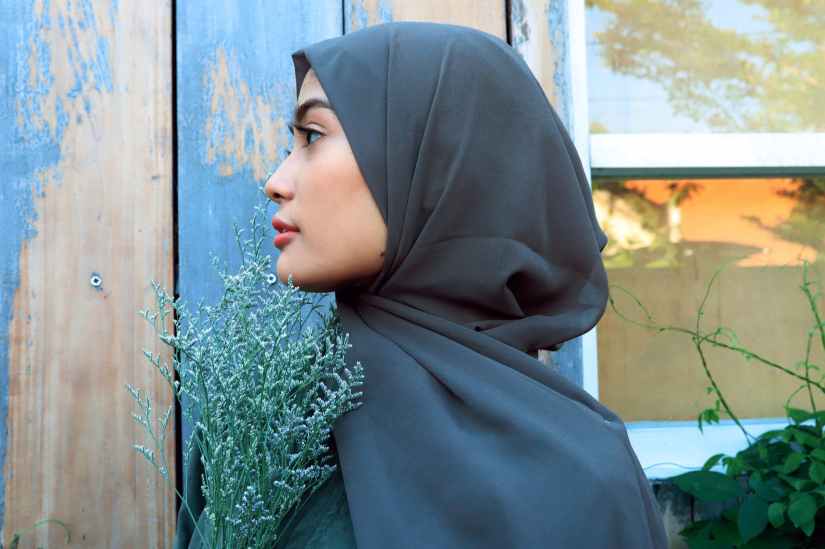
woman wearing hijab
Photo by Ambar Simpang on Pexels.com
books, reading

A Travelling American

Travel, whether for work or for pleasure, can be a chore. Away from your home, your family, your normal routines, you focus on where you are and how to fill the time. Especially if you are waiting in a crowded airport when your plane is delayed.  In this current trip, uncomfortably still on crutches, going through security I realized my ereader, just updated with four new titles, remained safely in the docking station in my home office. Travelling with only work equipment, I scramble to download something to read that will download to my personal phone. It is in this frame of mind that I started to read An American Marriage by Tayari Jones.

The title is a bit misleading – while this chronicles the story of a marriage, it is actually a study in the strengths and limits of love, in all different shapes and forms.  The story begins with Roy and Celestial. By mapping out the relationship by way of different perspectives, you see that these two have entered marriage with different expectations. They play at being married, sparring over everything, and not truly understanding the “communion” of the institution. Both come from homes based upon second chances, surrounded full of love and commitment. Then the scary reality of being a black man in the wrong place at the wrong time, the pair is forced to face the hardship of a forced but unjust separation.

As the years go by, life charges on. Trying to survive on the promise of dreams, finding strength within oneself to pursue them alone, and realizing the foundation of the marriage was not as strong as expected changes both. The stories told from both perspectives bring the realization that the base of the marriage was lacking, provoking guilt, grief and denial at different times.

These same revelations are shown when the stories turn to the parents. Big Roy and Olive were entirely devoted to each other. Olive had been through the passion and came through the fire alone with her son. When she met Roy, after making it clear it was a package deal, they made a commitment to each other. And the devotion continued to be shown each day until the last, when Big Roy made sure that Olive was buried by the one who loved her most, filling in the grave himself. Similarly, Celestial’s parents came together after they met when he was married to someone else. Another father devoted to the new family he built on a firm foundation – symbolized by the old hickory tree in the yard.

And then there is the love between a parent and a child. Big Roy fully embracing Little Roy; Andre embraced by Mr Henderson, Little Roy and the Biological, and even Dre and his father. Even if people leave, that does not mean they don’t care. Spoiler – finding out that Olive gives up the fight once she realizes there is someone taking care of her son was very different from the belief that Big Roy had once he hear Celestial told Olive the Biological was watching over Little Roy.

Stereotypes would be easy to fall back upon here, but the depth of these characters and the basic understanding of the underlying social injustice for the black community runs below the surface of the story. Paralleled in the river where Roy goes each day to contemplate, the river of injustice can be heard if you listen closely. The reality of it being there, always under the bridge to elsewhere, is the current running through each story. This is a most powerful image – the current remains, even if there is a bridge over it, you can’t always take it to the other side, just as The Hick is a metaphor for a marriage.

This book still surprises me as I process it. Very powerful, and beautifully written.

books, reading

June a month for weddings and family dysfunction

Families are complex organisms.  As Tolstoy stated in Anna Karenina “All happy families are alike; each unhappy family is unhappy in its own way.”  And unhappy in its own way usually brings an excellent story, although today I will not be delving into Tolstoy.

This week I read Family and Other Catastrophes by Alexandra Borowitz.  An anxiety-ridden daughter, Emily, flies from San Francisco to New York’s suburbs for their wedding weekend.  Her fiancé’s family is not far from her own, making it the right decision for them.  Over the course of the week, Emily is forced to endure “family therapy” administered by her mother the psychologist to address “lack of gratitude the siblings have for their parents.”  Brother Jason, a newly divorced playboy has returned to his childhood home, and sister Lauren, the militant feminist, political correct sister with her son Ariel and partner Matt are also residing there.  These two siblings agree, because the parents have taken them in.  Emily agrees to simply keep the peace.

Throughout the novel’s interior/exterior conversations, as the protagonist changes with each chapter, you not only see the truth in each person’s real existence, but they start to view themselves though a looking glass instead of a funhouse mirror.  Each person, starting with Emily’s mother’s passive aggressive need to be at the center of attention, Lauren breastfeeding her 3 year old son, keeping him co-sleep with his parents as a means of avoiding intimate contact between her and Matt, Jason’s on the make lines that go nowhere.

Please note, however, that David’s family is not left out on the dysfunction.  With a stepmother that is very pleasant, but not all there, and a father that is distant, David is in no way like his brother, Nathan, who lives in his father’s basement playing video games, stalking women while believing to be “protecting” them with his chivalry.  Add to it the stress of trying to be the next big something in tech, organizing a wedding, and the stress levels keep elevating.

Sounds a bit like most families – right?  Maybe not the specifics of who does what, but the stress of expectations, eagerness to please, and fear of what might be are universal.  What family isn’t going through a bit of growing pains now that the school year has finished?  Kids are moving up a grade and expect huge changes in their world because of this. Even though they are still the same age as they were the day before. We all need to keep our heads on, remember the big picture and treat each other with kindness and acceptance.

One by one, we all come to terms with who we are at the core.  Jason makes peace with his ex-wife Christina; Lauren admits to Matt she doesn’t love him; Matt leaves when the answer was not what he wanted, and Nathan finally finds a friend.  And at the core, a family that tries to protect each other, even when not liking each other too much.   Emily, viewed as the broken one has found David.  He finds her broken in places that he understands, and she is able to help him with his wounds.  Together they confront the fears and move forward.

Like a real family, it is messy and can be cruel, but in the end, they show who they really are and pull through like you never expected.

book-review, books, memoir, Non-Fiction, reading

Happy Father’s Day

I never had a pet, besides goldfish, until I got married. I married a man who was totally devoted to his 2 cats, which I was allergic to. We agreed that since they were 8 years old, we would keep them and then be a pet free family. 5 years of immuno-therapy, daily doses of allegra, advair and the more than occasional hit of ibuterol, and the cats were still going strong. We lost Amanda at the age of 18, and Jessica was a faithful companion for 21 years.
That was 2013.

My husband and children went into mourning, but also started a subtle war of hints. Finally, in the spring of 2014 I was persuaded to go to a shelter, on the context of donating the litter and food we had left, and take a peek at the kittens. There my husband fell in love with Pistol Annie. Within minutes of me touching her, however, I began to wheeze. That was when my husband’s dream of adding to his cat history ended. That was also the day he became determined to convince me to get an “allergy free” dog.

For Father’s day, I read the memoir of the best friend any dad could have – Marley & Me by John Grogan. John and his new wife Jenny start their life together, kill a plant and then decide to adopt a dog to practice before having kids. They fall in love with a yellow lab, whom they named Marley. Marley stories from puppy-hood through adulthood, and all the changes that the family went through over that time, are chronicled in honest and loving detail, including the story when the dog was so terrified of thunder that he ripped apart a door to get in from the garage, through plaster and all. Not sugar coated, but told with love.

As most pet stories end, they are gone well before we are ready. This tribute to the dog, what he taught and what he took, reminds us all of the undying love and devotion, selflessness, and fun they play in shaping our lives.

Happy Father’s day – and thank you for providing all your undying love and devotion to us, your family.