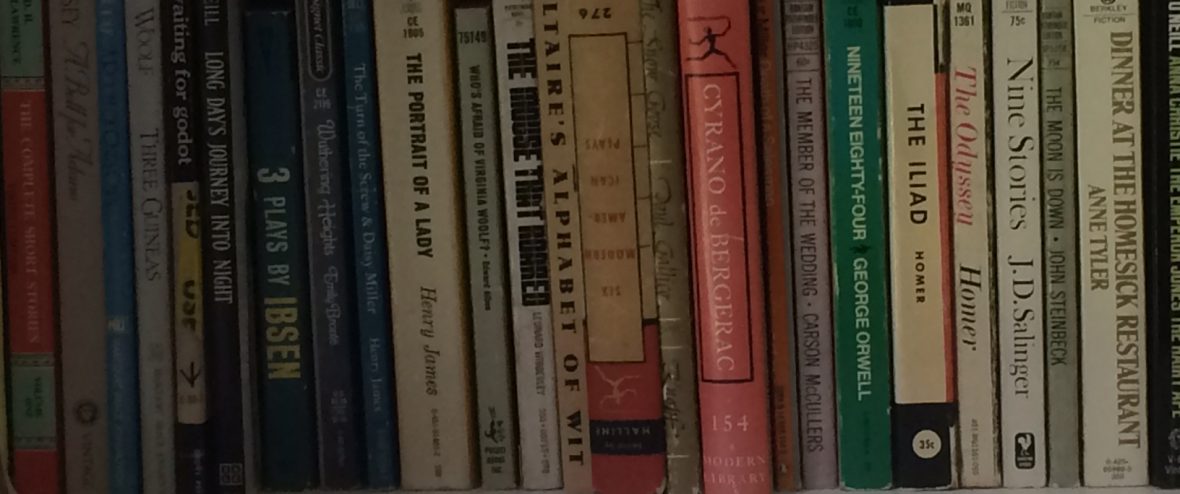
Black Experience, book-review, Family Drama, literature

The Vanishing Half

What would it be like to have a twin that makes choices as different from yours as possible? 

This is the premise of this book written by Brit Bennet.  In a town that was founded by black people that were striving to be light, two girls were born to the family of one of the founders.  Although the founders of this town considered themselves “better” than those with darker skin, it was no real “protection.” A group of white men stormed into their home, pulled their father out by the ankles and hung him for something that he had not done.  From then, the fragility of being light was shattered.  With the family in financial peril, they were pulled out of school at the age of 16 to work cleaning white people’s home.  There they saw first hand how anyone with any color was treated.

The girls run away to New Orleans, looking to build a new life.  It was then that they were again confronted with the reality of opportunities that were available to white women that were not available to black woman, even those with light skin.  In order to get a job, Stella “passed” as white, making choices to change herself into another person.  She selected “white” on the job application, became a secretary, married her boss, and built a new life that she managed to hide from everyone including herself.  

Desiree, however, took a different path, marrying a dark black man that ended up beating her. Fleeing her husband’s fists back to Mallard, with her small dark skinned daughter became an outsider in the light black town.  As a child, Desiree had been most likely to leave, always restless to be somewhere else.  Yet it was Stella that continued to live her lie and not return. 

The story traces how each life was different based upon choices that were made when they were young.  A choice led Stella to a larger life, yet it was a life of lies.  She never felt comfortable being herself until a black woman befriended her and she had to choose all over. 

The truth that you can deny your history, but it shapes you anyway, and the acceptance of those that love you for all their flaws and choices, makes this a story of discovering who you are at the core, so you can not only love yourself, but allow yourself to be loved.

Within the story, questions explored include what does it mean to be black? What does it mean to be poor? What is a woman’s place? What makes a man? What does it mean to stay? And ultimately, how do you live with the choices you have made?

Each choses their own path and lives with the consequences. 
Biography, book-review, memoir, Non-Fiction

Non-fiction in the air – even with a mask on.

In the strange world we are living in, I am amazed that I am able to concentrate at all on any book.  It has been harder than ever for me, but every few weeks I try to pick up something new.  I tried The Water Dancer, American Dirt and Little Fires Everywhere, but I just couldn’t handle the difficult topics, even if they were so well written.  I will return to them when I feel more grounded.  Instead, I have spent the last few weeks reading books of real people, living real lives. 

This first book, after having sat upon my bookshelf for years, is The Year of Living Biblically, by A.J. Jacobs. It was surprisingly engaging.  As A.J. went through his quest to learn more traditions and live closer to the letters of the biblical law, I saw a man striving to find himself in so many ways.  This was just the method he was currently using.  I saw in myself the understanding I have always tried to have around religious rules, separating those from traditions and determining what these meant and why I would either to continue to observe it or not.  I felt light after reading this.  Somehow closer to myself and the “greater being” I believe in. 

After finishing this book, I found The Library Book by Susan Orleans.  I was expecting a novel, and jumped right in.  This is absolutely not a novel.  I found an intriguing story of how the Los Angeles Central Library was created and grew, only to be devastated by fire in the 1980s.  Hearing the story as we are taken through the halls of the rebuilt library, with a mystery of how the fire was started and how the institution has changed was fascinating for a self-proclaimed library lover.  This simply highlighted the unique and special place libraries, their caretakers, and their contents are. 

I followed this up with The Young Woman and The Sea by Glen Stout.  I was drawn to this after I heard him in a book group for my employer talking about the book.  The way he explained the world of the time, jumping in and out of the space, and the context of swimming within the larger woman’s movement made me seek this out.  Learning about Trudie Edele, the first woman to cross the English Channel, was not all I gleaned from his pages. While this was a bit long with suppositions on things going through Trudie’s mind when swimming, the details on how she was instrumental in breaking so many barriers simply by being herself was refreshing and exciting.  I had never seen her in that light before, and I gained additional admiration for her ability to put sportsmanship first and swam for the joy of it.

Who knows what I will pick up next?  Could be from the library, Amazon Prime or even my own bookshelf.  I will go where the spirit pulls, and do my best to share with you some highlights.

book-review, books, Indigenous American, literature, reading

Refugee Problems in 1988 – the Kingsolver way

The first Barbara Kingsolver book I read was The Poisonwood Bible. It was soon after the release. Since then I have been reading as many of her books as I can. She is a storyteller extraordinaire.  As I was looking at my 50 States challenge, I realized I didn’t have a book for Arizona, and fell upon The Bean Trees.  One of her earlier books, this one focuses on a young woman that leaves the poverty of Kentucky to find her way in the world. She jumps in a car that is broken down, but moving, and heads west. As she goes through Oklahoma, she finds herself on Cherokee land. Here, she is faced with true need, and her fate is handed to her, literally.

As she continues her journey, she witnesses the worst that the world can be to others – especially children – and yet she remains surprised with each revelation. Her car finally gives out in Arizona, and she finds her way through the kindness of strangers. These people become her family, her home, and she comes to terms with the understanding that she was a refugee from Kentucky looking for a better life, just as refugees from other countries come to the US for another chance. Each has their past, but each also looks to the future with hope. The bean trees growing in Maddie’s back yard take root where they are, even though they came from so far away. Just like the people who tend them.

With the immigration issues still as difficult now as when the book was published, the story remains as relevant today as it did in 1988.  With this, and Letters from a Woman Homesteader, I can fill in Arizona and Wyoming on my 50 states list under the At Home Travel Log. And I will keep looking for more of Kingsolver’s books. I have never been disappointed.

aged aging background bark
Photo by Fancycrave.com on Pexels.com