book-review, books, Family Drama, literature, reading

The Messy Lives of Book People by Phaedra Patrick

The premise of this book is a bit of a stretch, but somehow it works. Olivia (Liv) Green is a 42 year old wife and mother that works as a cleaner. Her sons are almost grown, with one at University and the other getting ready to head off also. Her husband is constantly being summoned by his sister to talk about their family’s business, which he won’t discuss with Liv.

We see Liv at her jobs – one as a commercial cleaner being left to pick up after people that look through her, one where the parents expect her to care for their kids as well as cleaning for the same cost, and one with her favorite author of all time.

On a Friday she wishes the reclusive author, Essie Starling, a pleasant weekend, only to be informed the following week by a solicitor that Essie is dead and left instructions for Liv to finish her last book and that she can’t tell anyone for 6 months that Essie is dead. As Liv takes on the task, she finds self confidence to stand up for herself against everyone that underestimated her abilities – including herself.

As she works to complete the book in a faithful way for the character – her favorite – to complete the 20th and final book of the series, she digs deep into Essie’s past for inspiration. What she finds shakes her to the core, but also provides her strength to create a new path for herself.   

book-review, books, Family Drama, Middle Eastern, read around the world, reading

A woman is no man

A woman is no man by Etaf Rum

Regardless of what religion or nationality, there is a universal truth – women are victims of violence.

In too many cultures women are not valued for anything other than to cook, clean and procreate. This is true in middle-eastern, eastern and western civilizations. These is no corner of this earth that has not been dominated by men, and women are taught on some level of consciousness that they are inferior. There are cultures that adhere more to this belief, and enforce this rigorously. The number of women that are being beaten each day into submission is staggering. The fact that is it accepted as normal and supported by other women is a sad truth to how far the lessons of low worth are ingrained to the communities. This remains true, regardless of the work women have been making in the last century. Books like The Pearl That Broke its Shell, Big Little Lies, Girl on the Train, Black and Blue, and so many more continue to tell these tales. These books cover the world (Afghanistan, Australia, England, and United Stated) and are only a small sample of a much broader and enduring problem. Etaf Rum’s A Woman Is No Man is the story of a Palestinian woman’s life in these circumstances.

In Palestine, an Arab girl named Isra is brought up in her mother’s kitchen, learning to cook and clean. At 17 she is married to a man she meets once and is take to America – Brooklyn – to be his wife. With no money, no connections, and not able to leave the house unaccompanied, Isra works to ensure she does not besmirch her family’s name by doing what is expected.

As the story unfolds, it alternates between Isra’s voice and her daughter Deya’s 18 years later. Deya is about to graduate high school and her grandmother, who is raising her after her parents die in a car accident, is insisting she make a match so she will not continue to be a burden to the family, as girls always are.  Deya receives a letter with a card to contact a familiar figure that she can’t place. As Deya’s quest to find answers brings more questions, we are all faced with the limitations of what we set on ourselves as options.

As the story progresses, we learn of Isra’s fading hopes for love and connection and of the growing violence against her by her husband, of her growing despair and depression, and of her mother in law’s insistence that bruises be covered from other’s eyes. We also learn of Deya’s memories of her mother’s sadness and of her fears that not all was right, of Deya’s fear of being pushed into marriage and inability to continue to learn.

We learn that Deya doesn’t share her memories with her younger sisters to save them from pain. We also learn of other secrets that are kept that are meant to reduce other’s perceived pain.  We learn of choices made in the hope of saving face, in the hope of protecting others, in the hope of convincing yourself, in the hope of being loved.

In the end, we are all exposed for doing these things. Are we complicit if we don’t act against it? How often are we afraid that our actions will make things worse? Or that we are overreacting to something that was not as it seemed.  Etaf Rum has pulled the curtains back on what is largely unspoken inside and outside the Palestinian culture – in the US and abroad. The courage to write of this taboo topic and shameful reality of too many from every background reminds us that by not finding our own voice, question our choices, and think through consequences, the result will perpetuate the pain for others. We must not be complicit in allowing this to continue. We must find the strength to break the cycle of violence. 

book-review, books, Family Drama, literature, reading

The World Played Chess

by Robert Dugoni

This is a complex, intertwining story told by two men in three time periods. We start in 2016 when Vincent, a successful lawyer, receives a journal from an old friend he hadn’t heard from in years.  The author of the journal was William – someone that Vinny met when he was 18 in the summer of 1979. William, 12 years older than Vinny, had made a strong impression on him, and while he never spoke of the friend, this relationship helped shape the way Vinny approached life. William’s journal was written when he was an 18-year-old going off to Vietnam in 1967. Vinny had been a witness to William’s PTSD that summer, when he couldn’t fathom how difficult choices in life can be and how they change your course forever.

In 1979 Vinny just graduated as valedictorian, was accepted into Stanford, but his family was unable to pay the tuition and he is devastated. Instead, he is headed to community college. As he parties with his friends that summer before school, he takes a job in construction. There he meets William, a Vietnam vet twelve years older than he is. Over the course of the summer William tells stories of what he lived through as his life unravels.

As Vinny reads the journal in 2016, one entry each day, he is also preparing for his son Beau to graduate high school and go off into the world.  Disappointments and frustration are all there, as Beau tries to become independent and make his own decisions. After a tragedy Vinny watches as Beau struggles with the fragility of life. He is seeing personally that growing old is a privilege, not a right. Through Vinny’s eyes we see the pain of watching youth stolen from both William and Beau at the same point of life. You are reminded that the moments in between are all about shaping who you are. You need to accept your abilities, and make choices for yourself and your family, with the knowledge that all choices have consequences that you must live with. You also learn to put things in perspective – like being able to go to community college is better than not being able to go to college at all.

Everyone’s demons are different, but in the end, the role that Vinny place for both William and Beau is someone that has enough empathy to listen. That allows both men to face the hard parts of life, and be able to move forward to being a better person because of their past, not despite it. In 1979 most didn’t want to listen to those that saw horrors in Vietnam, and in 2016 most don’t want to acknowledge the dark possibilities in life.

This story was so well written that it was not hard to jump between the timelines. The interweaving of the stories is what makes it just so poignant – even though each man had different things happening in their lives at 18, the hope for the future and the realization of what that really means is difficult. As I watch my own son at 18, this has given me another layer of understanding to what it is he is grappling with. I wholeheartedly recommend reading this. 

book-review, books, Family Drama, literature, read around the world, reading

The King’s Cartographer by Jair Alcalay

The story starts out in the late 1600s with an introduction to Jewish brothers that are running from a mob that have been sent by the Catholic Church to kill them for their religion. You are introduced to the particulars of leaving Spain, how the sea faring business they owned was organized, and about the ships they sailed. I was looking forward to hearing how the family escaped, built a new life in Portugal, and continued to grow and navigate around the world.

What you get, however, are the details that the family moved and settled in. You do not hear of the family and how they deal with the changes in circumstance and the future planning they are doing to find somewhere they can practice their religion openly. You learn how new ships were built, how a new person comes to the family and learns of the sea and how to create new maps – and even how they were created and used in the early days of naval investigation. With each new person you are following in the story, you hear details on how they faired at sea, a few comments of who they may have married, but the focus was on the exploration and the ships.

While these details were very interesting, this left me confused about this novel. The story was more of a travel log that passed from people. At the end, there were indications as to how Jews moved to the new world, now New York, but nothing was ever noted explicitly. I wanted to hear a story around these facts. This, in my opinion, was a lost opportunity to tell a fascinating historically based story that fell way short of the mark.

I will keep searching.

book-review, books, Family Drama, Middle Eastern, read around the world, reading

The world of Henna makes a mark

Henna House / Yemen

Set in 1920’s Yemen, this is a story of a small but distinctive Jewish community in Yemen. There is a law called the Orphan’s Decree – if a Jewish child’s father passes away, even if there are other relatives, the government can take them away and place them in a Muslim home to be converted immediately. This law has stolen many children, and marriage arrangements for children as young as 2 have been made in order to try to prevent this from happening. It is in this world that we are introduced to Adela, the youngest girl in a Jewish family with a father seriously ill.  Adela’s mother, who beats her regularly, delayed the search for a suitable match, but at the age of 6, a high ranking official in the government has made it clear that he wants to take her as a present for his wife.

When Adela father’s condition worsens, the task is undertaken. After three failed engagements, Adela is considered “cursed” as tragedy befell all that agreed. Her father’s long lost brother arrives with his son Asaf in tow. An engagement is arranged. The child Adela begins to allow herself to fall in love with her betrothed. Her adoration of Asaf was mixed with confusion of his hiding his ritual side hair in order to ride horses, something forbidden by law for Jews.  The uncle and Asaf leave abruptly to seek greater fortune, with no goodbyes. 

Another uncle falls from grace and arrives with his family. He was a wealthy merchant that came to folly because of superstition over his wife, a famous Henna artist. It was rumored that she caused a woman to die because of the charms she wrote in the henna art that was drawn before a wedding. This brought the two families together and provided a sister for Adela. They became inseparable. Adela learns the Henna art over years of helping her aunt and cousin, which introduces her to a greater world outside her village. Marriage comes to the girls, and things that drew them together now pull them apart. Jealousy and deceit create pain for the entire family.

The lives of the two cousins represent the choices that Jews of that time were making – do you leave your home village, forsake the heritage you were brought up in and build a new fortune, or do you cling to the old ways while you build a future uniquely your own? Each avenue leads to peril, but some stories should not have ended the way they did.   

Henna is a way to create beauty for someone’s life. It is a celebration. When it is used for other things, then the magic can take on darker meanings. To mark someone with pain is to write your own tragedy. To receive the painful message on your skin may seem temporary, but the marks will remain forever. In order to release herself from the power of the henna, Adela wrote her own story. It is a story of emerging from a life that was existing in the past and arriving in a future that no one ever expected. Leaving the village in Yemen, where running water did not exist, and emerging from the dessert in Palestine at the dawn of a new country in the matter of months was as jarring as the reality that the Hani, her cousin found in Europe. 

The story, while slow to unfold, follows the speed of life in Yemen. The resolution and revelations near the end speed up as Yemen and Adela are thrust into modern times. The language is beautiful, and like a henna this left a mark. Family can be both salvation and destruction. Ultimately, the choices each girl makes leads them to their own futures.

African Experience, book-review, books, Family Drama, read around the world, reading

Baking Cakes and Burying Hoopies

Baking Cakes in Kigali / Rwanda & When Hoopies go to heaven / Swaziland

Baking Cake in Kigali is in a similar vein as the No. 1 Ladies Detective Agency. Meet Angel. She makes the most wonderful cakes. She has started this business while her husband Pius is a special consulting in Rwanda, rebuild the country after the genocide. They are not from Rwanda, they are Tanzanian. Angel and Pius are raising their five grandchildren. Three are their late son Joseph’s children. He had tested positive, but he was shot in a robbery. The other two are their daughter Vinas’ who died “from blood pressure.”  Pius and Angel are working so hard to provide for this second family, as so many grandparents across the African continent are doing.

Angel, who prides herself on being a professional person, faces the realities of life with grace and humility. The family lives on a compound for the many volunteers that have come to rebuild after the war. She takes people under her wing, and cares for them. Her main concern is to make people happy. We learn through Angel the difficulties that people face everyday. The status of women – the number of men being so scarce – pit them against each other as they look for partners. The unavailability of work leaving no choice but to sell their bodies in order to feed their families. Undercurrents through the country are the knowledge that you may have survived, but you are not sure if the person next to you was part of the massacre, or is somehow related to someone that was. Then there is the ever-present HIV.

This book takes on these difficult topics, such as the HIV crisis that has left so many grandparents raising children and the genocide with skill. While ever present, it is not maudlin or gratuitous. You see though different characters what it is like to be a child of a collaborator, to be the only survivor of a family, and the pain that remains as people try to move on with life.

All of this while you watch Angel go to HIV positive women that are being taught how to sew to keep them from selling themselves on the streets, buying fabric from women that are making their own patterns to survive, and standing in for a mother in jail for collaboration at a wedding. The wedding itself shows how the country is trying to heal – step by step learning to live together in the present with people from all over Africa, and the world, coming together – even the different groups that had been at war in Rwanda.

Through this empathy and openness to learning something new, Angel helps to heal hearts and make differences, both large and small for the whole community. There is hope for the country in what Angel is able to accomplish, which leads you to believe there is hope for the country in real life. Well worth the read.

I actively search for more stories with Angel and found When Hoopies Go to Heaven. The family has left Rwanda and moved to Swaziland. This installment is told from the point of view of the middle child of Joseph, Benedict.  Benedict is fascinated with all animals. Through his attempts to do the right thing, what he felt Angel or Pius would do, similar connections are made between different groups. While the changed POV was not as compelling as the first book, the same humanity and wonderful writing is found. I will continue to look for more books by Gaile Parkin for the pure delight in reading, and the added bonus of learning about different cultures. 

Black Experience, book-review, Family Drama, literature

The Vanishing Half

What would it be like to have a twin that makes choices as different from yours as possible? 

This is the premise of this book written by Brit Bennet.  In a town that was founded by black people that were striving to be light, two girls were born to the family of one of the founders.  Although the founders of this town considered themselves “better” than those with darker skin, it was no real “protection.” A group of white men stormed into their home, pulled their father out by the ankles and hung him for something that he had not done.  From then, the fragility of being light was shattered.  With the family in financial peril, they were pulled out of school at the age of 16 to work cleaning white people’s home.  There they saw first hand how anyone with any color was treated.

The girls run away to New Orleans, looking to build a new life.  It was then that they were again confronted with the reality of opportunities that were available to white women that were not available to black woman, even those with light skin.  In order to get a job, Stella “passed” as white, making choices to change herself into another person.  She selected “white” on the job application, became a secretary, married her boss, and built a new life that she managed to hide from everyone including herself.  

Desiree, however, took a different path, marrying a dark black man that ended up beating her. Fleeing her husband’s fists back to Mallard, with her small dark skinned daughter became an outsider in the light black town.  As a child, Desiree had been most likely to leave, always restless to be somewhere else.  Yet it was Stella that continued to live her lie and not return. 

The story traces how each life was different based upon choices that were made when they were young.  A choice led Stella to a larger life, yet it was a life of lies.  She never felt comfortable being herself until a black woman befriended her and she had to choose all over. 

The truth that you can deny your history, but it shapes you anyway, and the acceptance of those that love you for all their flaws and choices, makes this a story of discovering who you are at the core, so you can not only love yourself, but allow yourself to be loved.

Within the story, questions explored include what does it mean to be black? What does it mean to be poor? What is a woman’s place? What makes a man? What does it mean to stay? And ultimately, how do you live with the choices you have made?

Each choses their own path and lives with the consequences. 

book-review, books, Family Drama, literature, reading

Lost and Found

Each person leaves things behind, sometimes on purpose others, not.  These items can be keys to moments that change our lives.  This is the basis of the story behind The Keeper of Lost Things by Ruth Hogan. Throughout the book there are strings of stories of how mementoes are kept or lost, with them all coming back together in the end. 

There are two stories that this is based upon.  The first, a woman, Laura, who comes to work for an author and the second a woman, Eunice, who comes to work for a publisher.  Both women are brought into these men’s lives and become for them the way to fulfill their own destinies.  It is through the stories of people around them that show the six degrees of separation. 

Ultimately, the truth is told by a young woman with Downs Syndrome. It is through this girl’s ability to see and feel the things around her with no preconceived filter that helps her lead others to their own truth.  This girl, her given name is Sunshine, sits in the park observing those who live around her, including the author across the way.  As she realizes he has died and the woman who came each day to work with him moves in, Sunshine decides that this is her opportunity to make a new friend.  She comes around often, and at times Laura hides in the cupboards when she doesn’t want a visitor.  The gardener, Freddie asks why Laura doesn’t just explain to Sunshine about the times she wants to be alone.  After an old girlfriend comes around for Freddie, who also hides, the both come clean to those pursuing them with the reasons why.  Sunshine pragmatically states “why didn’t you just say so?” 

If we could only listen to this advice in our real lives.  How many times have we twisted ourselves into knots to avoid something instead of facing it straight on?  If we had been honest with ourselves and others, how much energy and heartache could be avoided?

As the stories continue, Sunshine later states that she is never listened to.  Again, Laura and Freddie stop and realize that there is truth to what she says.  Once they listen, they take steps toward solving a mystery at the heart of the story.  As the story progresses, tales of lost objects – how they came to be lost and how they came to be found – continue to show hints of how they are intertwined. 

When at last Sunshine puts a bet out for Freddie, the ending for both stories becomes apparent.  Sunshine has again predicted it through her simple but perceptive observation.  The tale is of love and loss, finding and discovering, and being honest to oneself.  If you are true to yourself, observant and open, you will find your happiness. 

Biography, Black Experience, Family Drama, Indigenous American, literature, memoir

Year End Summary

In this difficult year for us all, I have surprisingly been able to read.  While certainly not at the same pace as I am used to, especially since it took me three months to read 20, five months for the next 20 – which included a number of books in the 90-150 page length – and then 10 in the past 3 months.  Either way, I made it to my goal. 

This year’s reading included a number of books, non-fiction, that captured my time.  The Library Book and The Bad-Ass Librarians of Timbuktu stand out.  Both are stories of how books formed the basis of the area they were made, and how the impact of the threats to them have continued throughout time.  Destruction of books can kill a community.  The numbers of people that step up and help in LA and Timbuktu that put themselves in real danger to save these are nothing short of inspiring. 

Inspiration also came from Young Woman and the Sea as well as The Memo.  Both Gertrude Ederle and Minda Harts are victims of the society they are brought into.  As a girl in the early 1900s, not only was swimming not in fashion, but a woman’s ability to swim was questioned.  Trudy not only broke all the women’s swim records but also the men’s.  While she failed in her first attempt to cross the English Channel, it is widely documented that she believed she was poisoned by her coach to keep her from completing the feat.  Minda, on the other hand, discusses the need for women of color to not only lean in, but to bring your own chair. 

I read about people coming into their own understanding of the place they hold in their life, their family, society, and more.  Some were laugh out loud, others brought tears, and more were in between. 

From a fiction standpoint, as I look back on the titles, all seem to be searching for a place to feel fulfilled.  People trying to connect, being brushed off, being hurt, just trying to survive.  My favorites this year include:

The Art of Hearing Heartbeats: A lovely story about the strength of real love.  This book was an amazing love story, while a bit unsettling about the legacy it left his daughter.

The Painted Drum: The history of Native Americans is something that has not been valued by the invaders.  When a woman comes in to catalogue a home of a deceased man, she encounters items he stole from a tribe when he was their “representative”.  Her journey to herself and her tribe, which was called to by the drum, was a lesson in the history of a people calling to its next generation, giving strength to carry on.

Where the Crawdads Sing: A compelling story, especially the isolation, that resonated due to the lock down.  The ending was worthy of Chris Bohjalian.

The Bookwoman of Troublesome Creek: The concept of “colored” people in Kentucky is taken a step further when there is a group of “blue” people that are part of the community.  A real thing, this was a genetic quirk that actually existed.  The gradation of the color impacting the lives of people is amazing – there is always someone you can decide is lower than you. 

The Queen’s Gambit: After hearing about the TV adaptation, I pick up the book.  I have no idea how this book can be easily put into film, as the majority of the book is a metaphor of a game of chess, the game in question.  The Queen’s gambit is a move to start a game, similar to the first step to life.  As the story continues, each step in life becomes how Beth Harmon approaches the game.  To her, life is chess. 

Other titles that have left a lasting impression:

Say You’re One of Them by Uwem Akpen

Lilith’s Brood (Xenogenesis 1-3) by Octavia E. Butler

The Great Alone by Kristen Hanna

The One and Only by Emily Griffin

Elsewhere: A Memoir by Richard Russo

Erotic Stories for Punjabi Widows by Balli Kaur Jaswal

Finding Dorothy by Elizabeth Letts

The Dutch House by Anne Patchett

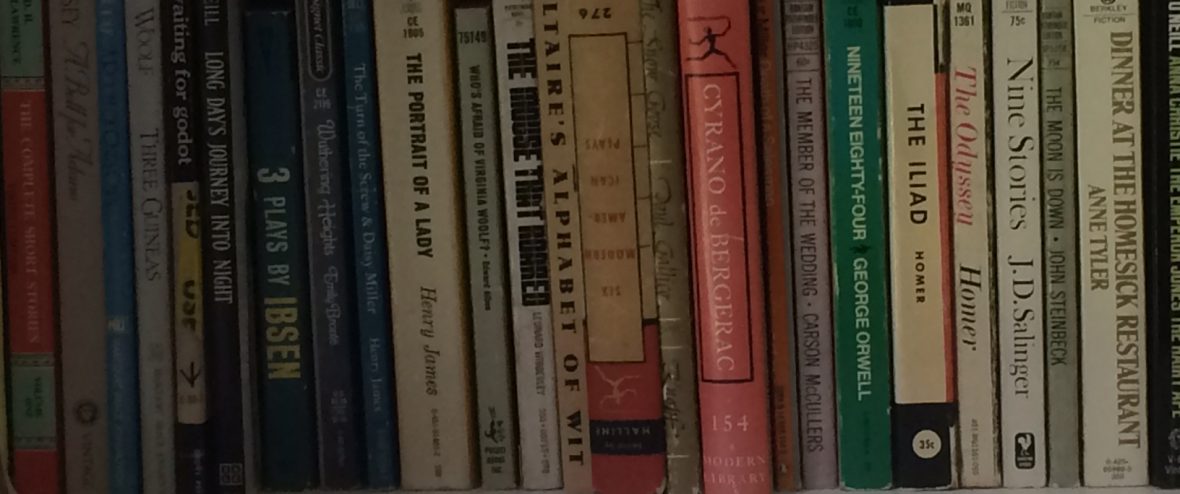
In the coming year, my focus will be to read books I own.  The titles may be a bit older, but I feel the need to do my bookshelves and brain the favor of slowing down the pace. 

book-review, Family Drama, literature

A return to reading

This year has been very different from anything anyone has ever experienced.  The COVID-19 life has been full of fear, isolation, and stress.  Many people with kids (of all ages) are watching them struggle with the new normal of not seeing people they care about, more screen time then we ever thought we would allow, and generalized anxiety about how this impacts them.  That last one will tip you off that I have teenagers.

In this atmosphere I am working to maintain my own identity.  My brain has not been able to process things as well as I used to.  I am spending hours playing solitaire; I pick up books just to put them down; and I don’t even spend the time finding new titles online.

Then we went on vacation.

I should tell you now that I have been known to not move for a week, except to turn pages.  I spent a week on Martha’s Vineyard and read 8 books while still spending time with the group of people I went with.  We were headed to the ocean with my in-laws, so I needed to make sure I had things to do.  I packed a book and an eReader.  First, I read The Ambassador’s Daughter by Pam Janoff.  The characters seemed familiar but I couldn’t place them until I posted on goodreads.com.  This is a prequel to The Kommandant’s Girl and The Diplomat’s Wife.  Each story can stand on its own, and I read them years apart.  Each was an interesting take on the world, but nothing was earth shattering.

Then I started reading the only other thing I had downloaded – The House by the River by Lena Manta.  The story of a strong woman who followed love, made a life for herself and her five daughters, and watched them grow and leave the small village under Mount Olympus.  The story of each child is then told, each left with their own goals and choices, and lived their lives.  In the end, the power of love, and the hope to start anew bring the women all together again, wiser and more aware of the good place they came from.

This has stuck with me.  My mother made so many choices for her three daughters, and we have all gone away to live our own lives.  Each of us, in our own way, has found our way back to mom and the comfort of the love and familiarity of where we came from.  The women’s lives were lived full of passion and adventure, either by direct path or not.  Born from love, they sought that out, if at first or not.  The stories of these sisters have pointed me back to myself.  In order to survive and thrive I must live fully with the choices I have made and the places it has taken me.  If I do not, I would not be true to the parents that raised me to be fearless.

Now, I am fearlessly reading books again, even if I have been stopping the heavier reads and going to more non-fiction, it is reading.  And I feel better.